When tackling metal cutting with a reciprocating saw, selecting the right blade is essential for clean cuts, durability, and speed. The following five blades are designed for heavy metal applications such as steel pipes, rebar, sheet metal, and alloy steels. Each option balances bi-metal or carbide technology with teeth design to optimize performance in demanding projects, from professional renovations to home workshops.
| Product | Brand | Material/Tech | Nice To Have |
|---|---|---|---|
| HORUSDY 6PCS 9-Inch 14TPI Bi-Metal Reciprocating Blades | HORUSDY | Bi-metal, 14TPI | Universal shank; |
| EZARC Carbide Reciprocating Saw Blade R678HM | EZARC | Carbide Tipped | 50x life vs bi-metal; |
| DEWALT Reciprocating Saw Blades Bi-Metal 6-Inch 24 TPI | DEWALT | Bi-metal | Made in USA materials |
| TOLESA Heavy Metal Cutting Reciprocating Blades 9 Inch 14TPI | TOLESA | Bi-metal, 14TPI | Thin-wall design |
| AMARTISAN 5-Piece 6 Inch 14TPI Blades | Amartisan | Bi-metal | Multi-pack, value |
HORUSDY 9-Inch 14TPI Bi-Metal Blades — 6 Pack

The HORUSDY set includes six 9-inch blades with 14 TPI, crafted from bi-metal for enhanced durability. These blades are designed for cutting through steel pipe, rebar, and thick metal sheets, making them suitable for professional jobs and DIY projects. The tooth geometry aims to deliver clean cuts while reducing vibration, resulting in steadier operation during extended use.
EZARC Carbide Reciprocating Blades R678HM (3-Pack)
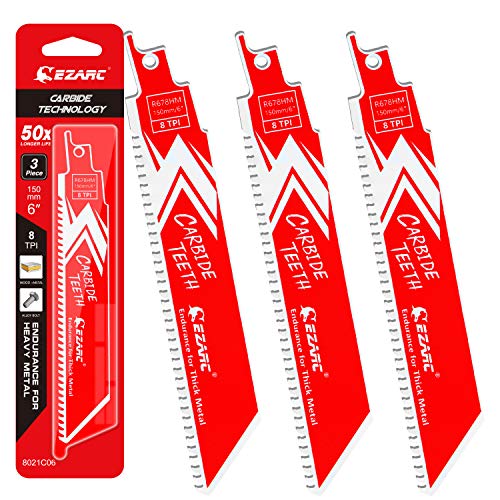
EZARC’s R678HM blades feature carbide-tipped teeth, delivering up to 50 times longer life than standard bi-metal blades. With an 8 TPI design, these blades excel in tough metal applications including high-alloy steels, stainless steels, rebar, and car beams. The carbide construction supports sustained performance in demanding demolition or fabrication work.
DEWALT Bi-Metal 6-Inch 24 TPI Blades (5-Pack)

DEWALT’s 6-inch blades use a bi-metal construction that blends flexibility with a long-lasting cutting edge. The 24 TPI configuration is geared toward precise cuts in metal while preserving blade life. Made in the USA with globally sourced materials, these blades provide consistent performance for metalworking tasks and remodeling projects.
TOLESA 9-Inch 14TPI Bi-Metal Blades — 5 Pack

TOLESA’s heavy metal blades use a bi-metal build with 14 TPI, designed to cut through metal pipe, sheet metal, and profiles efficiently. The blades feature a thin-wall design that reduces heat buildup and speeds up cutting, while the high-density teeth extend blade life for long demolition sessions.
AMARTISAN 5-Piece 6-Inch 14TPI Blades

AMARTISAN offers five 6-inch blades at 14 TPI, formatted for metal cutting across pipes, sheets, and bars. The set emphasizes bi-metal construction to balance hardness with toughness, supporting stable cuts and better heat resistance during extended use. It is positioned as a practical, multi-scene option for professionals and DIYers alike.
Caliastro 8-Pack 6-Inch 18TPI Blades

The Caliastro set includes eight blades at 18 TPI, designed for tougher metal cutting with a long-lasting bi-metal build. Engineered to slice through black pipe, conduit, rebar, and other metals, these blades minimize bending and deliver precise cuts thanks to a 0.05” thickness and precision-set teeth for smoother results.
Buying Guide: Key Considerations For Metal Cutting Sawzall Blades
- Material and teeth design: Bi-metal blades balance durability and flexibility for metal cutting, while carbide-tipped blades (like EZARC) offer extended life in hard metals such as stainless steel and high-alloy steels. Higher tooth counts (TPI) provide smoother cuts but may cut slower; lower TPI cuts faster but with rougher edges. Choose based on material and required finish.
- Blade length and shank compatibility: Common lengths are 6 and 9 inches. Ensure the blade length suits the depth of the cut and that the shank type is compatible with your reciprocating saw model.
- Heat resistance and wear: Thick materials and aggressive cuts generate heat; materials with heat resistance improve blade life and cut quality. Carbide-tipped blades excel in harsh metals, while bi-metal blades are versatile for mixed tasks.
- Application focus: For thick steel, rebar, and pipe, look for blades marketed for metal cutting with robust tooth geometry. For precision work on sheet metal, finer teeth and smoother finishes are preferred.
- Durability versus cost: Carbide blades typically cost more but last longer in tough jobs. Bi-metal sets often provide excellent value for general metal cutting tasks, especially in DIY projects.
- User experience considerations: Blades with reduced vibration and stable cutting are preferable for long sessions, helping reduce operator fatigue and improve control.
This article aims to present a balanced, objective view of available metal-cutting sawzall blades. It highlights options with different materials, tooth configurations, and price points to help buyers compare performance across common metalworking scenarios.