If you need a tool That Reliably Splits Bone And Handles Heavy Butchery Tasks, Choosing The Right Cleaver Matters. Below Is A Comparison Table Of The Selected Cleavers Followed By Detailed Reviews And A Buying Guide To Help You Pick A Knife Suited To Your Needs.
| Product | Blade Style | Notable Feature |
|---|---|---|
| Topfeel 2PCS Meat Cleaver & Heavy Duty Bone Chopper Knife Set | Cleaver + Heavy Duty Bone Knife | Hand Forged, Rosewood Handle |
| Professional Meat Cleaver Knife, 7 Inch Butcher Knife (QEGNOBOK) | 7″ Thick Blade Cleaver | Ultra Sharp High Carbon Stainless Steel |
| Huusk Meat Cleaver Knife Heavy Duty Bone Chopper | Japanese-Style Axe/Cleaver | Cryogenic Treatment, 60-62 HRC |
| ZHANG XIAO QUAN SINCE 1628 Heavy Duty Butcher Knife | Chinese Cleaver | 40Cr13 High Carbon Clad Steel, Hammered Blade |
| Dream Reach Meat Cleaver Heavy Duty Bone Chopper | Thick Axe-Style Cleaver | 5mm Blade Thickness, Hand Forged |
Topfeel 2PCS Meat Cleaver & Heavy Duty Bone Chopper Knife Set
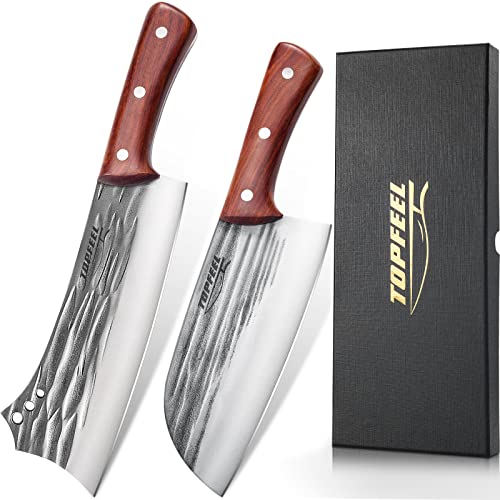
This Set Includes A 7.5″ Cleaver And An 8.5″ Heavy Duty Bone Knife. The Manufacturer Highlights Hand-Forged German High Carbon Stainless Steel And A 5 Mm Thick, 1.36 Pound Bone Cutter Designed To Provide Enough Mass For Chopping But Still Be Manageable. The Rosewood Handle With Full Tang And Three Rivets Is Marketed For Grip, Balance, And Durability. Features Emphasize Multipurpose Use—slicing, mincing, And Cutting Through Bone—With Craftsmanship From Experienced Forgers.
Professional Meat Cleaver Knife, 7 Inch Butcher Knife (QEGNOBOK)

This 7″ Cleaver Is Presented As An All-In-One Kitchen Workhorse With A 0.1″ Thick Blade That Handles The Majority Of Kitchen Tasks. The Blade Is Described As High-Quality Stainless Steel With Corrosion Resistance And A Razor-Sharp Edge That Restores Easily With A Steel Rod. The Product Emphasizes Extreme Sharpness And Durability For High-Intensity Cutting, Making It Suitable For Meat, Poultry, Vegetables, And Bone Tasks.
Huusk Meat Cleaver Knife Heavy Duty Bone Chopper

Huusk Markets A Hand-Forged Japanese-Style Kitchen Axe With Extensive Heat Treatment And Cryogenic Processing, Reaching 60–62 HRC Hardness. The Blade Uses A Front-Heavy, Leverage-Focused Design To Reduce Wrist Effort While Breaking Large Bones. The 25° V-Shaped Edge Is Said To Be Sharp Yet Chipping-Resistant, And The One-Piece Full Tang Construction With Ebony Handle And Rivets Adds Stability For Heavy Duty Chopping.
ZHANG XIAO QUAN SINCE 1628 Heavy Duty Butcher Knife

This Chinese Cleaver Uses 40Cr13 High Carbon Clad Steel And A Hand-Polished Edge. The Blade Is Described As High Hardness And Wear Resistant, With A Hammered Texture To Reduce Sticking. The Product Notes The Need For Proper Care To Prevent Corrosion, And Highlights A Full Tang Ergonomic Design For Balance, Stability, And Reduced User Fatigue During Extensive Cutting And Bone Work.
Dream Reach Meat Cleaver Heavy Duty Bone Chopper

Dream Reach Lists A 5mm Thick Axe Blade That’s Hand-Forged From High Carbon Steel With Reported Hardness Around 58 HRC. The Blade Has An Anti-Stick Hammer Texture And Includes A Hanging Hole For Storage. The Full Tang Handle Fixed With Three Rivets Is Marketed For Durability And Effort-Saving Physics Design That Shortens Force Distance During Chopping.
Buying Guide: How To Choose A Knife For Cutting Through Bone
Choosing A Knife For Bone Cutting Requires Attention To Materials, Design, And Intended Use. The Key Considerations Below Help Compare Options From Multiple Perspectives.
Blade Material And Hardness
- High Carbon Stainless Steel Offers A Balance Of Edge Retention And Corrosion Resistance; Good For Regular Use.
- Heattreated/ Cryogenically Treated Steels Can Achieve Higher Hardness (e.g., 58–62 HRC) For Durability Under Heavy Chopping.
- Harder Steel Holds An Edge Longer But May Be More Brittle; Softer Steel Is Tougher For Repeated Bone Impact.
Blade Thickness And Mass
- Thicker Blades (4–6mm Or More) Provide The Mass Needed To Transfer Force Into Bone; Look For Blades Described As Heavy Duty Or Axe-Style For Large Bones.
- A Heavier Blade Helps Split Bone With Controlled Momentum; Too Heavy Can Reduce Control And Increase Fatigue.
Blade Shape And Edge Geometry
- Cleaver/ Axe Geometry With A Slightly Curved Or Straight Wide Blade Works Best For Impact Chopping.
- A V-Shaped Edge (Approx 20–30° Per Side) Balances Sharpness And Chip Resistance For Hard Materials.
- Hammered Or Textured Surfaces Reduce Sticking When Cutting Through Meat And Bone.
Handle Design And Balance
- Full Tang Construction And Multiple Rivets Improve Strength Under Shock Loads.
- Ergonomic Handles Reduce Wrist Strain During Repeated Chops; Front-Heavy Blades Require Less Wrist Force But Need Secure Grip.
- Wood Handles Offer Comfort And Grip But Require More Care; Synthetic Handles Resist Moisture And Are Easier To Sanitize.
Maintenance And Sharpening
- Regular Honing Or Occasional Resharpening Keeps The Edge Functional. Some Products Emphasize Easy Edge Revival With A Steel Rod.
- High Carbon Steels May Require More Rust Prevention; Clean And Dry After Use.
- Consider Availability Of Professional Sharpening Or Whether You Can Use Standard Stones/Steels At Home.
Safety And Intended Use
- Use Cleavers For Breaking Bones And Heavy Butchery; Use Slicing Knives For Deboning Or Fine Tasks.
- Inspect For Secure Handle Attachment And No Wobble Before Heavy Use.
- Proper Cutting Surface Matters—Use A Thick Wooden Or HDPE Cutting Board To Protect The Blade And Work Safely.
Comparison Perspectives
- Performance vs. Durability: Harder, finely heat-treated blades offer edge retention but may require careful handling to avoid chipping.
- Weight vs. Control: Front-heavy designs reduce effort for heavy bones, while lighter cleavers allow more precise cuts.
- Material Care vs. Hygiene: Wood handles and high carbon steels require maintenance; stainless variants are lower maintenance but may trade some edge life.