For hobbyists and professionals alike, a Japanese pull saw offers clean cuts, light weight, and exceptional control. This guide highlights top picks designed for dove tails, joinery, flush cuts, and general stock reduction. Each product emphasizes razor-sharp Japanese steel, ergonomic handles, and reliable craftsmanship. Use this overview to compare blade geometry, tooth configuration, and build quality to choose a saw that fits your projects and budget.
Summary of chosen products
| Product | Brand | Blade Type | Key Feature |
|---|---|---|---|
| SUIZAN Ryoba Double Edge Saw 9.5″ Assembly ver | SUIZAN | Double-edge Ryoba | Made in Japan, razor sharp, lightweight pull saw |
| SUIZAN Ryoba Double Edge Saw 9.5″ Professional | SUIZAN | Double-edge Ryoba | Top Japanese steel, master craftsmanship |
| Temple Tool Japanese Pull Saw 9.5″ | Temple Tool | Ryoba pull saw | Premium components, dual-edge versatility |
| Clarke Brothers Japanese style Pull Saw Set | Clarke Brothers | Kataba & Dozuki | Two blades for diverse cuts, ergonomic handle |
| KERYE Japanese Pull Saw 9.5″ | KERYE | Ryoba | Replaceable blade, SK5 steel, ergonomic |
SUIZAN Ryoba Double Edge Saw 9.5″ Assembly ver

This pull saw uses a double-edge Ryoba design, with teeth configured for both rip and crosscut tasks. It is engineered to be lighter than traditional push saws, enabling precise cuts with less user fatigue. The blades are crafted from top-quality Japanese steel, delivering razor-sharp performance. Manufacturing is completed in Japan by skilled craftsmen, ensuring a long heritage of craftsmanship and a refined edge suitable for joinery and fine woodworking.
SUIZAN Ryoba Double Edge Saw 9.5″ – Professional

This professional-grade Ryoba mirrors the assembly ver in design, emphasizing a lighter pull stroke and clean edge. It utilizes Japanese steel for sharp, durable cuts and is manufactured in Japan to meet traditional craftsmanship standards. The tool is designed for a comfortable balance during long sessions, making it suitable for fine joinery, dovetails, and precise sizing tasks.
Japanese Pull Saw – 9.5 Ryoba Hand Saw

Temple Tool’s 9.5-inch Ryoba offers a rip-cut and cross-cut double-edge arrangement with a premium wood handle, featuring brass fittings. The design prioritizes precise pull-cut performance and a smooth finish. The overall construction supports accurate cuts across varied woodworking tasks, from stock reduction to fine joinery. The blade geometry enables a narrow kerf and reduced operator effort without sacrificing edge quality.
SUIZAN Flush Cut Saw 6″ – Professional Japanese Pull

This compact flush-cut variant is a dedicated pull saw designed for fine trimming and flush cuts. It uses a top-quality Japanese steel blade with the option to replace blades, extending tool life. Made in Japan, it reflects a heritage of craft and provides a reliable edge for precise material removal, detailing, and finishing work in tight spaces or near delicate joinery.
Clarke Brothers Japanese style Pull Saw Set of 2
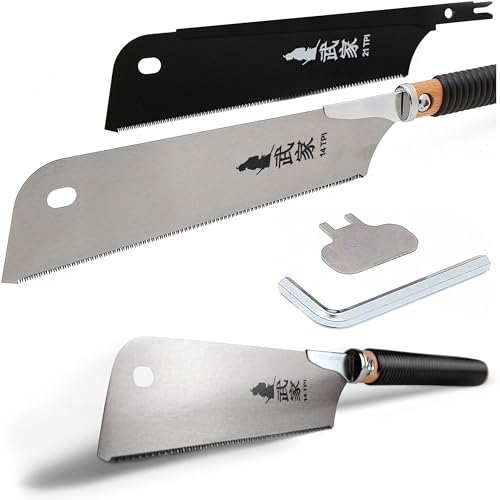
This set includes a 10″ Kataba and a 10″ Dozuki blade, covering both rough stock removal and fine finishing cuts. The blades feature 14 TPI and 21 TPI options respectively for diverse joinery tasks. An ergonomic rattan-wrapped wooden handle provides a traditional grip and steady control during pull strokes, making the set versatile for various woodworking projects and skill levels.
KERYE Japanese Pull Saw 9.5″ KY01

The KY01 features a 9.5-inch blade with replaceable blades and a double-edge configuration (10 and 17 TPI) for versatile cutting across grain directions. Built from SK5 high-carbon steel for hardness and wear resistance, the saw balances a beech-and-rattan handle for a lightweight, ergonomic experience. It is positioned as a practical gift and workhorse for general woodworking and precise trimming tasks.
Husfunov Japanese Hand Saw

This 6-inch pull saw offers double-edged teeth with 11 TPI and 17 TPI, designed for flexibility and precision. The SK5 blade provides robust performance and durability, suitable for detailed trimming, crosscuts, and edge work. An ergonomic soft-grip handle reduces fatigue and enhances control across extended projects, making it a practical choice for hobbyists and professionals who value comfort and accuracy.
Buying Guide: Key Purchase Considerations
Blade geometry and tooth configuration matter depending on your typical tasks. Ryoba double-edge blades offer both rip and crosscut functionality on a single tool, while Kataba blades are best for precise, deep cuts in joining stock. Consider the TPI (teeth per inch) when planning for rough stock removal versus fine finishing. Higher TPI yields smoother cuts but with slower material removal.
Blade material and heat treatment influence edge retention and rust resistance. Japanese steel is a common hallmark among top brands, with SK5 being a typical high-carbon option that balances hardness and flexibility. Replacement blades can extend tool life and reduce ongoing costs in busy workshops.
Handle design affects control and comfort. Look for ergonomic grips, such as wood handles with brass hardware or rattan-wrapped grips, which reduce fatigue during long sessions. A lightweight tool reduces wrist strain, particularly on repeated pull-stroke cuts.
Overall tool life and maintenance are key. Some sets offer replaceable blades, allowing you to refresh sharp edges without buying a new saw. Consider whether you need one or two blades for different cut types, or if a single versatile Ryoba would suffice for your typical joinery tasks.
Budget and availability also play a role. While premium models emphasize handcrafted quality and longer-lasting steel, reputable mid-range options still deliver exceptional performance for common woodworking tasks. Reading user reviews and confirming the seller’s return policy can help ensure you choose a saw that meets your needs.