Keeping track of battery health is essential for home electronics, gadgets, and emergency gear. The right tester helps you avoid unnecessary recharges, replacements, and downtime. Below are five dependable options that cover a range of battery types—from common AA and AAA to 9V and button cells—so you can pick the one that best fits your needs. Each entry highlights compatibility, display clarity, and ease of use to help you compare at a glance.
| Product | Brand | Key Strength | Battery Types |
|---|---|---|---|
| Dlyfull LCD Universal Battery Tester | DLYFULL | Wide compatibility, clear LCD | AA, AAA, C, D, 9V, CR2032, CR123A, CR2, CRV3, button cells, 1.5V/3V |
| D-FantiX BT-168 | D-FantiX | Compact, no batteries required to operate | AA, AAA, C, D, 1.5V, 9V, button cells |
| VTECHOLOGY Battery Tester | VTECHOLOGY | No battery required to operate | AA, AAA, C, D, 9V, 1.5V, button cells |
| Tenergy T-333 | Tenergy | LCD metering for quick health read | AA, AAA, C, D, 9V, CR123A, CR2, CRV3, 2CR5, CR-P2, button cells |
| KKEANIC SL-049 | KKEANIC | Real-load testing with multiple slots | AA, AAA, AAAA, C, D, 9V, button cells, CR2/CR123A |
Dlyfull LCD Battery Tester — Wide Compatibility

The Dlyfull battery tester offers extensive compatibility beyond common cylindrical cells. It supports AA, AAA, C, D, 9V, and various cylinder types, plus a broad range of button cells. The crisp LCD display clearly indicates whether a battery is poor, weak, or good, helping users decide if a replacement is warranted. Users should note:
– It is not intended for rechargeable testing.
– Quick-read indicators help identify weak batteries to prevent unnecessary recharges.
This model is suitable for households with many disposable batteries or mixed battery inventories.
D-FantiX BT-168 — Pocket-Sized Battery Checker
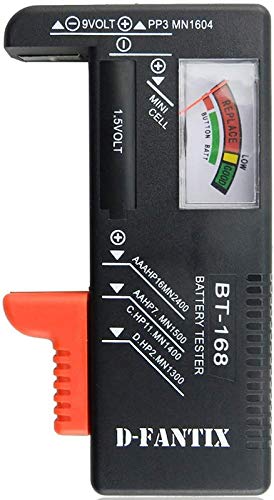
This small, practical tester is designed for home use. It works with standard and rechargeable household batteries and requires no external power. An analog display needle moves along a color-coded scale to show status: green for good, yellow for low, and red for replace or recharge. Its compact size makes it perfect for drawers, toolkits, and travel kits, while its durable build supports regular use.
VTECHOLOGY Universal Battery Checker — No Battery Needed

The VTECHOLOGY tester emphasizes ease of use with no power requirement for operation. Its portability and straightforward design appeal to users who want a quick check on common household batteries such as AA, AAA, C, D, 9V, and various button types. While the device is simple, it provides reliable status indicators that reduce guesswork when replacing batteries, making it a staple for busy households and DIY projects.
Tenergy T-333 — LCD Battery Health Meter
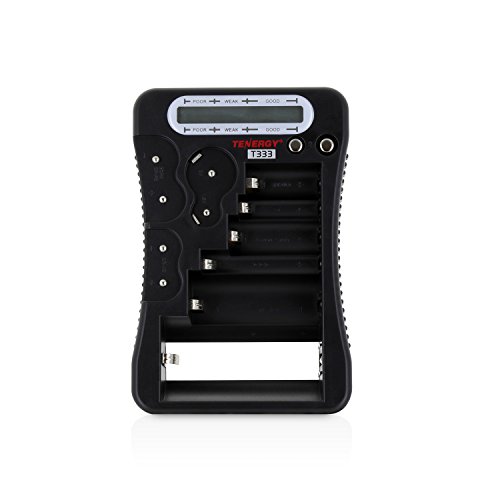
The T-333 provides a versatile LCD metering display that supports a wide range of sizes, including several button cell formats. It quickly communicates battery health—from poor to good—helping extend recharge cycles and promote battery longevity. This tester is especially useful for users who handle many types of batteries, including rechargeables, as it helps prevent overcharging and early disposal of healthy cells.
Dlyfull Battery Tester — Robust, Broad Coverage

Another DLYFULL option emphasizes broad compatibility and a crisp LCD readout. It supports multiple cylindrical batteries and a wide array of button cells, with a clear verdict on battery health. The device is designed for straightforward use—place the test battery in the slot and read the health status on the indicator bars. It is suitable for annual preparedness kits and family use where numerous battery types may be present.
KKEANIC SL-049 — Professional Digital Battery Checker

The KKEANIC SL-049 delivers professional-grade capability with a real-load testing approach and multiple testing slots. It supports a broad range of battery types, including 1.2V rechargeables and common button cells, with smart detection to avoid incorrect readings. The device is well-suited for hobbyists and DIY enthusiasts who require precise voltage measurements and power level indicators in a compact package.
Buying Guide: How to Choose a Household Battery Tester
- Compatibility: Look for testers that cover your typical battery types—AA, AAA, C, D, 9V, button cells, and common lithium cells. If you use rechargeable batteries, ensure the tester supports them and offers a real-load or load-based test.
- Display and readability: An LCD or analog display should clearly indicate battery health (good, weak, replace). A color-coded or easily interpretable scale reduces guesswork.
- Power source: Some testers require no external power to operate, while others use the tested battery to power the device. Choose based on where you’ll use it (garage, kitchen drawer, or workshop).
- Portability: For on-the-go checks, a compact, lightweight tester is advantageous. Some models include carrying cases or compact footprints for toolkits.
- Accuracy and reliability: Consider testers with metered readings and real-load testing options for more accurate assessments, especially for rechargeable batteries.
- Ease of use: Simple slots, clear polarity orientation, and straightforward step-by-step testing reduce user error and extend battery life.
- Durability and warranty: A sturdy build and a reasonable warranty help ensure long-term value for frequent use in households or workshops.
- Price and value: Balance the breadth of compatibility and display clarity against cost. A mid-range model often provides the best mix of features for most homes.
When selecting a tester, consider your typical battery inventory and how often you replace or recharge cells. A single versatile unit can streamline maintenance, minimize waste, and keep devices ready for use across your home, car, and emergency kits. Always follow the manufacturer’s instructions and avoid testing non-rechargeable or non-recommended batteries in ways not outlined by the device’s documentation.