Choosing the right hole saw makes cutting Hardie board (fiber cement siding/backer board) faster and reduces chipping and wear. Below is a concise comparison table of the top picks in this guide followed by focused product sections and a buying guide to help you pick the best tool for recessed lights, vents, or conduit through Hardie board.
| Product | Best For | Key Feature |
|---|---|---|
| HLOFIZI 4-1/4″ Carbide Grit Hole Saw | 4″ Recessed Lights, Dryer Vent | Tungsten Carbide Grit Edge, 1-1/2″ Depth |
| Blue Boar 4-3/8″ Carbide Grit Hole Saw | 4″ Light Cutouts, Hardie Board | Continuous Carbide Grit Edge, 1″ Depth |
| The Amazing Tile 4-1/4″ Masonry Hole Saw | Masonry & Fiber Cement Mix | Tungsten Carbide Grit, Works With SDS/Hammer Drill |
| Hole Pro X-230+ Adjustable Hole Cutter | Variable Hole Sizes 2″–9-1/4″ | Twin Blade Adjustable System, Shielded Cutting |
| PLG2SUPT 3″ Carbide Grit Hole Saw | Smaller Penetrations In Fiber Cement | Fast Cutting Carbide Edge, 1-1/2″ Depth |
HLOFIZI 4-1/4″ Carbide Grit Hole Saw For 4 Inch Recessed Lights

This HLOFIZI hole saw Is Built With A tungsten carbide grit edge Designed For Abrasive Materials Like Hardie Board, Stucco, Plaster And Sheetrock. The 4-1/4″ Diameter Targets Typical 4″ Recessed Light Cutouts And Dryer Vents, While A 1-1/2″ Cutting Depth Handles Thicker Backer Boards. The Manufacturer Notes Improved Life In Abrasive Applications And Faster Cuts Compared To Traditional Bi-Metal Saws.
Use With A Proper Pilot Bit/Arbor And Moderate Drill Speed. Carbide Grit Edges Reduce Chipping On Fiber Cement Surfaces When Used Steady And With Light Feed Pressure.
Blue Boar 4-3/8″ Carbide Grit Hole Saw For 4 Inch Lights

Blue Boar’s Carbide Grit Hole Saw Features A Continuous Tungsten Carbide Grit Edge And A 1″ Cutting Depth. It’s Specifically Marketed For Recessed Light Cutouts, Lath & Plaster, And Fiber Cement Hardie Board. The Continuous Edge Promotes Smooth Cuts With Reduced Snagging Compared To Toothed Bits.
This Option Is Practical Where Chip-Free Edges Matter For Visible Cutouts. Keep Drill RPM Moderate And Use A Backing Board Or Masking Tape To Minimize Breakout On The Exit Side.
4 1/4 Inch Masonry Hole Saw For Hardie Plank Cement Siding
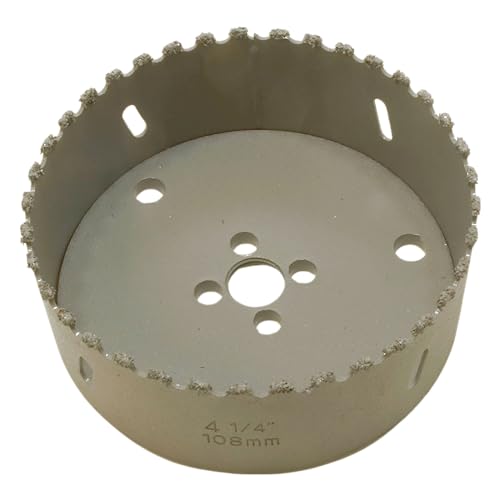
This Masonry Hole Saw From The Amazing Tile And Glass Cutter Is A 108mm Tungsten Carbide Grit Tool Intended For Tough Materials Like Brick, Concrete Block, Backer Board And Fiber Cement. The Listing Notes Compatibility With SDS-Plus Or Hexagonal Arbors And Advises Using Hammer Drill Mode For Concrete.
Because It’s Designed For Masonry, This Saw Provides Durable Cutting For Mixed Applications Where You May Encounter Brick Or Mortar Close To The Hardie Board. Ensure Your Drill And Arbor Match The Recommended Setup When Cutting Dense Substrates.
Hole Pro X-230+ Adjustable Hole Saw Cutter 1-7/8″ To 9-1/4″

The Hole Pro X-230+ Is An Adjustable Twin-Blade System That Covers Holes From About 1-7/8″ Up To 9-1/4″. Its Twin Blades Provide Faster, Smoother Cuts And A Shield That Helps Trap Dust; The Tensioning Knob Controls Cutting Depth For Cleaner Results.
For Hardie Board, This System Offers Versatility — no need to own multiple fixed-diameter carbide hole saws. It Also Accepts Carbide Grit Hole Saws Mounted On The 5/8″ Threaded Shaft Tip For Abrasive Materials. Use A Proper Pilot And Moderate RPM To Avoid Overheating The Fiber Cement Surface.
PLG2SUPT 3″ Carbide Grit Hole Saw For Hardie Plank And Backer Board

This 3″ Carbide Grit Hole Saw Emphasizes Fast Cutting And Durability For Abrasive Substrates Like Fiber Cement Siding. The Carbide Grit Edge Is Rated For Long Life And The Cup Offers A 1-1/2″ Maximum Cutting Depth. The Listing Notes Easier Plug Removal And A High Hardness Edge.
Choose This Size When Smaller Penetrations Are Needed For Air Bricks Or Small Vents. As With Other carbide grit cups, Use Controlled Feed Pressure, Appropriate RPM, And Periodically Clear Dust To Maintain Performance.
Buying Guide: How To Choose A Hole Saw For Hardie Board
Cutting Hardie board requires tools optimized for abrasive, dense fiber cement. Focus on the following criteria to select the right hole saw for your job.
Cutting Edge Type
- Tungsten Carbide Grit — Preferred for fiber cement and abrasive siding. Provides longer life and reduced tooth snagging.
- Diamond-Tipped or PCD — For frequent professional use or continuous heavy cutting; offers very long life but higher cost.
Diameter And Depth
- Match The Diameter To Your Fixture (e.g., 4″ recessed lights typically use ~4-1/4″ hole saws).
- Verify cutting depth (1″ to 1-1/2″ common). Thicker backer or siding profiles may require deeper cups or a plunge saw approach.
Arbor And Drill Compatibility
- Confirm The Arbor Thread/Arbor Type Matches Your Drill Or Adjustable Cutter System.
- Some masonry-style hole saws Require SDS-Plus/Hammer Drill Use On Concrete; for fiber cement, a standard high-torque drill at controlled speed is usually fine.
Cut Quality And Chip Control
- Continuous Carbide Grit Edges Produce Smoother Cuts With Less Snagging Than Toothed Hole Saws.
- Use Backing Materials Or Masking Tape To Reduce Breakout On The Exit Side, Especially For Visible Cutouts.
Durability And Frequency Of Use
- For Occasional DIY Tasks, a single carbide grit cup sized to your need is cost-effective.
- For Contractors Or Repeated Cuts, invest in diamond-tipped blades or multiple carbide cups and compatible arbors to minimize downtime.
Dust Management And Safety
- Fiber Cement Generates Silica Dust — Use A NIOSH-Approved Respirator, Eye Protection, And Local Exhaust Or Vacuum Attachment When Possible.
- Consider A Dust Shield Or Hole Saw System With Dust Collection To Limit Airborne Particles.
Versatility
- Adjustable Systems (like the Hole Pro X-230+) Offer Range For Multiple Hole Sizes, Reducing Tool Count.
- Carbide Grit Cups Are Best When You Need A Clean Circular Cut For Lights, Vents, Or Conduit Through Hardie Board.
Performance Tips For Cutting Hardie Board
- Run The Drill At Moderate RPMs; High Speed Generates Heat And Premature Wear.
- Apply Steady, Light Feed Pressure; aggressive forcing increases chipping and dust generation.
- Make A Pilot Start Or Use A Guide To Keep The Hole Saw Stable On The Plank Face.
- Clear Dust Frequently To Maintain Abrasive Cutting Action.