Overview: Choosing the right hole saw for drywall helps ensure clean openings for recessed lights, electrical boxes, vents, and plumbing. Below is a quick comparison of the selected products to help you scan features at a glance.
| Product | Best For | Key Feature |
|---|---|---|
| KATA Hole Saw Set 20PCS | Varied Sizes | 13 blades, wide size range |
| Klein Tools 53710 Adjustable Hole Cutter | Variable Circle Cuts | 2–7″ adjustable with dustbowl |
| Seimneire Adjustable Hole Saw | Large Diameter Cuts | 30–300mm adjustable range |
| VIKITON 6.25 Hole Saw With Dust Bowl | Recessed Lighting | 6-1/4″ bi-metal saw + dust bowl |
| VIKITON 6 Inch Bi-Metal Hole Saw | Durable Single Size | Bi-metal construction for wood/metal/drywall |
KATA Hole Saw Set 20PCS Hole Saw Kit
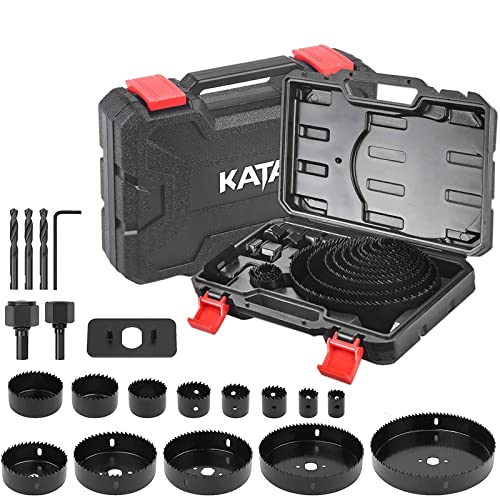
This multi-piece kit includes 13 hole saw blades from 3/4″ to 6″, two mandrels, drill bits, an installation plate, and a hex key. The blades are made from heat-treated carbon steel with black coating for corrosion resistance and faster cuts. The set targets general-purpose tasks such as drywall, soft wood, plywood, and PVC. Accessories allow quick arbor changes and pilot drilling for centered holes.
Considerations: The blades are optimized for soft materials like drywall and PVC; they may not be suited for hard metals or dense hardwood. Heat-treated serrations aim to provide cleaner cuts, but cutting depth and operator technique will affect finish.
Klein Tools 53710 Hole Saw, Adjustable Circle Hole Cutter

The Klein Tools adjustable circle cutter cuts holes from 2 to 7 inches, designed specifically for drywall and ceiling tiles. It features an integrated gearing mechanism for smooth size adjustments and a spring-loaded collar to keep the tool perpendicular to the surface for controlled cuts.
Its design reduces the need for multiple fixed-size saws when working on different fixture diameters. The built-in dust capture system (dustbowl integrated in some models) helps to minimize debris when cutting overhead. The adjustable arms and auto-set feature make it practical for ceiling work and larger aperture needs.
Seimneire Adjustable Hole Saw 30–300mm Circle Cutter
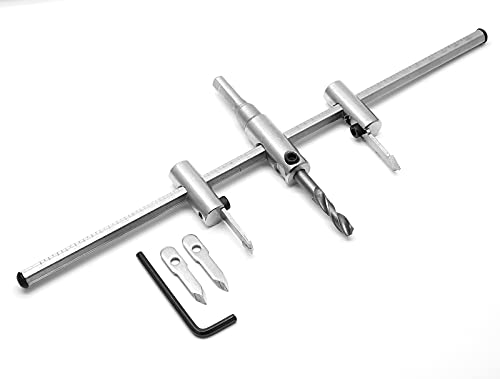
This heavy-duty adjustable cutter covers a broad range from 1-3/16″ to 11-3/4″ (30–300mm) with cutting depths of about 3–50mm, suitable for drywall, plaster, and wood. It includes two blades and a hex wrench and features clear scales for quick measurement and adjustment.
Its double-blade design aims for smooth, burr-free cuts. The tool suits jobs where many different hole diameters are needed without switching out multiple saws. Keep in mind cutting depth limitations and the need for a steady handheld or guided approach for best results.
VIKITON 6.25 Hole Saw For Recessed Lights With Dust Bowl

Built around a 6-1/4 inch bi-metal hole saw with a matching dust bowl and arbor, this kit targets recessed light and can-light installations in drywall and plasterboard. The bi-metal construction combines high-speed steel teeth with a flexible steel body for longer life and sharp edges.
The included dust bowl captures most drywall dust and chips during ceiling cuts, improving cleanup and reducing airborne debris. The kit includes a replacement pilot bit and hex key for maintenance. This is a focused choice when installing standard-sized recessed fixtures.
VIKITON 6 Inch Hole Saw With Arbor For Metal, Wood, Plastic
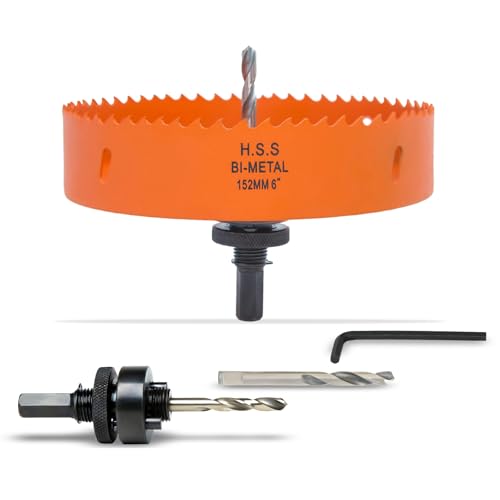
This 6″ bi-metal hole saw is designed for versatility across drywall, wood, PVC, and some metals. The bi-metal construction and special steel body provide corrosion and heat resistance while the high-speed steel teeth are intended for clean, smooth cuts.
Fast chip removal and a flat drilling edge assist in producing smooth apertures. The arbor-locking method is standard—rotate until alignment and secure locking pins—so correct assembly is important for stable operation and safety.
Buying Guide: Choosing The Right Hole Saw For Drywall
Material And Construction
Bi-metal vs Carbon Steel: Bi-metal hole saws generally last longer and can handle occasional metal and harder substrates. Carbon steel saws are lighter in cost and suitable for drywall, PVC, and soft wood. For frequent trades use, bi-metal often offers better longevity.
Size Range And Adjustability
Fixed-Size Kits: Multi-blade kits (19–13-piece ranges) give you precise diameters for common tasks and quick swaps using mandrels. Adjustable Cutters: Adjustable circle cutters or auto-set models cover a wide diameter range, reducing the need for many blades—useful for infrequent or variable-sized cuts.
Dust Control And Overhead Work
For ceiling and recessed-light work, choose a saw with a dust bowl or integrated capture to reduce falling debris. This makes overhead cutting cleaner and safer, and limits cleanup.
Cutting Depth And Burr Control
Check the maximum cutting depth of the hole saw—thick ceilings or layered drywall can limit a shallow saw. Double-blade or serrated designs can reduce burrs, producing cleaner openings that need less finishing.
Compatibility And Arbors
Confirm the included mandrels/arbors and pilot bits fit your drill’s chuck and that replacement parts are standard sizes. Proper arbor locking reduces wobble and improves cut quality.
Durability And Maintenance
Look for heat-treated or coated teeth to resist corrosion and maintain sharpness. Carry spare pilot bits and replacement teeth where possible. Allowing the saw to cool and avoiding prolonged contact with metal will extend life.
Application-Focused Choices
- Recessed Lights: Use purpose-sized saws (6″ or 6-1/4″) with dust bowls for controlled ceiling cuts.
- Electrical Boxes & Small Holes: Multi-blade kits or small fixed-size saws give accurate, repeatable diameters.
- Variable Sizes: Adjustable circle cutters cover many sizes but require steady handling for best results.
Safety And Technique
Use steady, perpendicular pressure and a pilot bit to center cuts. For overhead work, use dust control and eye protection. Take pauses on long cuts to avoid overheating the blade or dulling teeth.