For demanding wood-splitting tasks, choosing a heavy-duty log splitter means prioritizing power, reliability, and ease of use. This guide highlights five top-rated models that balance raw splitting force with practical design features like dual-position operation, towing capability, and user safety. Whether you’re processing hardwoods for winter, clearing a bulk of timber, or maintaining a large property, these machines are built to work efficiently while minimizing fatigue.
| Product | Brand | Ton Rating | Engine/Power | Key Feature |
|---|---|---|---|---|
| BILT HARD 40-Ton Gas Powered Log Splitter | BILT HARD | 40 | 389cc OHV Engine | Dual-position operation |
| BILT HARD Full Beam 30-Ton Gas Splitter | BILT HARD | 30 | 223cc OHV Engine | Auto return, full beam |
| BILT HARD 25-Ton Horizontal/Vertical Log Splitter | BILT HARD | 25 | 209cc OHV Engine | Horizontal/Vertical switch |
| BILT HARD 20-Ton Gas Log Splitter | BILT HARD | 20 | 209cc OHV Engine | Towable, 2-stage pump |
| WEN Electric Log Splitter 6.5-Ton | WEN | 6.5 | 15A Electric motor | Portable stand option |
Summary: The lineup focuses on heavy-duty gas-powered splitters for high-output needs, plus a compact electric option for lighter workloads or indoor use. All include practical mobility features and dual-position operation to reduce strain during long sessions. These selections are well-suited for properties with large timber supplies, professional firewood preparation, or demanding DIY projects.
BILT HARD 40-Ton Gas Powered Log Splitter

The 40-ton model delivers substantial power through a 389cc OHV engine, producing up to 16.96 ft.-lb. of torque. It features a dual-position design for horizontal and vertical operation, enabling efficient processing of large, dense logs. Towable with DOT tires and a 2-inch ball coupler, it can be moved between work sites with ease while maintaining stability on uneven terrain. This unit is designed for high-volume splitting tasks and can handle demanding hardwoods with speed and consistency.
BILT HARD Full Beam 30-Ton Gas Splitter

This 30-ton full-beam splitter pairs a 223cc OHV engine with a robust two-stage gear pump. It uses a practical auto-return feature and a double-position operation capability, allowing rapid transitions between horizontal and vertical orientations. The design includes 16-inch DOT tires and a 2-inch ball hitch for ATV/UTV towing, enabling efficient transport across work sites. It’s engineered for frequent, heavy-duty splitting sessions, delivering dependable performance on larger logs without excessive manual handling.
BILT HARD 25-Ton Horizontal/Vertical Log Splitter

This 25-ton unit uses a 209cc OHV engine and offers dual-position operation to ease handling of large logs. Its 2″ ball coupler and 16″ DOT tires improve portability, and the two-position design reduces user strain during extended sessions. The model is suitable for a wide range of hardwoods and is designed to balance mobility with substantial splitting power for medium-to-heavy workloads.
BILT HARD 20-Ton Gas Log Splitter
With a 20-ton splitting force, this unit uses a 7 HP 209cc OHV engine to deliver consistent performance across medium-to-large logs. It features a towable design with a 2-inch ball coupler and 24-inch safety chains, facilitating stable transport to different sites. The splitter is designed for efficient operation with a hydraulic system that handles logs up to 21 inches in length, making it suitable for typical backyard and property maintenance tasks.
WEN Electric Log Splitter 6.5-Ton
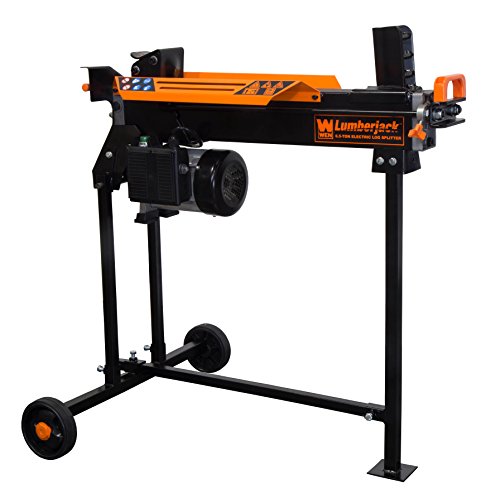
The WEN 6.5-ton electric splitter uses a powerful 15A motor capable of generating substantial log cracking pressure. It offers flexibility with a 34-inch stand option, and mobility features include a pull handle and 5.5-inch never-flat wheels for easy transport between jobs. This electric model is a practical option for lighter-duty tasks, indoor use, or environments where emissions must be minimized, while still delivering reliable performance for small to medium logs.
Buying Guide
Choosing a heavy-duty log splitter involves evaluating several factors to match your needs. Consider the following:
- Splitting Force — Measured in tons, higher tonnage means better capability for hardwoods. For most homeowners, 20–40 tons covers common hardwoods; commercial or professional use may require even more.
- Power Source — Gas-powered units provide portability and high torque, ideal for large logs and remote sites. Electric splitters are quieter, cleaner, and suitable for lighter workloads or indoor use.
- Operation Style — Dual-position (horizontal/vertical) designs reduce back strain and enable handling of oversized logs. Auto-return features speed up cycles and improve productivity.
- Mobility and Towability — Check hitch type (2-inch ball), tire size, and safety chains. DOT-certified tires and trailer-style towing enhance site-to-site transport.
- Log Length and Wedge Design — Ensure the model can handle logs you typically process. A longer stroke and a durable steel wedge improve efficiency and durability.
- Safety Features — Look for two-hand controls, guards, and clear operator instructions to reduce the risk of injury during operation.
- Maintenance and Support — Consider the availability of spare parts, warranty terms, and service networks, particularly for gas engines and hydraulic components.
When comparing models, balance initial cost with long-term efficiency. A higher-tonnage unit can reduce splitting time on large logs but may be heavier and less portable. For mixed workloads, a dual-position splitter offers flexibility for varying log sizes. Always follow the manufacturer’s safety guidelines and local towing regulations when transporting gas-powered splitters.