Choosing a hand log splitter can make kindling and firewood prep safer and quicker. Below are five top options that balance safety, ease of use, and durability. Each product is evaluated for portability, build quality, and practical performance. This guide helps you compare manual and electric solutions to fit your needs and workspace.
Summary of Selected Products
| Product | Brand | Highlights |
|---|---|---|
| Kindling Cracker Firewood Splitter | Kindling Cracker | Safe, no moving blade; 6.5″ top ring; easy kindling making |
| Kindling Cracker XL Kindling Cracker King | Kindling Cracker | Safer operation; larger top ring; handles bigger pieces |
| WEN Electric Log Splitter | WEN | 6.5-ton capacity; portable stand; 15A motor |
| Roughneck Manual Log Splitter | Roughneck | Slide hammer; safer than ax; steel construction |
| BILT HARD Log Splitter 6.5 Ton | BILT HARD | Hydraulic ram; portable; 6.5-ton split power |
Kindling Cracker Firewood Splitter

The Kindling Cracker Firewood Splitter offers a safe, blade-free approach to making kindling. It reduces the force required compared with an axe and accommodates a 6.5-inch inside diameter top ring for a stable cutting zone. This model emphasizes user safety and straightforward operation, making it suitable for quick kindling sessions without risk to hands.
Kindling Cracker XL Kindling Cracker King

The XL model expands the original concept with a larger top ring, enabling larger pieces of firewood to be split without repositioning. Like the standard version, it prioritizes safety with a no-blade-swing design and reduces the effort needed to produce kindling, making it suitable for frequent use in home wood prep cycles.
WEN Electric Log Splitter
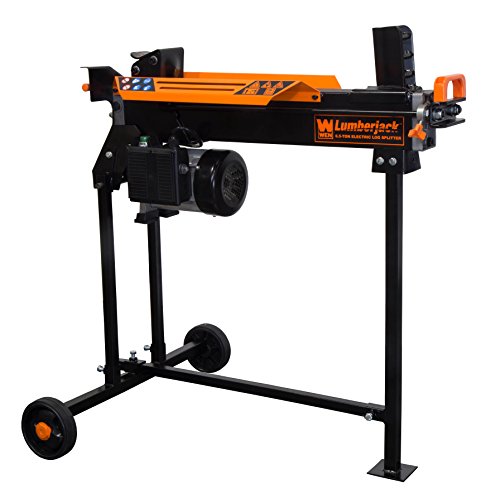
The WEN Electric Log Splitter combines power with portability. With a 15A motor delivering over 13,000 pounds of splitting force and a stand option, this unit supports steady, on-site operation. Its design includes a pull handle and 5.5-inch wheels to facilitate transport between job sites or storage areas, offering a strong option for medium-duty use.
Roughneck Manual Log Splitter

The Roughneck Manual Log Splitter features a slide hammer action that reduces flying wood chips and provides a safer alternative to swinging axes. Its cushion grip handle minimizes shock and offers a secure grip, while a heavy-duty steel construction with a laser-cut wedge ensures long-term performance in regular wood-splitting tasks.
BILT HARD Log Splitter 6.5 Ton

The BILT HARD 6.5-ton electric log splitter uses a hydraulic ram to deliver consistent splitting power. It supports logs up to roughly 9.8 inches in diameter and 20.5 inches in length. The design emphasizes safety with two-hand controls and a relatively quiet, emission-free operation, making it a practical choice for home workshops and smaller outdoor spaces.
Buying Guide
Key purchase considerations
- Splitting power and capacity: Manual splitters excel for smaller, softer logs or kindling, while electric models handle larger pieces with more ease. Consider diameter, length, and the typical timber you split.
- Safety features: Look for two-hand controls, blade-free kindling options, cushioned grips, and stable bases to reduce accidental contact with moving parts.
- Portability and setup: If you move equipment between locations, prioritize models with wheels, stands, or lightweight construction. Assembly time and storage space also matter.
- Durability and materials: Steel wedges and cast-iron or reinforced bases provide longevity under regular use. Check for rust protection and coatings in outdoor environments.
- Maintenance: Manual devices may require less maintenance, while electric models need motor care and occasional hydraulic checks. Ensure replacement parts are available.
Comparative perspectives
- Safety-first approach: For beginners or casual use, models with blade-free design and slide-hammer action minimize risk.
- Power vs. portability: Electric splitters offer higher power and efficiency but require electricity and may be heavier; manual tools are portable and quiet but require more physical effort.
- Space considerations: Horizontal designs generally save space and are suitable for tight yards, while vertical or stand-alone configurations may offer ergonomic advantages for taller users.
- Maintenance overhead: Simple manual tools tend to need less maintenance, whereas hydraulic electric units require periodic checks and proper storage.