Finding the right hand axe for splitting firewood or kindling means balancing head weight, handle length, blade geometry, and shock reduction. Below is a concise comparison of the five featured axes selected for reliability, splitting performance, and comfort.
| Product | Type / Key Feature | Best For |
|---|---|---|
| Fiskars X27 Super Splitting Axe | 36″ forged steel blade, shock-absorbing handle | Medium To Large Logs |
| Estwing Fireside Friend Axe | 14″ forged steel, patented shock reduction grip | Small Splits, Campsite Use |
| Edward Tools 17″ 3 lb Splitting Maul | 3 lb head, combined axe/sledge | Kindling & Small Rounds |
| INTERTOOL 36-Inch Wood Splitting Maul | 5 lb convex head, fiberglass shock-absorbing handle | Large Logs, Heavy-Duty Splitting |
| Purple Dragon 14.7″ Hand Forged Splitting Axe | Hand-forged carbon-manganese head, hickory handle | Bushcraft, Delimbing, Balanced Splitting |
Fiskars X27 Super Splitting Axe

Overview: A 36″ splitting axe designed to split medium to large-size logs with a hardened forged steel blade and shock-absorbing handle. The advanced bevel convex design is intended to split efficiently and reduce blade hang-up.
- Blade: Hardened forged steel, convex grind to aid splitting and extraction.
- Handle: 36″ shock-absorbing textured non-slip grip to reduce hand strain.
- Use Case: Best for yard work and regular firewood preparation where reach and swing power matter.
- Durability: Designed for longer edge life than traditional axes and to resist overstrike damage.
Estwing Fireside Friend Axe

Overview: A compact 14″ forged steel splitting maul built for campsites and smaller splitting tasks. Notable for its molded shock reduction grip that reduces vibration significantly.
- Construction: One-piece forged steel design provides strength and consistent balance.
- Grip: Patented shock reduction grip reduces impact vibration by up to 70% per the manufacturer.
- Use Case: Ideal for campers, light yard chores, and quick kindling preparation where portability and low vibration are priorities.
- Benefits: Reduced user fatigue and slip-resistant handling during repeated swings.
Edward Tools 17″ 3 lb Splitting Maul
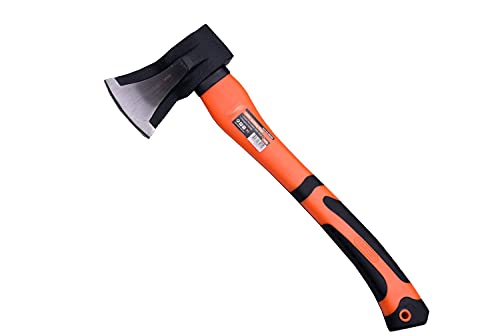
Overview: A combined 3 lb axe and sledge maul designed for faster chopping of kindling and smaller logs with a weighted forged steel head and included rubber sheath for storage safety.
- Head: Forged, sharp fine-grain steel blade with a weighted profile for quicker chopping.
- Length & Weight: 17″ length with a 3 lb head offers control and enough momentum for efficient splits.
- Accessories: Rubber sheath included for safe transport and storage.
- Use Case: Suited to users who need a compact maul for kindling and small rounds without the reach of longer axes.
INTERTOOL 36-Inch Wood Splitting Maul
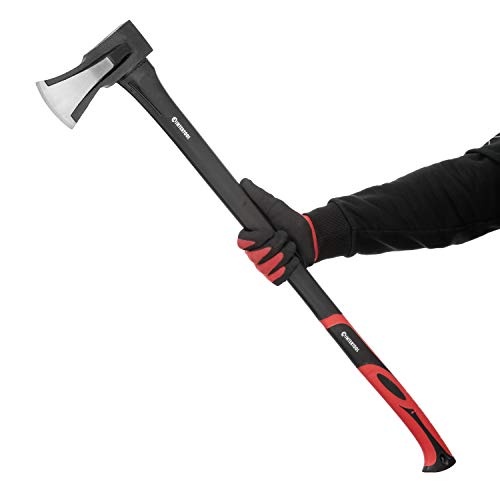
Overview: A heavy-duty 36″ maul with a 5-pound convex grind head for high-impact splitting and a fiberglass shock-absorbing handle for reduced vibration and improved comfort.
- Head: Heat-treated carbon steel, convex grind for single-strike splits and a flat poll for driving wedges.
- Handle: Fiberglass with textured rubber grip to minimize shock and ensure secure handling.
- Rust Resistance: Anti-corrosive coating on the head and a protective sheath included.
- Use Case: Recommended for heavier splitting tasks and users who need a durable, high-impact tool for large logs.
Purple Dragon 14.7″ Hand Forged Splitting Axe

Overview: A 14.7″ hand-forged splitting axe with a high-hardness carbon-manganese head and an S-curve hickory handle for balance, shock absorption, and secure grip.
- Blade: Hand forged, polished and hardened to a high HRC for edge retention and splitting efficiency.
- Handle: S-curve hickory for shock absorption and ergonomics; head secured with two ring wedges.
- Design: Cow foot-style head suited to splitting and delimbing tasks in bushcraft settings.
- Use Case: Well suited to outdoorsmen who prioritize traditional materials and a balanced, multi-use tool for camping and forest work.
Buying Guide: How To Choose The Best Splitting Hand Axe
Selecting a splitting axe depends on the type of wood you’ll split, where you’ll use the tool, and your physical comfort. Below are key considerations and comparison perspectives to help match a tool to your needs.
1. Head Weight And Geometry
Heavier Heads (4–6 lb): Provide more momentum for single-strike splitting of large logs. Best paired with longer handles for swing leverage.
Lighter Heads (2–3 lb): Offer greater control for kindling, small rounds, and camping use. Often used for repeated lighter swings with less fatigue.
Blade Geometry: Convex grinds or wedge-shaped heads are designed to force wood apart and reduce hang-ups. Thin, sharp edges cut better for felling; thicker, wedge profiles split better.
2. Handle Length, Material, And Shock Reduction
Length: Long handles (30–36″) increase swing force and are suited for large logs. Short handles (12–18″) give control and portability.
Materials: Hickory provides a traditional feel and shock absorption. Fiberglass handles absorb impact and resist weathering. One-piece forged steel handles maximize durability but can transmit more shock unless mitigated by grips.
Grip And Vibration: Shock-absorbing grips reduce hand and arm fatigue. Consider molded grips or fiberglass with a rubber sleeve for prolonged work.
3. Construction And Durability
Forged Steel Heads: Typically stronger and better at holding an edge than cast heads. Heat-treated carbon or alloy steels resist deformation.
Attachment Method: Wedges and epoxy or one-piece forge affect safety and longevity. Head retention is critical—look for secure wedge systems or integrated forging.
4. Use Case And Portability
Campers & Hikers: Prefer compact, lighter axes with multi-use heads for hammering and splitting small logs.
Homeowners & Firewood Prep: Usually favor longer, heavier mauls for efficiency on large rounds.
Bushcraft & Trail Work: Value hand-forged heads and wooden handles that offer carving and delimbing capabilities in addition to splitting.
5. Safety And Accessories
Sheaths: A protective sheath is recommended for safe storage and transport. Rubber or molded sheaths reduce accidental contact with the blade.
Flat Poll Use: Some mauls include a flat poll side for driving wedges or tent stakes—useful for multi-tasking outdoors.
6. Maintenance And Edge Care
Sharpening: Regular maintenance keeps splitting performance high—use files or stones appropriate to the steel hardness. Convex edges often benefit from a file and jig technique.
Rust Prevention: Wipe and oil heads after wet use; anti-corrosive coatings help but routine maintenance extends life.
Comparison Perspectives
- Power vs Control: Choose heavier heads and longer handles for power; choose shorter, lighter tools for precision and portability.
- Durability vs Weight: Forged heads and one-piece designs favor durability but may increase transmitted shock—counter with grip tech or fiberglass handles.
- Traditional vs Synthetic: Hickory handles provide natural shock absorption and replaceability; fiberglass handles resist weather and reduce breakage risk.
Refer to your intended tasks—large log splitting, kindling making, camping, or bushcraft—and match the axe head weight, handle length, and construction for the most efficient and comfortable tool selection.