Choosing the right sanding grit is essential when removing paint from wood without damaging the surface. This guide reviews top sanding products and explains how each grit family helps you strip paint, smooth surfaces, and prep wood for finishes. Whether you’re tackling old furniture, trim, or cabinetry, the right combination of sponges and papers can save time and improve results.
Summary of Selected Products
| Product | Brand | Grit Range | Format |
|---|---|---|---|
| 8 Pack Sanding Sponge (60/80/120/220) | MOWPOG | 60, 80, 120, 220 | Sanding blocks |
| 3M Sandpaper 60 Grit (4 Sheets) | 3M | 60 | Paper sheets |
| VRKET Wet & Dry Sandpaper Set (120–3000) | VRKET | 120–3000 | Sheets + sanding block |
| HSYMQ 24PCS Variety Pack (12 Grits) | HSYMQ | 120–3000 | Sheets |
| 3M Sandpaper 220 Grit (5 Sheets) | 3M | 220 | Paper sheets |
MOWPOG 60–Grit Sanding Sponge Set

The MOWPOG 8-pack includes four grits (60/80/120/220) in eight blocks, two blocks per grit. The sponges are washable, reusable, and designed for hand sanding. Their 4″ x 2.75″ x 0.65″ dimensions fit comfortably in one hand, making it ideal for detail work and tight spots where a power sander may not reach. The blocks use a high-elastic sponge and premium brown corundum, delivering flexible performance and durability without grain loss. This set is well-suited for removing paint in wood furniture and trimming edges without gouging the surface.
Key considerations: For heavy old paint, start with the 60–80 grit to lift coatings, then graduate to 120–220 for smoothing and final prep. The washable design helps extend life when sanding multiple pieces or projects. Use gentle, even pressure to avoid creating gouges, and wipe away dust frequently between grits to monitor progress.
3M Sandpaper, 60 Grit (4 Sheets)

These 60-grit sheets from 3M are a robust choice for rapid paint removal and initial shaping. Aluminum oxide grains provide aggressive material removal on wood, metal, and painted surfaces. They can be used by hand, on a sanding block, or cut to fit a power sander. While highly effective at stripping coatings, this grit is coarse enough to leave a rough surface if not followed by finer grits. Pair with 120–220 grits later in the workflow to achieve a smoother base for staining or sealing.
Best practice: Start with 60 grit to break through the old finish, then move up through 120 and 220 for a clean, paint-free surface. Always check for heat buildup on delicate wood and avoid excessive pressure that might round edges or burnish corners.
VRKET Wet & Dry Sandpaper Set (120–3000)
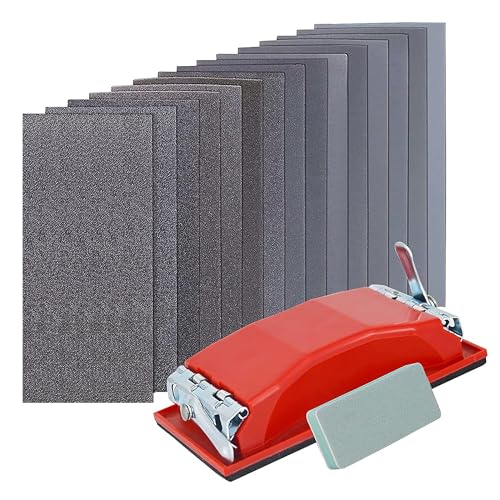
The VRKET set covers a full spectrum from 120 to 3000 grit, including 42 sheets and a sanding block. It is designed for step-by-step sanding, polishing, and finishing across wood, metal, and automotive projects. The 120–3000 range allows you to strip paint, smooth bare wood, and achieve mirror-like finishes as you approach the final stage. A notable feature is the included polishing options at the high end of the spectrum (3000 and white 7000 variants in some sets), which can save you from sourcing additional polishing tools.
Use approach: Use 120–220 for paint removal and rough shaping, 320–400 for blending and finishing, and up to 1500–3000 for final smoothing. The ergonomic grip reduces fatigue during long sanding sessions, and the set is versatile for corners and curves where a power sander may struggle.
HSYMQ 24PCS Variety Pack (12 Grits)

The HSYMQ set offers 12 different grits, ranging from 120 up to 3000, with two sheets per grit. The 9″ x 3.6″ size is easy to grip and can be cut to fit custom shapes. This wet/dry set features waterproof backing for durability in moisture-prone projects and reduces clogging. Its printed grit on the back helps you quickly identify the right sheet, enabling a smoother workflow from rough paint removal to final polishing.
Guidance: For older paint layers, begin with 120–150 grit, then progress through 180–240 to minimize surface scratches. The 3000 grit sheets are excellent for polishing high spots on furniture or creating a near-mirror finish on metal or plastic accents after final sealing.
3M Aluminum Oxide Sandpaper, 220 Grit

The 220-grit sheets from 3M offer a mid-range option for refining surfaces after initial paint removal. Aluminum oxide grains provide durability and consistent performance on wood and metal. This grit is ideal for final smoothing before staining, varnishing, or sealing. It sands paint remnants and helps remove rough patches left by coarser grits without aggressively cutting into the wood grain.
Usage tip: After using coarser grits for paint removal, switch to 120–220 to create a uniform base. Finish by moving to finer grits (320–600) if needed before applying primer or finish coats.
Buying Guide: Key Purchase Considerations
- Project type: For heavy coatings on soft woods, start coarse (60–80 grit) and finish with 120–220 grit. For furniture that requires a smooth finish, plan multiple passes through progressively finer grits.
- Surface type: Wet/dry sheets offer versatility for damp environments or finishing work; keep separate sets if you’re sanding in paint removal and finishing tasks to prevent cross-contamination of grits with different purposes.
- Attachment method: Sanding sponges and blocks provide control for detail work, corners, and edges. Paper sheets are cost-effective for large flat areas or power-sander use.
- Durability and foam quality: Look for high-elastic sponge or rigid blocks with durable abrasive grains to minimize grain loss and extend sheet life during multi-step work.
- Grit progression: Plan a sequence from rough to ultra-fine. Typical sequences are 60–80, 120, 220, then 320–600 for final prep; for polishing, move toward 1000–3000 depending on the finish desired.
- Dust management: Use dust extraction or work in a well-ventilated area to reduce allergy and irritation. Wipe surfaces between grits for accurate progress checks.
- Budget and availability: A balanced selection of sponges and papers can cover a wide range of projects. Consider sets that include multiple grits to avoid buying piecemeal.
The right combination of grit and format can dramatically improve results when removing paint from wood. Coarse grits speed up initial removal, while mid to high grits prepare the surface for stains, paints, or clear finishes. By selecting a multi-grit set, you gain flexibility to tackle various project sizes and edge work without spending extra time sourcing separate products.