Choosing the right grinder for knife making depends on project scale, workspace, and the finish you want. Below is a concise comparison of the most relevant grinders and jigs from the selected products to help you decide quickly.
| Product | Type | Key Feature |
|---|---|---|
| Greteefor 6″ Bench Grinder & 1″x30″ Belt Sander Combo | Bench Grinder + 1″x30″ Belt | 3600 RPM wheel, 3400 FPM belt, tool-free adjustments |
| KFMK 3-in-1 2″x36″ Belt Sander (KF8236) | 2″x36″ Belt Grinder + Disc + Grinder | 3.1A motor, adjustable belt to 90°, 2″x36″ belt |
| Bucktool Combo 2″x42″ Belt Sander BG2600 | 2″x42″ Belt Grinder + 6″ Grinder | 1/2HP induction motor, tilt 0–90°, high belt speed |
| SI FANG Mini Electric Belt-Sander (Mini Kit) | Mini 7-Speed Belt Sander / Small Bench Grinder | 7 speeds, multi-attachments, includes many belts |
| ONECHOI Belt Grinder Knife Jig | Bevel/Sharpening Jig | T6 6061 aluminum, -5°–25° adjustable angle, secure clamping |
Greteefor 6″ Bench Grinder & 1″x30″ Belt Sander Combo

This bench grinder and 1″x30″ belt sander combo is tailored for small-scale knife making and sharpening. The unit uses a 2.3A induction motor running at 3600 RPM for the wheel and 3400 FPM for the belt. It ships with multiple sanding belts (two 120-grit and one 100-grit) and a 60-grit grinding wheel. Tool-free adjustable eye shields, an adjustable worktable, quick-release belt tension/tracking, and integrated wrench storage enhance workflow. The steel base with mounting holes helps reduce vibration during heavy-duty use.
KFMK 3-in-1 2″x36″ Belt Sander (KF8236)

The KFMK combo offers a 2″x36″ belt sander with an integrated 7″ disc sander and 8″ grinder. A 3.1A (approx. 1/2HP) induction motor provides consistent power. The belt can tilt up to 90 degrees and includes quick belt release and tracking systems for faster setup. This model suits knife makers who need a mid-sized belt for beveling, shaping, and finishing while retaining disc and wheel options for auxiliary tasks.
Bucktool Combo 2″x42″ Belt Sander BG2600
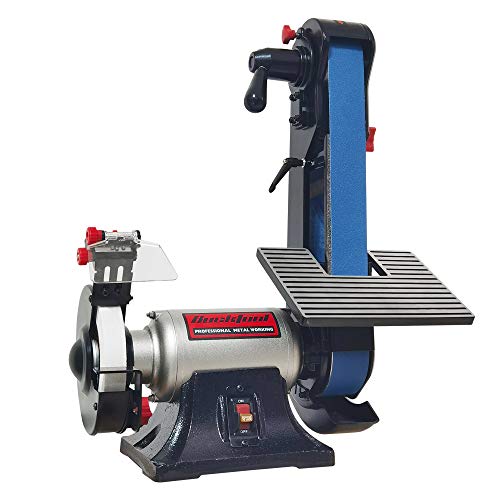
The Bucktool BG2600 features a 2″x42″ belt paired with a 6″ bench grinder and a large work table. With a 1/2HP induction motor and high belt speed (reported belt FPM ~4480), it meets CSA standards for heavy-duty operation. The belt tilts 0–90° and the housing swivels to handle longer workpieces. This unit is designed for more demanding knife making and stock removal while providing multi-angle capability for varied bevel profiles.
SI FANG Mini Electric Belt-Sander Knife-Sharpener Kit
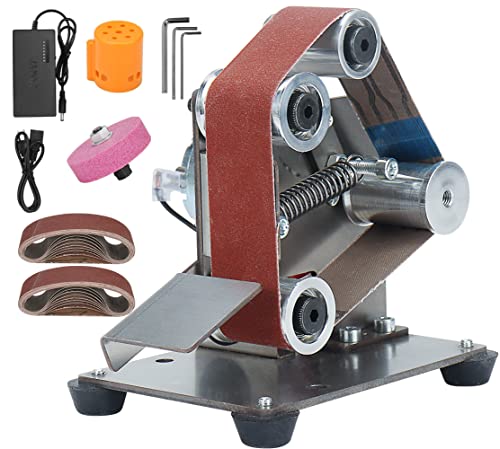
This compact kit is a mini belt sander with 7-speed control and multiple accessories. The package includes 20 sanding belts across several grits, a grinding wheel, polishing attachments, wrenches, and a dustproof cover. No-load speeds range from 4000–9000 RPM. The small footprint (about 4″ x 4.7″) makes it suitable for bench-top hobbyist knife making, fine finishing, and polishing of small blades or detailed work where larger grinders would be impractical.
ONECHOI Belt Grinder Knife Jig (Adjustable Angle)

The ONECHOI jig is a precision beveling and sharpening jig made from T6 6061 aluminum with an embedded hinge to reduce vibration. The stainless steel protractor plate offers an adjustable range of -5° to 25° with a fine-thread turnbuckle for accurate angle control. It includes 44 tapped mounting holes and additional clamp plates to secure blades up to 11 mm thick. This jig is intended for consistent bevel repeatability when used on belt grinders and sanders.
Buying Guide: Choosing A Grinder For Knife Making
When selecting a grinder for knife making, consider motor power, belt size, belt speed, adjustability, accessories, and workshop footprint. Below are focused criteria and multiple perspectives to help you evaluate options.
1. Belt Size And Purpose
- 1″x30″ or 1″x42″ Mini/Small Belts — Better for sharpening, light shaping, and hobbyists; compact and affordable.
- 2″x36″ or 2″x42″ Mid-Size Belts — Preferred for serious knife making and stock removal; balance of contact area and precision.
- Large Industrial Belts — For production-scale forging and heavy stock removal, larger motors and frames are required.
2. Motor Power And Speed
- Amps/HP — Higher amps/HP handle heavier loads and stay cooler during long sessions. 1/2HP or 3A+ motors are common for mid-size grinders.
- Belt Speed (FPM) — Faster belts remove material quicker; slower speeds or variable speed are helpful for heat control and finishing.
3. Adjustable Angle And Tracking
- Tilting platen and adjustable tracking allow precise beveling and consistent contact.
- Quick belt release and tracking controls save time when switching belts or realigning for a clean bevel.
4. Jig Compatibility And Accessories
- Beveling jigs (like ONECHOI) provide repeatability across blades and benefit from a stable, low-vibration machine.
- Look for included work rests, guards, and multiple abrasive grits for immediate setup.
5. Build Quality, Stability, And Safety
- Steel bases, mounting holes, and low-vibration designs improve accuracy and safety.
- Eye shields, guards, and tool-free adjustments reduce setup time and protect the operator.
6. Workspace And Noise Considerations
- Mini grinders fit small benches and are quieter; larger 2″ belt grinders require more space and may produce more noise and dust.
- Consider dust collection or local ventilation for prolonged grinding sessions.
7. Types Of Tasks And Recommended Matches
- Sharpening & Polishing — Mini belt sanders and bench grinders with fine grits and polishing wheels.
- Beveling & Profiling — 2″x36″ or 2″x42″ belt grinders with jigs for repeatable angles.
- Initial Stock Removal — Higher-power 1/2HP+ motors and wider belts to remove material faster.
8. Budget And Upgrade Path
- Hobbyists may start with mini kits, then upgrade to 2″x36″ belt grinders and a quality jig for consistent bevels.
- Choose machines with modular accessories and upgradable platens for long-term value.