Keep Your Printer Running Smoothly: Choosing the right lubricant for lead screws, linear rails, gears, and bearings helps reduce noise, lower wear, and improve print consistency. Below is a quick comparison table of the selected products to help you scan features at a glance.
| Product | Type / Key Benefits | Best For |
|---|---|---|
| Creality Lubricant Grease (Pack of 2) | Noise reduction, non-toxic paste | Ender Series Parts & General Use |
| Creality Official Lubricant Grease (2 Pack) | Long-lasting paste, rail & screw focus | Rails, Lead Screws, Frequent Use |
| KEZE Silicone Grease With PTFE | NSF H1 food-safe silicone + PTFE | Rubber Seals, Plastic-to-Metal Interfaces |
| Horex 3D Printer Lithium Grease 50g | Lithium-based, wide compatibility | Lead Screws, Gears, High-Duty Motion Parts |
| Ecoglide 3D Printer Lubricating Oil | Lightweight, biodegradable oil | Metal Linear Rails, Environmental Safety |
Creality Lubricant Grease For 3D Printer Parts (Pack Of 2)

This Creality paste is formulated to reduce noise and minimize friction-related wear on gears, rails, and lead screws. Its neutral, non-toxic, and non-corrosive composition is suitable for common printer materials and helps protect against dust and rust. The product emphasizes improved motion precision and extended component life. Suitable for Ender lines and similar desktop machines where a paste-style lubricant helps stay in place during operation.
Creality Official Lubricant Grease, 3D Printer Gear Grease (2 Pack)
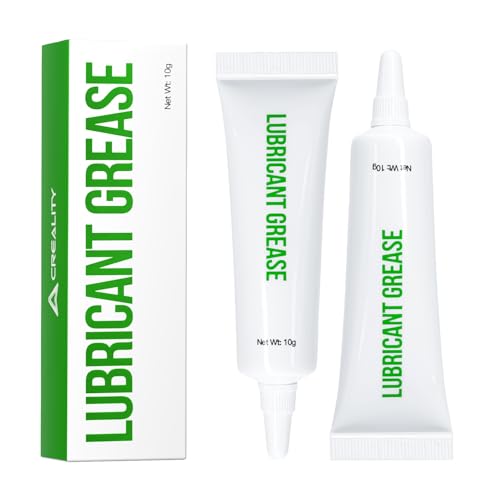
Creality’s official grease is a paste designed for long-lasting adhesion to rails, screws, and sliding parts. It targets friction noise reduction and print accuracy by smoothing motion. The formula resists drying or flowing away, so reapplication frequency is reduced. This makes it a practical choice for regular maintenance of rails and lead screws in home or studio printers.
KEZE 92003 Silicone Grease With PTFE, Food-Safe

KEZE provides an NSF H1-rated silicone grease with PTFE, offering food-safe credentials and a broad temperature range from -40° to 428°F. The silicone + PTFE combo reduces friction between plastic, metal, and rubber components and prevents squeaks or binding. This product is appropriate where rubber seals, O-rings, or plastic-to-plastic contacts are present and when a non-reactive, water-resistant grease is required.
Horex 3D Printer Lithium Grease 50g For Lead Screws & Rails
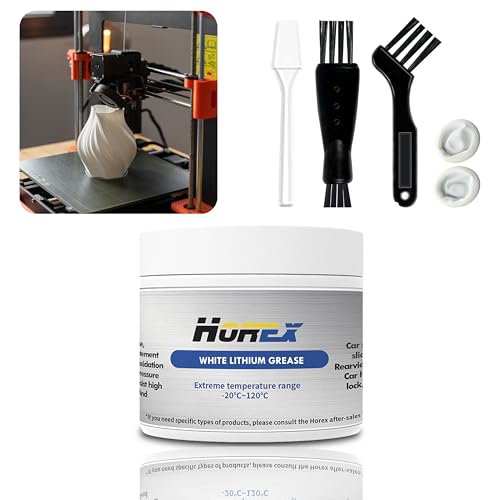
Horex offers a white lithium grease formulated for lead screws, axes, and gears. It is designed to remain stable (not drip or separate) while providing noise reduction and anti-wear protection. The listed temperature tolerance covers common printing environments and the product notes compatibility with POM nuts and other typical 3D printer materials. Its larger 50g size suits users who perform frequent maintenance or have multiple machines.
Ecoglide 3D Printer Lubricating Oil — Biodegradable
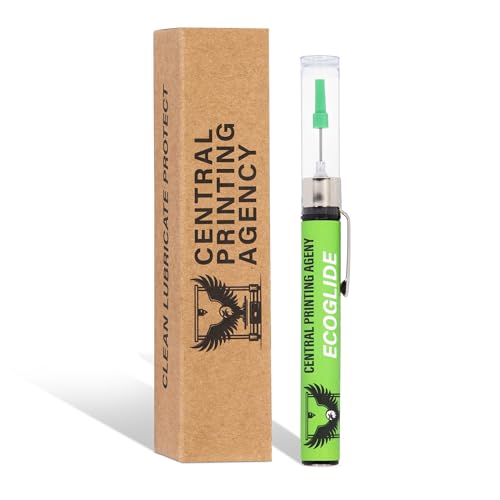
Ecoglide is a lightweight, eco-friendly oil intended for metal linear rails, rods, and bearings. It cleans, lubricates, and protects against corrosion and residue buildup from printing fumes. The product meets EPA guidelines for environmentally acceptable lubricants, making it a fitting choice where runoff or environmental impact is a concern. As an oil rather than paste, it penetrates tight interfaces but may require more frequent reapplication on exposed surfaces.
Buying Guide: How To Choose The Right Grease For Your 3D Printer
Selecting the correct lubricant depends on component type, materials, operating conditions, and maintenance preference. Consider the following factors:
- Component Type: Use paste/lithium greases for lead screws, gears, and exposed bearings where adhesion is important. Use lightweight oils for linear rails and tight sliding contacts that benefit from penetration.
- Material Compatibility: Verify grease compatibility with POM, PTFE, plastics, rubbers, or metal surfaces. Silicone-based greases are generally safe with rubber and plastics; lithium greases are commonly compatible with metal and POM nuts.
- Temperature Range: Check rated operating temperatures. Higher print speeds or enclosed heated chambers may push component temperatures; choose a lubricant with an appropriate stability range.
- Staying Power vs. Penetration: Paste greases adhere and last longer; oils penetrate but can migrate and require more frequent application. Choose based on whether you prioritize low maintenance or deep lubrication.
- Noise Reduction: Many greases advertise noise reduction; improved lubrication and lower friction will reduce squeaks and stepper motor noise. For gearboxes and Z-axis screws, thicker greases often help most.
- Corrosion & Environmental Concerns: If your printer sits near open windows or humid areas, pick a lubricant with corrosion resistance. For eco-conscious setups, biodegradable oils meet environmental criteria.
- Application Size & Packaging: Small tubes are handy for occasional touch-ups; larger tubes are economical for workshops or multiple machines. Consider applicator tips or ease of dispensing for precise application.
- Safety & Cleanliness: Food-safe (NSF H1) or non-toxic formulations are preferable if your workspace has exposure to food or drinking water lines. Avoid solvents or greases that contain harmful additives near prints or electronics.
- Maintenance Frequency: Establish a schedule—light oil every few weeks for heavily used rails, paste grease every few months or after cleaning lead screws. Keep notes on performance to refine intervals.
Comparison Perspectives
- Performance Focus: Lithium and synthetic pastes (Creality, Horex, FYSETC-style greases) provide durable lubrication on screws and gears.
- Material-Specific Needs: Silicone + PTFE (KEZE) is best for rubber seals and plastic interfaces where chemical neutrality is critical.
- Environmental/Health Considerations: Biodegradable oils (Ecoglide) minimize ecological impact and comply with environmental guidelines.
- Maintenance Effort: Paste greases require less frequent re-application; oils need more vigilance but offer superior rail penetration.
Use the product selections above to match your printer’s components and maintenance style. Regular cleaning and appropriate lubrication will help maintain dimensional accuracy, reduce noise, and extend part life.