Quick Intro: Roofing requires gloves that balance abrasion resistance, grip, dexterity, and breathability. The list below compares durable coated gloves and heavy-duty options suited for shingle work, handling tools, and working on ladders. The summary table highlights key features for a fast comparison.
| Product | Coating | Key Strength |
|---|---|---|
| Kebada W1 Work Gloves (12 Pairs) | PU | Lightweight, touchscreen, value pack |
| COOLJOB Nitrile Dipped (10 Pairs) | Nitrile | Oil resistance, durable in damp/oily conditions |
| LOCCEF MicroFoam Nitrile Coated (12 Pairs) | Micro-Foam Nitrile | Excellent grip with light oil compatibility |
| SHOWA Atlas 300 Latex Palm (12 Pair) | Natural Latex | Strong wet/dry grip, ergonomic design |
| Cestus HandMax Heavy Duty (Fingerless) | Heavy-duty shell (fingerless style) | High abrasion resistance for tough jobs |
Kebada W1 Work Gloves For Men And Women

These Kebada gloves feature a PU coating across the palm and fingers for increased grip on shingles, tools, and fasteners. The gloves are described as lightweight and breathable with a thin profile that enhances dexterity, useful for handling nails and sealant tubes. Included touchscreen-compatible fingers allow phone use without removal. The pack is a value bulk set, which is practical for crews or replacing worn pairs frequently. PU performs well in dry and slightly damp scenarios but has limits with heavy oil exposure.
COOLJOB Nitrile Dipped Rubber Coated Safety Work Gloves

COOLJOB gloves use a nitrile palm coating on a breathable microfiber polyester shell. Nitrile provides superior resistance to abrasion, oils, and greases, making these gloves suitable where roofing materials, adhesives, or lubricants may be present. The seamless knit construction improves comfort and prevents debris intrusion at the cuff. Their combination of durability and breathability suits extended outdoor work in varied conditions.
LOCCEF MicroFoam Nitrile Coated Work Gloves (12 Pairs)
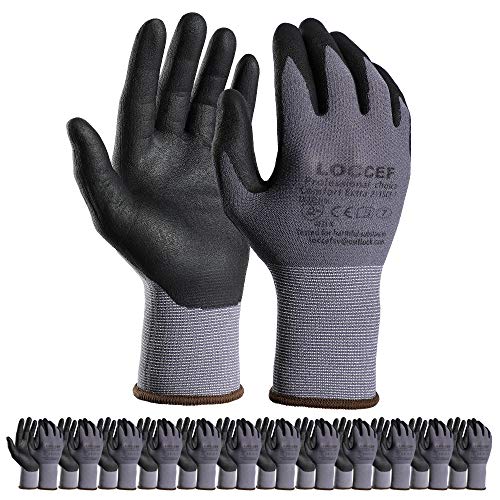
LOCCEF’s micro-foam nitrile coating gives excellent grip and abrasion resistance while remaining compatible with light oils. The ultrathin, seamless nylon liner maximizes fingertip sensitivity for precise tasks like fastening and caulking. Knit wrist cuffs help keep debris out. These gloves are positioned as a balance of tackiness and dexterity, ideal for detailed roofing tasks where feel matters.
SHOWA Atlas 300 Natural Latex Palm Coated Work Glove

SHOWA Atlas 300 gloves feature a natural latex palm coating for reliable wet and dry grip. The ergonomic 10-gauge design reduces hand fatigue, and the absence of irritating seams improves comfort during long roofing shifts. Natural latex grips very well on textured surfaces but can be less chemical-resistant than nitrile. These gloves work well for shingle handling, ladder work, and tasks where secure traction is essential.
Cestus HandMax Series Heavy Duty Work Gloves

Cestus HandMax gloves are built for heavy-duty abrasion resistance. The design targets construction, roofing, and framing work where rough materials and high wear are common. These gloves emphasize rugged protection and a secure fit for demanding jobs. Note: the listed fingerless style increases ventilation and fingertip access but reduces full-finger protection; choose based on the balance you need between protection and tactile freedom.
Buying Guide: Choosing Roofing Gloves
Key factors to weigh when selecting roofing gloves include material/coating, cut and abrasion resistance, dexterity, grip in wet conditions, fit, and breathability.
- Coating Type: Nitrile offers the best oil and chemical resistance and strong abrasion resistance. PU provides good dry grip and dexterity. Latex has excellent wet/dry traction but lower chemical resistance.
- Abrasion & Cut Resistance: Roofing exposes hands to rough shingles and fasteners. Look for gloves rated for abrasion resistance; consider higher gauge or heavy-duty shells for frequent tear risk.
- Grip Performance: Micro-foam nitrile and nitrile dips are known for balanced grip in dry and slightly oily conditions. Latex excels in wet environments. Evaluate the common worksite conditions (dry, wet, tar, adhesives).
- Dexterity & Tactile Feel: Thin, seamless liners increase dexterity for nailing, screwing, and sealant application. Bulkier heavy-duty gloves protect more but reduce fine motor control.
- Breathability & Comfort: Breathable shells (nylon, polyester) and knit cuffs reduce sweat and keep hands comfortable during long roofing days.
- Fit & Sizing: Snug fit across fingers improves grip and reduces slippage on ladders. Ensure appropriate sizing and consider elastic cuffs to keep debris out.
- Special Features: Touchscreen fingertips can be convenient, but confirm they don’t compromise grip. Fingerless or ventilated styles add airflow at the cost of fingertip protection.
- Task Matching: For general shingle handling and ladder work choose a nitrile or latex coated glove with strong grip. For precision tasks like fastening or sealing, favor thinner PU or micro-foam nitrile gloves.
- Durability vs. Replaceability: Bulk value packs can reduce cost per pair when gloves wear quickly, while heavy-duty single pairs extend service life for harsh conditions.
Compare from multiple perspectives: coating chemistry (nitrile vs. PU vs. latex), intended tasks (precision vs. heavy abrasion), environmental exposure (wet/oily/tar), and crew size (value packs vs. premium single pairs). Use these considerations to match a glove’s strengths with the specific demands of roofing work.