Quick Overview: These abrasive cleaning sticks and rubber erasers are designed to remove sawdust, pitch, glue, and other residue from sanding belts, discs, and sheets to restore abrasive performance and extend tool life. Below is a summary table of the most relevant picks from the list.
| Product | Brand | Key Feature |
|---|---|---|
| 1-1/2″ x 1-1/2″ x 8″ Abrasive Cleaning Eraser Stick | abrasticle | Unclogs belts/discs; extends life 3–4× |
| WEN WA0002 8-Inch Sandpaper Cleaning Stick | WEN | Removes wood dust, glue, and residue |
| POWERTEC 71002 Abrasive Cleaning Stick | POWERTEC | Natural rubber; large 8-1/2″ stick for durability |
| POWERTEC 71002-P2 2PK Abrasive Cleaning Sticks | POWERTEC | Two sticks; same natural rubber construction |
| Abrasive Cleaning Stick Small (Peachtree) | Peachtree Woodworking Supply | Small natural rubber block for belts & discs |
1-1/2″ x 1-1/2″ x 8″ Abrasive Cleaning Eraser Stick

This abrasticle cleaning stick measures 1-1/2″ x 1-1/2″ x 8″ and is made to unclog sanding belts and discs without damaging the abrasive surface. It is intended to remove packed sawdust, resin, and other debris so belts and discs can be returned to service quickly.
- Main Use: Unclogging sandpaper on stationary and portable sanders.
- Claims: Extends the life of belts and discs up to 3–4 times by removing buildup.
- What To Expect: Quick restoration of abrasive bite; usable on a variety of grit levels.
WEN WA0002 8-Inch Sandpaper Cleaning Stick

The WEN WA0002 restores used sandpaper and sanding discs by collecting and removing wood dust, glue, and residue. Its recommended application is pressing the stick against moving belts or heads to pick up clogged debris and return the abrasive surface to near-new performance.
- Main Use: Cleaning running sanding belts and disc heads safely.
- Material/Action: Removes compacted particles to improve cutting efficiency.
- Suitable For: Belt sanders, disc sanders, and sanding drums.
POWERTEC 71002 Abrasive Cleaning Stick 8-1/2″
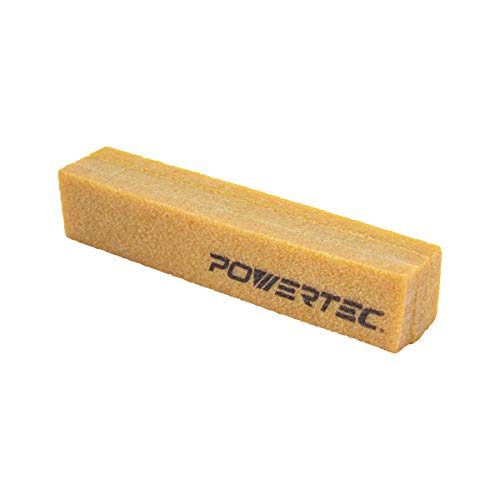
POWERTEC’s 8-1/2″ cleaning stick is constructed of professional-grade all-natural rubber. The larger size and girth make it suitable for heavier-duty cleaning tasks and frequent shop use, removing sawdust, pitch, gum, and glue without harming the grit.
- Main Use: Heavy-duty belt and disc cleaning for shop use.
- Material: Natural rubber designed for durability and extended service life.
- Performance: Intended to extend lifespan of abrasives while minimizing abrasive wear.
POWERTEC 71002-P2 Abrasive Cleaning Stick 2PK

This two-pack offers the same 8-1/2″ x 1-1/2″ x 1-1/2″ POWERTEC sticks made from natural rubber. The pack is aimed at users who need spare sticks for continuous shop workflows or for sharing between workstations.
- Main Use: Backup or multiple-station cleaning capability.
- Benefits: Same heavy-duty material for frequent cleaning jobs.
- Consideration: Two sticks allow rotation—one in use while one is stored clean.
Abrasive Cleaning Stick Sandpaper Cleaner (Peachtree)

Peachtree’s small natural rubber block functions like a large rubber eraser to rejuvenate sanding belts and discs. Designed for quick removal of debris, it is suitable for both handheld and stationary sanders and can restore smaller abrasive pieces to usable condition.
- Main Use: Quick cleaning for belts, discs and small abrasive areas.
- Material: Natural rubber formulation intended to remove residue without damaging grit.
- Practical Note: Compact size suits occasional or portable tool use.
Buying Guide: How To Choose A Woodworking Eraser For Sanding
Type And Material: Most woodworking sanding erasers are made from natural rubber. Natural rubber sticks are flexible and remove debris without abrading or tearing the abrasive surface. For heavy shop use choose larger, professional-grade rubber sticks.
Size & Coverage: Longer and thicker sticks (8–8.5 inches) cover more area and last longer. Smaller blocks are easier to handle for detail work or portable sanders.
Intended Use: Match the stick to your application: continuous belt or disc cleaning favors larger sticks; occasional touch-ups can use smaller blocks.
Compatibility With Grits: Cleaning sticks are generally safe across a range of grits, but use lighter pressure on fine grits to avoid pulling abrasive particles out of the backing.
Durability & Replacement: Natural rubber wears down with use. Consider multi-packs or larger sticks if you clean frequently. Rotate sticks to maintain a clean contact surface.
Safe Use Practices: For powered sanders, press the eraser gently against the running belt or disc—do not jam or overpressure. Use appropriate personal protective equipment (eye and dust protection) when cleaning running abrasives.
Performance Indicators: A good cleaning stick will quickly restore abrasive “bite,” reduce clogging, and noticeably decrease sanding time required to achieve the same cut.
Cost Effectiveness: Rejuvenating sandpaper with a cleaning stick is often more economical and less wasteful than replacing belts and discs frequently. Consider lifespan claims (e.g., extends life 3–4×) as a factor when evaluating value.
Comparison Perspectives: Evaluate sticks by material grade (professional vs. basic), size (long/large vs. small), and pack quantity (single vs. multi-pack). Professional shops benefit from large, durable sticks and multi-packs; hobbyists may prefer a single compact block.
Final Tip: Store cleaning sticks in a clean bag or container to avoid transferring removed debris back onto new abrasives.