Finding the right epoxy for plastic repairs can be challenging. This guide highlights five highly capable epoxy products designed to bond plastic surfaces—from ABS to PVC, thermoplastics, and coated metals—while offering strength, fast cure times, and gap-filling support. Each entry contains practical use cases, durability notes, and application tips to help you select the best epoxy for common plastic repair scenarios.
| Product | Brand | Type | Typical Set Time | Notable Benefit |
|---|---|---|---|---|
| Gorilla 2 Part Epoxy, Clear Epoxy, 0.85 Ounce Syringe (Pack of 2) | GORILLA | Two-part epoxy (clear) | 5 minutes | Excellent gap filling; quick repositioning |
| J-B Weld 50139 Plastic Bonder Body Panel Adhesive | J-B Weld | Two-part polyurethane adhesive | 15 minutes | Strong bond on plastics and composites |
| Gorilla 2 Part Epoxy, Clear Epoxy, 0.85 Ounce Syringe | GORILLA | Two-part epoxy (clear) | 5 minutes | Clear dry for discreet repairs |
| J-B Weld 50112 ClearWeld Epoxy Syringe | J-B Weld | Two-part epoxy (clear) | 5 minutes | Clear cure; 1:1 mix; versatile on many surfaces |
| J-B Weld 50133 Plastic Bonder Structural Adhesive | J-B Weld | Two-part polyurethane adhesive | 15 minutes | Tan color; strong bond with plastics |
Gorilla 2 Part Epoxy, Clear Epoxy (Pack of 2)
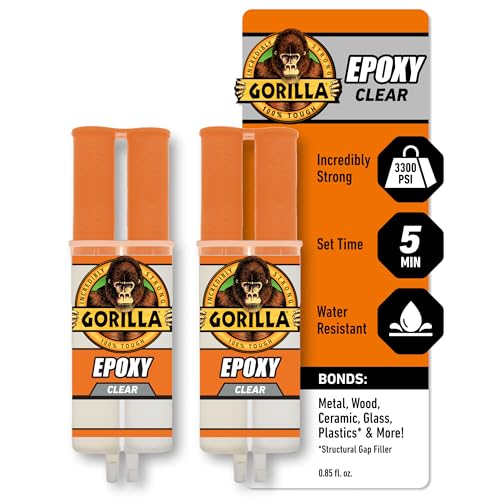
This Gorilla Tough epoxy resin dries clear for a clean finish and delivers strong bonding in a 5-minute set time. It doubles as a gap filler, making it suitable for bonding uneven or vertical surfaces and filling voids. The dual-syringe format helps ensure accurate 1:1 mixing for consistent results across plastic substrates and common household repairs.
J-B Weld 50139 Plastic Bonder Body Panel Adhesive (Black)

Plasticbonder is a quick-set two-part urethane adhesive designed for a wide range of plastics, including thermoplastics and coated metals. With a 1:1 mix and a 15-minute set time, it provides a strong, lasting bond that sands after curing. The tan/black variants help color-match and blend repairs on automotive panels, bumpers, and DIY plastic projects.
Gorilla 2 Part Epoxy, Clear Epoxy (Pack of 1)

This single-pack Gorilla epoxy mirrors the pack of two in clarity and strength, offering a 5-minute setting window and gap-filling ability. It is well-suited for precise, short-term fixes where a clean, transparent finish is desired on plastic components inside and outside the home.
J-B Weld 50112 ClearWeld Epoxy Syringe

ClearWeld is a clear, quick-setting two-part epoxy suitable for metals, tile, most plastics, ceramic, glass, and wood. The syringe facilitates an easy 1:1 mix, and a resealable cap reduces drying and leakage for multiple uses. It sets in 5 minutes and cures in about one hour, with a clear cure color and a tensile strength around 3900 psi.
J-B Weld 50133 Plastic Bonder Structural Adhesive
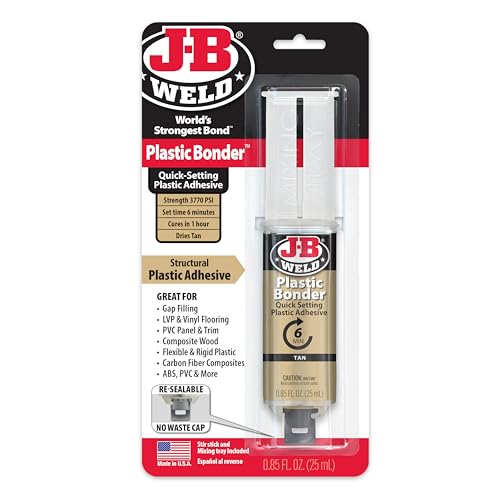
Tan-colored PlasticBonder is a fast-setting, two-part urethane adhesive and gap filler designed for many plastic surfaces. Providing a 1:1 mix and a 15-minute set time with a full cure around 30 hours, it yields a robust bond suitable for DIY repairs, bumper work, and more. Its strength rating is around 3770 psi, making it a durable option for automotive plastics and household plastics alike.
J-B Weld 8237 PlasticWeld Epoxy Putty

PlasticWeld is a hand-mixable two-part epoxy putty ideal for repairs and rebuilding plastic surfaces. It works on ABS and PVC plastics and can be molded, shaped, sanded, drilled, and cut after curing. It sets in about 25 minutes and cures in around 3 hours, with a durable off-white color and a 600 psi lap shear strength, making it useful for patching and contouring plastic components.
Buying Guide
Key purchase considerations when buying epoxy for plastic repairs include bond type, cure and set times, substrate compatibility, finish, and applicator format. Quick-set epoxies are ideal for on-the-spot fixes, but long-term durability often depends on the material’s compatibility with plastics such as ABS, polycarbonate, PET, and PVC. Some epoxy systems are polyurethane-based, offering strong bonds and gap-filling capabilities, while others are two-part epoxies designed for precise 1:1 mixing and clear cures. In choosing between syringes and dual-cartridge systems, consider ease of mixing, waste, and the need for multiple uses. For visible repairs, clear epoxies reduce the appearance of the bond line. For automotive or outdoor use, select products with UV resistance and weather tolerance. Assess whether a putty or a liquid epoxy better suits the repair area, shape requirements, and surface texture. Finally, verify safety data and NSF/UL ratings if the repair involves potable water or food-contact surfaces.
Special considerations by scenario:
- Automotive plastics: prefer epoxy systems with impact resistance and good adhesion to coated surfaces; look for quick cures to minimize downtime.
- Water exposure: NSF-certified putties and water-resistant epoxies offer reliability for plumbing applications.
- Complex shapes or vertical bonding: gap-filling epoxies and putties help maintain positions during curing.
- Clear visibility: choose clear epoxies to avoid noticeable bond lines on decorative or display pieces.
- Tooling and cleanup: syringes reduce waste and enable neat, controlled application; ensure resealable packaging if multiple uses are planned.