For metalworkers and DIY enthusiasts, electric metal shears offer faster, cleaner cuts compared to manual tools. This guide highlights top options, comparing power, versatility, and durability to help you choose the right tool for sheet metal, aluminum, or stainless steel projects. The selections below focus on reliability, ease of use, and features that improve accuracy and safety on real-world jobs.
| Product | Brand | Main Benefit | Link |
|---|---|---|---|
| WEN Metal Shear | WEN | Swivel head, variable speed, light and fatigue-friendly | Amazon |
| DEWALT DW890 | DEWALT | 360° swivel head, 18-Gauge capability, strong motor | Amazon |
| SHALL Electric Metal Cutter | SHALL | Double-cut design, 360° swivel, 0-2500 SPM | Amazon |
| Eastwood Electric Throatless Shear | Eastwood | Cuts multiple metals, high-performance motor | Amazon |
| Genesis Electric Cutting Shear | Genesis | Swivel-head, quick-cut capability for metal roofing and flashing | Amazon |
WEN Metal Shear With Swivel Head
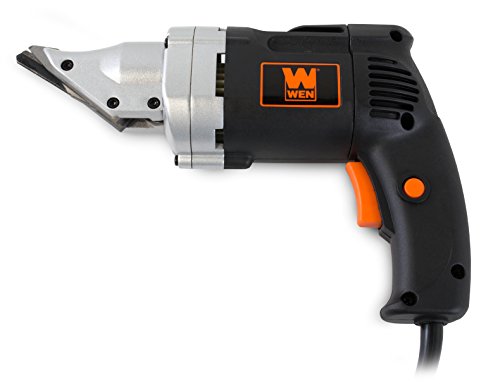
The WEN 3650 metal shear combines a compact, lightweight form with a practical swivel head and a variable speed range that suits a variety of metals. Its pressure-sensitive trigger enables precise control from 0 to 2500 strokes per minute, making it suitable for delicate trimming as well as thicker cuts. It can attack up to 20-gauge stainless steel and 18-gauge sheet metal, which covers many common HVAC and metal fabrication tasks. The tool’s light design helps reduce operator fatigue over long sessions, increasing efficiency on overhead or tight-space projects.
DEWALT DW890 Metal Shear

The DEWALT DW890 offers a 5-amp motor and a 360-degree swivel head for versatile cutting angles. It’s designed to handle up to 18-gauge sheet metal efficiently, with a blade and gearing setup that maintains visibility and control as you cut. The head’s 360-degree swivel allows for comfortable operation in hard-to-reach areas, while the positive feed and continuous curling of cut metal help keep the line of sight clear. The tool emphasizes durability and consistent performance in professional settings.
SHALL Electric Metal Cutting Shear

The SHALL shear highlights a double-cut blade design to produce a curled 1/4-inch metal strip, minimizing waste and airborne dust. It operates at 0-2500 SPM with a 360-degree swivel head, enabling precise curves and shapes across straight lines, large curves, circles, and irregular forms. The tool allows for variable speed control, so users can tailor cutting speed to material type and thickness for smooth, clean results without burrs. It’s positioned as a flexible option for complex metalwork tasks.
Eastwood Electric Throatless Shear

Eastwood’s throatless shear is engineered to cut through 18-gauge steel, 22-gauge stainless, and 16-gauge aluminum, supported by a high-performance motor and tungsten carbide blade for extended life. The motor is fan-cooled with ball bearings and replaceable brushes, underscoring durability in demanding shop environments. This model emphasizes robust cutting geometry and endurance for pro-grade metalworking, offering reliable performance across multiple materials and project scales.
Genesis Electric Metal Cutting Shear

The Genesis GES40 brings a 4-amp motor and quick-cut capability geared toward sheet metals used in roofing and flashing. The 360-degree swiveling head provides cutting control and convenience for various angles, ensuring clean lines in constrained spaces. This unit is positioned as a reliable mid-range option for users who need consistent performance in metal construction and renovation projects.
Buying Guide
- Material compatibility: Check gauge and thickness support. Some models cut up to 18- or 20-gauge stainless steel, while others also handle aluminum and thicker steels. Choose based on your typical work.
- Power and motor type: Corded models (like 4-amp to 5-amp) deliver steady performance for continuous use. Cordless variants offer portability but may require battery management and may have shorter runtime per charge.
- Swivel head utility: A 360-degree swivel head enhances cutting angles, access in tight spaces, and curves. This is especially helpful for HVAC ducting, roofing, and decorative metalwork.
- Speed control: Variable speed (0-2500 SPM) lets you tailor cutting cadence to material type, reducing burrs and heat buildup. Consider models with smooth trigger control for precision.
- Cut quality vs. waste: Some designs incorporate double-cut blades or throatless configurations to minimize waste and burrs, improving edge finish on finished pieces.
- Durability and maintenance: Look for ball bearings, brush design, and replaceable blades or brushes. Durable housings and protective features (like IP ratings) extend tool life in dusty shop environments.
- Safety features: Lock-off switches, blade guards, and stable handles help prevent accidental starts and operator fatigue during prolonged use.
- Battery ecosystem (for cordless): If choosing a cordless model, consider compatibility with existing battery systems to maximize value and reduce charging downtime.
- Price vs. performance: Higher-priced tools often offer longer blade life, better torque, and more durable gearing. Balance cost with how often you cut metal and the materials you encounter.
Across these options, the best fit depends on how you balance portability, material range, and project scale. For occasional shop tasks and overhead cuts, a lightweight corded model with a swivel head provides reliable versatility. For full-time fabrication or on-site work, a robust, high-torque unit with durable gearing and a long blade life offers the most value. Always review blade compatibility and replacement costs, as these influence long-term maintenance and cutting efficiency.