Finding The Right Dust Extractor for woodworking keeps your shop cleaner and protects your tools and lungs. Below is a concise comparison table of selected dust extractors and separators chosen for woodworking tasks, followed by detailed product sections and a buying guide.
| Product | Type | Key Feature |
|---|---|---|
| WEN DC3401 | Portable Dust Collector | 5.7-Amp, 660 CFM, 12-Gallon Bag |
| DEWALT DXVCS002 | Cyclone Dust Separator | 6-Gallon Poly Tank, 99.5% Efficiency |
| Dustopper PRO | Low-Profile Separator | Fits 5-Gallon Buckets, 99.9% Separation |
| WEN DC1300 | High-Capacity Dust Collector | 1,300 CFM, Dual Inlets, 50-Gallon Bag |
| DEWALT DXVCS003 | Cyclone Dust Separator | 10-Gallon Stainless Tank, 99.5% Efficiency |
WEN Woodworking Dust Collector DC3401
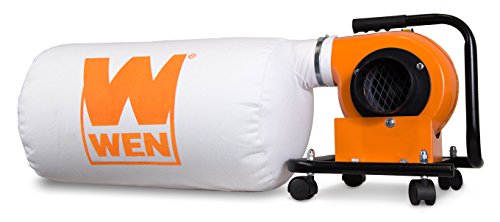
Brand: WEN. This portable shop dust collector uses a 5.7-amp brushed motor and a 6-inch impeller to move up to 660 cubic feet per minute (CFM). It includes a 4-inch dust port for connecting common woodworking tools and a 12-gallon bag for dust collection. The compact design features an onboard carrying handle and a mobile base for easy repositioning.
This unit is suited for small to medium shop setups that need continuous air flow for sanders, planers, or small stationary tools. The 4-inch port supports common hoses; the 12-gallon bag reduces dust dumping frequency compared with smaller bucket separators.
DEWALT Dust Separator DXVCS002

Brand: DEWALT. The DXVCS002 is a cyclone-style dust separator with a 6-gallon poly tank and claims 99.5% efficiency at removing chips and debris before they reach your vacuum. It accepts 1-7/8″ or 2-1/2″ ports and rolls on a four-caster base for stability and mobility. The design is intended to reduce filter clogging and extend vacuum life.
This separator is useful for workshops that rely on a separate wet/dry vacuum or shop vac. It handles various materials including wood chips and fine dust, and its compatibility with common hose sizes makes it flexible for different vacuums.
The Dustopper PRO Low-Profile Separator

Brand: Dustopper. The Dustopper PRO is a patented, low-profile cyclone separator designed to sit on standard 5-gallon buckets. It claims >99.9% collection of typical shop dust before the dust reaches the vacuum filter. Includes high-flow 90-degree sweep elbows and connection hose. Best performance is with vacuums around 5.0 HP or higher.
This separator is ideal for hobbyists and small shops that want a compact separator without moving to a larger tank. The bucket-based approach keeps upfront cost and footprint low while protecting vacuum filters and reducing maintenance.
WEN DC1300 High-Capacity Dust Collector

Brand: WEN. The DC1300 delivers up to 1,300 CFM using a 14-amp motor, supports dual 4-inch inlets to attach up to two tools simultaneously, and uses a vertical 50-gallon collection bag. The system is mounted on a mobile base for workshop mobility and is designed for heavier dust loads from larger stationary machines.
This collector is targeted at larger hobby or small professional shops where multiple tools may need dust extraction at once. The high CFM and large bag reduce collection frequency and make it suitable for planers, large table saws, and jointers.
DEWALT Dust Separator DXVCS003

Brand: DEWALT. The DXVCS003 upgrades to a 10-gallon stainless steel tank and uses professional cyclone technology to separate and capture up to 99.5% of debris. It supports 1-7/8″ or 2-1/2″ ports for flexible hose fittings and can mount directly to compatible vacuums. The design aims to reduce frequency of filter cleaning and extend vacuum lifespan.
This model suits users who prefer a durable tank and greater capacity than 5–6 gallon separators, while maintaining portability. Stainless construction makes it more robust for repeated workshop use and handling heavier debris.
Buying Guide: Choosing The Right Dust Extractor For Woodworking
Selecting the best dust extractor or separator depends on your workshop size, tools, dust emission, and budget. The following factors help compare options objectively.
Types Of Systems
- Standalone Dust Collectors: High CFM, large bags or bins; best for stationary tools and continuous extraction.
- Cyclone/Separator Units: Placed between tool and vacuum to capture chips and reduce filter clogging.
- Shop Vac/Dust Extractors: Wet/dry vacuums with built-in filtration; portable but filters require maintenance.
Key Performance Metrics
- CFM (Cubic Feet Per Minute): Determines air volume moved; higher CFM improves removal at a stationary tool with large ports.
- Separation Efficiency: Percentage of debris trapped before vacuum filters, often 99%+ for cyclone units; higher values protect vac filters and motors.
- Port Size And Compatibility: Match your tool and hose diameters (common sizes: 1-7/8″, 2-1/2″, 4″).
- Collection Capacity: Larger bags/buckets reduce emptying frequency but increase footprint.
Practical Considerations
- Mobility: Casters and compact designs make moving between machines easier for multi-tool shops.
- Durability: Stainless or heavy-duty plastics resist wear from abrasive dust and chips.
- Noise: Higher CFM units tend to be louder; consider quieter models or hearing protection for indoor use.
- Filter Maintenance: Cyclone separators reduce filter changes; auto-clean or HEPA options reduce airborne fine dust but may increase cost.
- Tool Matching: For sanders and small routers, a separator plus a shop vac may suffice; for planers and jointers, a higher-CFM collector or dual-inlet system is recommended.
Health And Regulatory Factors
- Fine Dust & Silica: Use HEPA filtration or containment strategies when working with silica-containing materials to reduce respiratory risks.
- OSHA/Local Codes: For professional shops, consider systems that support compliance measures or are rated for silica control when required.
Comparison Perspectives
- Budget vs. Performance: Small separators (Dustopper, Mullet) provide cost-effective filter protection; larger collectors (WEN DC1300) offer sustained high airflow for heavy use.
- Portability vs. Capacity: Portable collectors and separators are easier to move; large-bag collectors reduce interruptions during long tasks.
- Material Handling: Metal or mixed debris handling favors robust tanks and rigid connections to prevent leaks and wear.
Use this guide to match CFM, separation efficiency, port compatibility, and capacity to your specific machines and workshop layout for effective dust control.