Choosing the Right Drill Bit For Natural Stone requires matching bit design to stone type, drill method (dry vs wet), and hole size. Below is a concise comparison of top options that work across granite, marble, travertine, slate and other natural stones.
| Product | Type / Best Use | Key Feature |
|---|---|---|
| BOSCH NS2000 4-Piece Carbide Tipped Natural Stone Tile Bits | Carbide tipped bits for tile & stone | Dry use; no water required |
| Milwaukee 4PC Tile And Natural Stone Bit Set | Carbide set for tile & stone | Multipurpose 4-piece set |
| EDiamondTools 7/8″ Dry/Wet Multipurpose Core Bit | Diamond core for masonry & natural stone | Dry/wet use; 5/8″-11 arbor |
| ALPEN Concrete Drill Bit 11/32″ | Carbide-tipped hammer drill bit | PGM certified precision, durable carbide tip |
| BOSCH DDB14 1/4 in. Diamond Drill Bit | Diamond dry-drilling bit for porcelain & stone | Wax insert tip for lubrication and control |
BOSCH NS2000 4-Piece Carbide Tipped Natural Stone Tile Bits
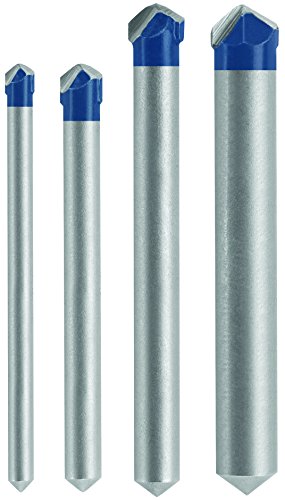
This 4-piece set From BOSCH Is Marketed For Drilling Harder Tile And Natural Stone Including Granite, Slate And Ceramic. The Bits Feature Carbide Tips Designed For Rotary Drills And Are Compatible With Hammer Drills Where Appropriate. Bosch Highlights Ease Of Use With No Water Required, Which Helps For Quick Jobs And Fast Clean-Up. These Bits Are Best For Small-To-Medium Holes In Tile And Thin Stone Where Carbide Tips Provide Sufficient Wear Resistance.
Milwaukee Electric – 4PC. Tile And Natural Stone Bit Set

The Milwaukee 4PC Set Is Presented Specifically For Tile And Natural Stone Drilling. The Small Set Size Makes It Suited For Typical Home Improvement Tasks Where Multiple Diameters Are Needed. These Bits Are Intended For Rotary Drills And Are Useful When A Carbide Option Is Preferred For Harder Ceramic/Stone Surfaces. They Provide A Practical Starter Set For Light-To-Moderate Stone Work.
7/8″ Dry/Wet Multipurpose Core Bit For Masonry, Concrete And Natural Stone

This 7/8″ Core Bit From EDiamondTools Is Designed For Both Dry And Wet Drilling, Making It Versatile For Brick, Pavers, Concrete And Natural Stone Applications. It Is Specified For Natural Stones With Mohs Hardness Below 4 For Dry Use And Up To 7 For Wet Use, And Uses A 5/8″-11 Threaded Arbor. The Core Bit Is Appropriate For Larger-Diameter Holes Such As Fixture Pass-Throughs Or Plumbing Work Where A Core Removal Method Is Needed.
Alpen Concrete Drill Bit 11/32″ – PGM Certified Precision

The ALPEN Bit Is Optimized For Concrete But Also Suitable For Brick, Masonry, Natural Stone And Marble. It Features A Durable Carbide Tip And Is PGM Certified For Precision Holes, Which Helps When Accurate Dowel Or Anchor Holes Are Required. This Bit Is Intended For Hammer Drill Use And Emphasizes Longevity And Precise Hole Quality In Tough Conditions.
BOSCH DDB14 1/4 In. Diamond Drill Bit For Dry Drilling

This Diamond-Tipped Bit Is Engineered For Dry Drilling In Porcelain And Natural Stone Tile. The Tip Contains A Built-In Wax Insert To Lubricate And Cool The Hole During Dry Operation, Allowing Greater Control When Two-Handed Guidance Is Needed. Diamond Construction Provides Superior Wear Resistance For Hard Stone Surfaces And Produces Cleaner, More Precise Holes Compared To Carbide In Many Applications.
Buying Guide: Selecting A Drill Bit For Natural Stone
Choosing the correct drill bit depends on the stone type, hole size, drilling method and the tool used. Below are the primary considerations:
- Stone Hardness (Mohs Scale) — Granite and quartzite are very hard (high Mohs), requiring diamond tooling. Softer stones like limestone, travertine or some slate can be drilled with quality carbide bits.
- Bit Material — Diamond bits excel on hard natural stone and porcelain for clean holes. Carbide-tipped bits work well on many tiles and softer stone types at smaller diameters.
- Dry Vs Wet Drilling — Wet drilling (water feed) cools the bit and reduces dust, extending life for diamond core and small diamond bits. Dry-drilling options with wax inserts or designed cooling can be used when water is impractical, but watch for overheating.
- Hole Size And Type — For small-diameter holes use diamond or carbide twist/point bits. For larger holes or countersinks use diamond core bits with the appropriate arbor.
- Drill Type — Use rotary or hammer drills as recommended by the bit manufacturer. Hammer mode is suitable for masonry and some durable stones with appropriate bits; avoid hammer action with fine porcelain or delicate stone tile.
- Arbor And Shank Compatibility — Match arbor thread (e.g., 5/8″-11) and shank size to your drill or core adapter for safe mounting.
- Cooling And Feed Rate — Apply light pressure with steady feed. For wet drilling ensure continuous water supply. For dry drilling, pause frequently to clear dust and avoid overheating.
- Durability And Certification — Look For vacuum-brazed or PGM-certified bits when precision and longevity are priorities, especially for professional or repeated use.
- Application Scope — Consider whether you need a multipurpose set for tile and occasional stone work (carbide sets) or specialized diamond bits for heavy-duty stone and countertop work.
Comparison Perspectives
- Best For Very Hard Stone — Diamond core and diamond dry bits provide best longevity and hole quality.
- Best For Small Holes In Tile/Stone — Carbide-tipped tile/stone bits offer good performance for small to medium holes without the cost of diamond tooling.
- Best For Large Holes — Diamond core bits with correct arbor and wet feed are the standard for larger diameter holes in stone.
- Best For Occasional DIY Use — Small multipiece carbide or diamond sets give flexibility for multiple tasks.
Use the manufacturer’s specs and match the bit to your stone’s hardness, required hole diameter and the available drilling method to ensure optimal results and tool life.