Quick Overview: This guide reviews top draw knives suited for peeling logs and debarking wood, covering curved and straight blades, handle styles, and materials. Use the table below to compare the five selected tools at a glance.
| Product | Blade Type | Handle | Key Feature |
|---|---|---|---|
| Konload 10″ Upgrade Tree Draw Knife | Curved | Full-Tang Steel With Rubber Cover | Hand-forged, durable |
| Konload 10″ Curved Draw Shave Knife | Curved | One-Piece Steel With Wooden Pattern | Hardened steel, forged |
| ANZHIRUOSU 8″ Straight Draw Knife | Straight (8″) | Inclined Handle (integrated) | Ergonomic 30° handle |
| Wadoy 8″ Curved Draw Shave Knife | Curved (8″) | Dual Wooden Handles | HRC 30 steel, sharp bevel |
| Carmyra 8″ Straight Draw Shave | Straight (8″) | Wood Handles | 5mm thick blade, HRC 30 |
Upgrade Tree Draw Knife 10″ — Debarking Tool

This Konload 10″ curved draw knife is described as a tree bark removal and log debarker tool used by timber framers and wood turners. The blade is hand-forged hardened steel with polished beveled edges that can be honed for continued sharpness. Its full-tang steel handle with a non-slip rubber cover integrates the handle and blade into a single steel plate for increased durability and resistance to handle breakage. The curved blade profile favors controlled peeling on rounded logs and posts and is intended to rapidly remove bark and shape surfaces.
Tree Draw Knife 10″ Hand-Forged Curved Draw Shave Knife

This 10″ Konload curved draw shave tool emphasizes hand-forged hardened steel for longevity and a finely polished bevel for easy honing. The tool uses a one-piece steel plate design with a wooden patterned, non-slip handle. The curved geometry and full-length blade make it well suited for removing bark from cylindrical surfaces and working larger-diameter logs, fence posts, and rough-cut timber.
8 Inch Draw Knife — Straight Multi-Purpose Debarker

This 8″ straight draw knife by ANZHIRUOSU is promoted as a versatile debarking and shaping tool. It features a 30° inclined handle for ergonomics and reduced hand fatigue. The straight blade suits flattening and smoothing planar surfaces or trimming edges on billets, and its premium-grade steel construction aims to retain edge sharpness for repeated use. The shorter 8″ width offers control for narrower or more detailed work.
Draw Shave Knife 8″ Curved — Ultra-Sharp Bark Knife

Wadoy’s 8″ curved draw shave tool is described as an ultra-sharp debarking implement with dual ergonomic wooden handles. The blade is heat-treated steel with an HRC ~30 hardness rating and a 5mm thickness and a 30° bevel angle for slicing through bark. The model notes that initial sharpening of the bevel (bevel facing up) may be required before first use. The dual handles assist control when pulling across rounded surfaces.
Carmyra Draw Knife 8″ Straight Draw Shave
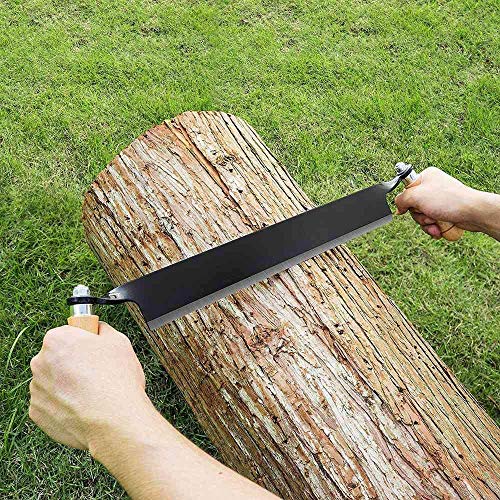
The Carmyra 8″ straight draw knife offers a 5mm-thick blade with a 30° angle and HRC 30 hardness suitable for fast, accurate work. It is positioned for woodworking tasks including removing bark, shaping spindles, and rough-cutting. Straight blades excel when you need to flatten or square a surface along grain and when controlled, even shaving is required.
Buying Guide — Choosing The Right Draw Knife For Peeling Logs
When selecting a draw knife for peeling logs, consider the following key factors to match tool features to tasks and ergonomics.
- Blade Type — Curved vs Straight: Curved blades follow log contours and excel at peeling round posts; straight blades are preferred for flattening and shaping flat faces or beveling.
- Blade Length: Longer blades (10″) remove more material per pass and suit larger logs; shorter blades (8″) provide more control on smaller or irregular pieces.
- Steel Quality and Hardness: Hardened steel with a reasonable hardness rating (commonly around HRC 30 in these listings) maintains an edge and can be honed; hand-forged blades often emphasize durability.
- Bevel And Thickness: A well-polished bevel eases initial cutting; thicker blades (e.g., 5mm) resist flex on tougher wood but require more force. A 30° bevel angle is common for debarking.
- Handle Design And Comfort: Dual handles allow strong, two-handed pulls. Consider full-tang or one-piece constructions for strength. Ergonomic or inclined handles reduce fatigue during extended use.
- Safety And Transport: Check for included edge protectors or consider a sheath for safe storage and transport.
- Sharpening And Maintenance: Draw knives require regular honing. Look for polished bevels and steel types that accept sharpening easily. Initial sharpening may be recommended out of the box for some brands.
- Intended Use: For large log peeling choose a curved 10″ draw knife with robust handles; for detailed spindles or bowl shaping, shorter straight or specialized carving draw knives are more appropriate.
- Durability: One-piece or full-tang designs and hand-forged construction often indicate higher resistance to handle failure under heavy use.
Comparison Perspectives
- Best For Large Logs: 10″ curved blades provide broader coverage and faster bark removal on round sections.
- Best For Control And Detail: 8″ straight or curved draw knives let you manage small-diameter work and detailed shaping.
- Best For Heavy-Duty Use: Full-tang or one-piece steel constructions reduce the risk of handle failure under high leverage.
- Best For Ergonomics: Tools with inclined or ergonomically spaced handles reduce wrist strain for longer sessions.
- Maintenance Consideration: Models with polished bevels simplify honing; heat-treated steel tends to hold an edge longer.