Finding the right coping saw for dovetails means balancing blade type, frame depth, tensioning, and ergonomics to remove waste and refine pins and sockets. Below is a quick comparison of the top picks covered in this guide to help you choose a saw and blades suited for fine dovetail work.
| Product | Best For | Key Feature |
|---|---|---|
| Spyral FreeStyle Coping Saw (5 Blades) | Cutting In Tight Curves | 360° spiral teeth cut all directions |
| Pégas Pinned Dovetail Sawblades (Pack of 12) | Traditional Dovetail Blade Replacement | 18 TPI pinned ends, Swiss-made |
| IRWIN ProTouch Coping Saw | All-Purpose Durable Frame | Flat-bar frame, HSS blades, ergonomic handle |
| Taytools 6-1/2″ Coping Saw Frame | Fine Coping & Dovetail Waste Removal | Sturdy steel frame, hardwood handle |
| SUIZAN Dozuki Dovetail Saw (7″) | Accurate Finishing Cuts & Shoulders | Japanese pull-saw, razor steel |
FreeStyle Coping Saw With 360° Spyral Tooth

This Spyral FreeStyle coping saw emphasizes blades that cut in all directions without twisting. The included five Spyral blades feature a spiral tooth geometry to cut when you push, pull, or apply lateral pressure. That makes the blades useful when removing waste in tight dovetail sockets or navigating out-of-plane cuts.
- 360° Spiral Tooth: Cuts in any direction, reducing blade breakage from twisting.
- Multi-Directional Control: Helpful when working inside curved or irregular dovetail waste.
- Included Blades: Pack includes multiple blades so you can replace blades during extended sessions.
Pégas Pinned Dovetail Sawblades 18 TPI (Pack Of 12)

Pégas pinned blades are a traditional choice for hand frames that accept pinned end blades. Manufactured at a reputable Swiss facility, these blades are thin and fine-toothed for accurate dovetail work.
- 18 TPI, 0.02″ Thick: Fine tooth count for clean dovetail edges and tight curves.
- Pinned Ends: Compatible with hand frames that require pinned blades—ideal if you prefer classic frame/blade setups.
- Versatile Material Cutting: Designed to cut various woods and some nonferrous metals when needed.
IRWIN Tools ProTouch Coping Saw

The IRWIN ProTouch frame combines a durable flat-bar frame and ergonomic handle with high-speed steel blades. It suits users who want a reliable, comfortable tool to remove dovetail waste and perform general coping tasks.
- HSS Blades: Good for cutting a range of materials and hold up under tension.
- Flat-Bar Frame: Provides stable blade support and consistent tensioning.
- ProTouch Handle: Ergonomic grip for longer sessions of precise cutting.
Taytools 6-1/2″ Coping Saw Frame With Extra Blades
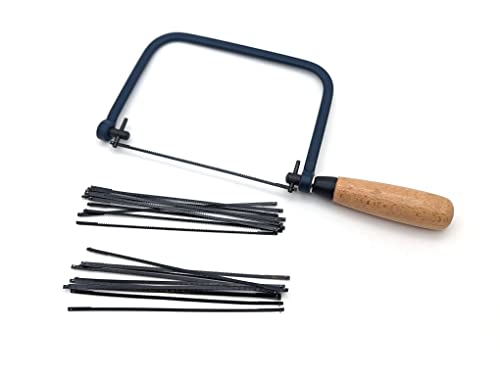
Taytools markets this frame toward luthiers and model builders, emphasizing fine control when removing waste between hand-cut dovetails. The 3/16″ by 3/8″ steel frame and hardwood handle add rigidity and comfort during detailed work.
- Fine Coping Work: Frame geometry supports delicate, accurate cuts for dovetail cleaning.
- Solid Construction: Steel frame with powder coat finish for durability and low flex.
- Suitable For: Craftspeople doing repetitive, precise dovetail cleanup.
SUIZAN Dozuki Dovetail Saw 7″ Japanese Pull Saw

Although not a coping frame, the SUIZAN Dozuki excels at shoulder and finishing cuts on dovetails thanks to a thin, razor-sharp Japanese pull blade. Pull saws make controlled, clean cuts along shoulders and cheeks, improving final fit.
- Japanese Pull Action: Cuts on the pull stroke for lighter effort and cleaner kerfs.
- High-Quality Steel: Razor sharp edges that give crisp finish on dovetail shoulders.
- Made In Japan: Traditional manufacturing for consistent blade quality.
Buying Guide: Choosing The Best Coping Saw For Dovetails
Selecting the right coping saw system for dovetails depends on workflows and the type of cuts you perform. Below are key considerations and comparison perspectives to guide your choice.
Blade Type And Tooth Geometry
For dovetails, fine-tooth blades (12–20 TPI) produce cleaner edges and reduce splintering. Spiral or multi-directional teeth help in removing waste in confined sockets where you need lateral movement without twisting the blade.
Blade Attachment: Pinned Vs. Common Ends
Pinned blades fit traditional frames and are easy to swap in older or specialty coping frames. Universal end blades or quick-tension systems simplify changes and are practical if you switch blade types frequently.
Frame Depth And Rigidity
Deeper frames permit cutting farther into panels and allow more clearance when sawing inside boxes. Stiff, low-flex frames keep blade alignment consistent for straight, accurate cuts at dovetail pins and tails.
Tensioning And Ease Of Blade Replacement
Reliable tensioning systems reduce blade wander. Look for frames that allow tool-free blade changes or simple handle-turn tensioning to speed workflow when swapping from coarse to fine blades.
Handle Ergonomics And Control
An ergonomic grip reduces hand fatigue when cleaning many dovetails. A comfortable handle helps maintain steady control for delicate paring and inside cuts.
Pull Saws For Shoulders And Fine Fit
Consider adding a Japanese pull dovetail saw for shoulder and final trimming. Pull saws produce thinner kerfs and cleaner shoulders than many push-style saws, improving final joint fit.
Material Considerations
If you occasionally cut non-wood materials (liner metals, plastics), choose high-speed or hardened blades rated for mixed media. For pure hardwood dovetails, thin, fine-toothed carbon or Japanese steel blades are preferable.
Replacement Blade Availability
Assess the availability and variety of replacement blades. Packs of specialized blades (pinned dovetail blades or spiral blades) let you match tooth count and geometry to the wood species and cut type.
Comparison Perspectives
- Precision-Focused — Thin, high-TPI blades or a Dozuki for clean shoulders and tight fits.
- Versatility-Focused — Frames with quick-tension and HSS blades that cut various materials.
- Durability-Focused — Sturdy steel frames with reliable tensioning for consistent long-term use.
- Specialized Cuts — Spiral multi-direction blades for inside curves and awkward waste removal.
Use these factors to match a coping saw and blade set to your dovetail technique, whether you prioritize fast waste removal, razor-finish shoulders, or a durable everyday frame.