The right combination blade can switch a table saw from a basic ripper to a precise crosscutting tool. This guide highlights top combination blades designed for American workshops, balancing fast material removal with clean, accurate finishes. Each blade features a mix of flat and alternate bevel teeth to handle ripping and crosscutting tasks efficiently while managing heat and resin buildup.
| Product | Brand | Teeth | Arbor |
|---|---|---|---|
| CMT 256.050.10 ITK Xtreme Industrial Combination Saw Blade | CMT ORANGE TOOLS | 50 | 5/8 inch |
| Diablo by Freud D1050X 10″ 50-Tooth ATB Combo | Diablo | 50 | 5/8 inch |
| Freud LU83R010 Industrial 10-in 50T Thin Kerf | Freud | 50 | 5/8 inch |
| Freud LU84R011 Premium TiCo 50T Comb | Freud | 50 | 5/8 inch |
| WEN BL1040 10-Inch 40-Tooth Blade | WEN | 40 | 5/8 inch |
Selected blades cover a range of woods, including soft and hard hardwoods, plywood, and laminates. Each option emphasizes efficient chip removal, heat management, and precision finishes, making them solid choices for builders, hobbyists, and professionals alike.
CMT ITK Xtreme Industrial 10-Inch Combo Blade

The CMT 256.050.10 ITK Xtreme Industrial combination blade is designed for both ripping and crosscutting. It features large gullets for deep cuts and effective chip clearance, enabling efficient material removal on solid wood, melamine, laminates, plywood, and chipboard. With a 0.098 inch kerf and 0.071 inch plate thickness, it offers a stable cut path and a 15° hook angle. The blade uses a 5/8-inch arbor and combines one flat tooth with four 20° teeth for balanced performance across tasks.
Diablo D1050X 10-Inch Combo Blade

Diablo’s D1050X offers a 10-inch, 50-tooth ATB combination blade designed for reduced noise and vibration through laser-cut stabilizer vents. Its laser-cut heat expansion slots help the blade manage heat build-up, maintaining accuracy and minimizing warp for clean, straight cuts in a range of woods and engineered boards.
Freud LU83R010 10-Inch 50-Tooth

Freud LU83R010 blends TiCo carbide with a thin-kerf design to deliver efficient cutting with reduced resistance. Its non-stick Perma Shield coating minimizes resin buildup and corrosion, while an anti-vibration design helps maintain stability and accuracy during long cuts in hardwood and plywood.
Freud LU84R011 Comb Blade
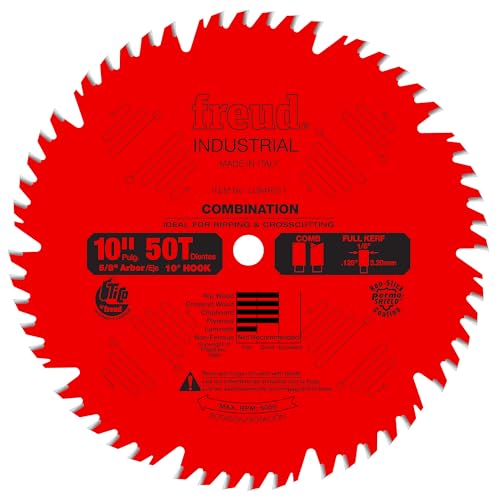
Freud LU84R011 uses a premium TiCo carbide blend for high performance, edge retention, and durability. The blade combines one flat tooth for efficient ripping with four ATB teeth for smooth crosscuts, aided by large gullets for rapid chip removal and a clean finish on hardwood, softwood, and plywood. The non-stick coating helps resist heat and resin buildup.
WEN BL1040 10-Inch 40-Tooth Blade
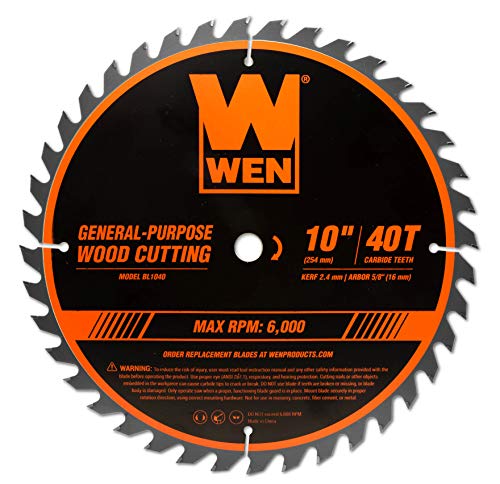
The WEN BL1040 features a 10-inch diameter and a 5/8-inch arbor, rated up to 6000 RPM. Its ultra-thin 1/10-inch kerf provides clean, efficient cuts while reducing material waste. The 40-tooth configuration is balanced to handle both ripping and crosscutting tasks with decent finish quality.
Hardwin 50-Tooth Combination Blade
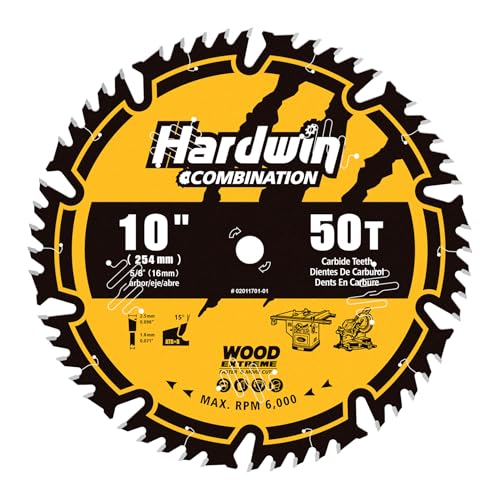
Hardwin’s 50-tooth combination blade provides a universal solution for table saw work, featuring ATB teeth for smooth finishes and a 5/8-inch arbor. It offers a 0.098-inch kerf, a thin kerf design to minimize waste, and anti-stick properties to reduce resin buildup during longer sessions.
Buying Guide: Key Considerations For Choosing A Combination Blade
When selecting a combination blade for a table saw, consider the following factors to match your work style and materials:
- Tooth configuration: A blend of flat and ATB teeth supports fast ripping and smooth crosscuts. Look for blades labeled as combination or with mixed tooth designs.
- Kerf and plate thickness: Thin-kerf blades (0.098 inch or thinner) reduce waste and require less power, while thicker blades can be sturdier for denser woods. Plate thickness affects rigidity and vibration control.
- Arbor size: Most consumer table saws use a 5/8-inch arbor. Ensure the blade’s arbor matches your saw to avoid compatibility issues.
- Coatings and wear resistance: Non-stick coatings like Perma Shield minimize resin buildup and heat-related wear, improving longevity and performance.
- Heat management: Vents, expansion slots, and blade design influence heat dissipation. Cooler blades can reduce warping and maintain accuracy on longer cuts.
- Material compatibility: Check blade ratings for hardwood, plywood, laminates, and melamine. Large gullets aid in chip removal for dense materials.
- Finish quality: Consider tooth geometry and hook angle. Higher ATB emphasis improves crosscut cleanups; flatter raker teeth can help with ripping tasks.
- Durability and warranty: Look for blades with carbide-grade teeth and coatings designed to withstand frequent use in workshop settings.
Overall, the best combination blade depends on the primary materials you work with and your priority between faster material removal and finer finish quality. The blades listed here provide a spectrum of performance, enabling you to choose a blade that aligns with your typical projects and saw setup.