Cutting pressure treated lumber requires blades that resist corrosion, stay sharp against resin and grit, and minimize burning or gumming. Below is a concise comparison table of top circular saw blades suited for pressure treated wood, followed by detailed product sections and a buying guide to help you choose a blade that matches your saw, project, and budget.
| Product | Brand | Tooth Count / Type |
|---|---|---|
| DEWALT 7-1/4″ Circular Saw Blade (DW3174) | DEWALT | 20-Tooth, ATB, Thin Kerf |
| Diablo Tracking Point 7-1/4″ 24-Tooth (D0724VPX) | Diablo | 24-Tooth, Tico Carbide, Tracking Point |
| Diablo Framing Blade 7-1/4″ x 24-Tooth (D0724A) | Diablo | 24-Tooth, Tracking Point, Thin Kerf |
| DEWALT 7-1/4″ 40-Tooth Wood Cutting (DWA171440) | DEWALT | 40-Tooth, Thin Kerf |
| FOXBC 7-1/4″ Blades 24T & 60T Pack | FOXBC | 24-Tooth Framing & 60-Tooth Finish |
DEWALT 7-1/4″ Circular Saw Blade For Pressure Treated And Wet Lumber (DW3174)

This DEWALT blade targets rough cuts in pressure treated and wet lumber. It features tough tungsten carbide teeth designed to stay sharp under heavy use. The special anti-stick coating minimizes friction and gum-up from resin-laden wood, helping maintain cut quality. A thin kerf promotes faster, smoother cuts and reduces load on the saw motor. With a 20-tooth configuration, this blade emphasizes fast ripping and framing performance over fine finish.
Diablo Tracking Point 7-1/4 In. 24-Tooth Circular Saw Blade (D0724VPX)

Diablo’s Tracking Point blade uses a specialized tip geometry for straighter cutting lines in framing and treated lumber. The blade employs TiCo Hi-Density carbide for durability against abrasive inclusions in treated wood. Laser-cut stabilizer vents reduce noise and vibration for better control, and a non-stick coating helps resist pitch and gum-up. The 24-tooth balance delivers reasonably fast cuts while preserving straighter edges than very coarse blades.
Diablo Framing Saw Blade 7-1/4″ X 24-Tooth (D0724A)

This Diablo framing blade emphasizes long life and efficiency. The Tracking Point tooth design is marketed to deliver straighter cuts and up to 5X longer life in framing and pressure-treated wood. It’s optimized for cordless tools, offering up to 30% more cuts per battery charge when used on compatible saws. Anti-vibration stabilizer vents reduce blade stress, improving accuracy and reducing the chance of warping during heavy use.
DEWALT Circular Saw Blade 7-1/4 Inch 40 Tooth (DWA171440)

This DEWALT 40-tooth blade suits users seeking a finer finish when cutting treated lumber, plywood, or trim. Its high-density tungsten carbide teeth aim for toughness and wear resistance. The tough coat anti-stick coating helps cut through resinous material with less gumming. The thin kerf reduces waste and requires less power—useful for cordless saws or extended projects requiring more precise, less tear-out-prone cuts.
FOXBC 7-1/4 Inch Circular Saw Blade 24T & 60T Pack
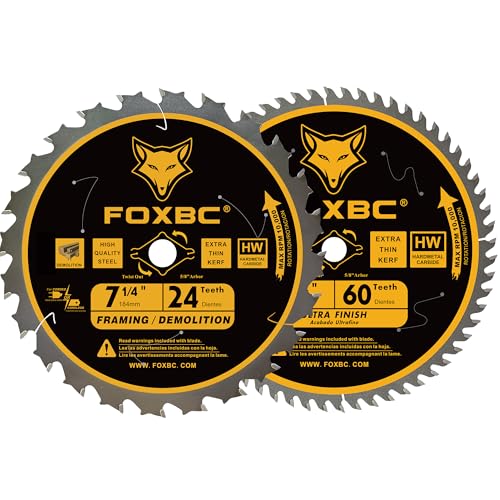
FOXBC bundles a 24-tooth framing blade and a 60-tooth finish blade for versatile jobsite use. The 24T blade targets aggressive framing and pressure-treated lumber cuts, while the 60T blade provides a cleaner finish for trim and plywood. Both blades feature a standard 5/8″ arbor and a diamond knockout for adapter use. The pack is marketed toward framers, roofers, and remodelers who need both rough and finish cutting capability on treated wood.
Buying Guide: Choosing A Circular Saw Blade For Pressure Treated Wood
When selecting a blade for pressure treated lumber, consider these critical factors to match blade performance to your saw and workflow.
Material And Tooth Composition
- Tungsten Carbide Or TiCo Carbide Teeth: Provide superior wear resistance when cutting abrasive treated wood and embedded grit.
- High-Density Carbide Extends Edge Life: Look for blades that advertise high-density or TiCo carbide for longer life.
Coatings And Corrosion Resistance
- Anti-Stick Or Tough Coat Coatings Reduce Gumming: Coatings help resist sap and chemicals in treated lumber that cause buildup.
- Rust Resistance: Pressure treated wood can be wet or chemically active, so corrosion-resistant finishes help blade longevity.
Tooth Count And Cut Type
- Low Tooth Count (18–24T): Best For Fast Ripping And Framing; tolerates more aggressive cuts in rough lumber.
- Medium Tooth Count (24–40T): Good Balance For Versatility—faster than fine blades but cleaner than coarse framing blades.
- High Tooth Count (60T+): Use For Finish Cuts, Plywood, And Trim When Tear-Out Must Be Minimized.
Kerf And Power Considerations
- Thin Kerf Blades Remove Less Material And Place Less Load On Smaller Motors And Batteries.
- Thicker kerf blades may be more stable under heavy loads but require more power and produce more waste.
Stability And Vibration Control
- Laser-Cut Stabilizer Vents Or Anti-Vibration Designs Reduce Noise, Improve Accuracy, And Help Prevent Warping.
Arbor Size And Compatibility
- Confirm your saw’s arbor size (commonly 5/8″) and whether adapters or diamond knockouts are required for fitment.
Jobsite Practicalities
- Wet Or Chemical Exposure: Blades marketed for wet lumber or treated wood often have coatings or materials to resist corrosion and gumming.
- Cordless Use: If using a battery saw, favor blades advertised for optimized efficiency or thin kerf to extend battery life.
- Pack Size: Framing crews may prefer multi-pack framing blades, while finish carpenters will keep higher-tooth blades on hand.
Comparison Perspectives
- Durability vs Finish: Coarse, carbide-tipped framing blades last longer in abrasive treated wood but sacrifice edge smoothness. Higher-tooth blades produce cleaner edges but may dull faster on gritty materials.
- Speed vs Precision: Lower tooth counts and thin kerfs cut faster and require less power; higher tooth counts favor precision and less tear-out.
- Cost Efficiency: Multi-packs and blades optimized for cordless tools can reduce downtime and overall blade spend on job sites.
Use the product sections above to match blade specific features—such as carbide type, tooth count, coating, and stabilizers—to the considerations that matter most for your saw and the treated lumber you’ll be cutting.