Choosing The Right Blade for aluminum requires blades with Triple Chip Grind (TCG), corrosion-resistant coatings, and carbide teeth designed for non-ferrous metals. Below is a quick comparison of top blades chosen for chop saws and miter/table saws that work well with aluminum.
| Product | Size / Teeth | Arbor | Key Feature |
|---|---|---|---|
| TOMAX 12-Inch 100 Tooth TCG | 12″ / 100T | 1″ | Electrophoretic Coating, Construction Grade Carbide |
| MASTEC 10-Inch 100T TCG | 10″ / 100T | 5/8″ | Smooth Clean Cuts, Durable Carbide |
| Diablo 12″ 96T TCG | 12″ / 96T | 1″ | Perma-SHIELD Coating, Shock-Resistant Brazing |
| OA-BRES 10″ 80T TCG Upgrade | 10″ / 80T | 5/8″ | Laser Cut Stabilizer Vents, Electrophoretic Coating |
| FOXBC 10″ 80T TCG | 10″ / 80T | 5/8″ | Laser-Cut Stabilizers, High-Density Tungsten Carbide |
TOMAX 12-Inch 100 Tooth TCG Aluminum And Non-Ferrous Metal Saw Blade
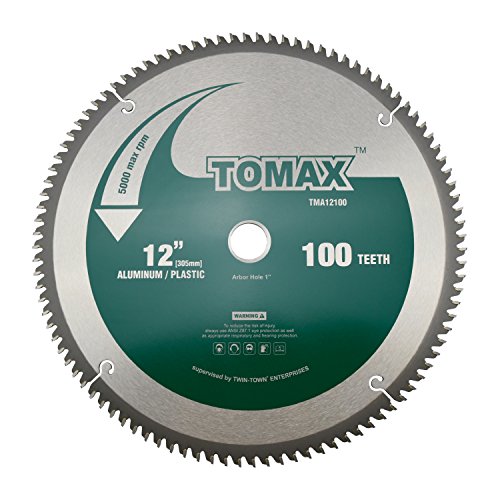
This 12″ blade Features 100 TCG carbide teeth specifically marketed for aluminum and other non-ferrous metals. The construction-grade carbide teeth are intended to provide extended life when cutting soft metals and plastics. An electrophoretic coating helps resist rust and corrosion, which can improve durability when working in humid or workshop environments. The blade size and 1″ arbor make it suitable for larger chop saws configured for metal cutting.
MASTEC 10-Inch 100T Carbide Tooth TCG For Aluminum

The MASTEC 10″ blade offers 100 carbide teeth with a TCG profile optimized for clean, burr-free cuts in aluminum, plexiglass, and other non-ferrous materials. Its 5/8″ arbor fits many standard miter saws and chop saws. The listing emphasizes smooth cutting and durability, which is useful when surface finish matters or when minimal post-cut finishing is desired.
Diablo 12″ 96 TCG Blade For Medium Aluminum

Diablo’s 12″ blade Equipped With 96 TCG teeth and Perma-SHIELD non-stick coating, designed to reduce gumming and heat buildup. The blade uses tri-metal, shock-resistant brazing for impact resilience when cutting metal, and a low hook angle for controlled cuts. These features are beneficial for repeatable, burr-free cuts and for blades used in higher-duty workflows.
10 Inch 80T Aluminum Non-Ferrous Metal Saw Blade (Upgrade TCG)

This 10″ blade from OA-BRES features 80 upgraded TCG teeth made from C-4 construction grade tungsten carbide for durability and sharpness. It includes an electrophoretic coating to reduce corrosion and laser-cut stabilizer vents to trap noise and reduce vibration, which helps maintain blade flatness and cutting accuracy during heavy use.
FOXBC 10-Inch 80-Tooth TCG For Aluminum And Non-Ferrous Metal

FOXBC’s 10″ blade provides 80 TCG teeth with a 0.094″ kerf and 5/8″ arbor. The blade lists laser-cut stabilizer vents to reduce noise and vibration, and high-density tungsten carbide tips for wear resistance. This blade emphasizes stability and longevity for repeated cuts in aluminum and plastics while aiming to minimize warping and noise.
Buying Guide: How To Choose A Chop Saw Blade For Aluminum
Selecting the right blade for aluminum cutting depends on material, saw compatibility, and expected finish. Below are the main considerations.
1. Tooth Geometry
- Triple Chip Grind (TCG) is the preferred profile for aluminum and non-ferrous metals because it produces clean, burr-free cuts and reduces edge chipping.
- High tooth counts (80–100+) yield smoother finishes but may cut slower; lower tooth counts remove material faster but can leave more burrs.
2. Carbide Quality And Tooth Count
- Construction-grade or high-density tungsten carbide teeth resist wear when cutting abrasive alloys and extend blade life.
- Match tooth count to finish needs: 80–100 teeth for fine profile cuts; 60–80 for faster rough cuts.
3. Coatings And Corrosion Resistance
- Electrophoretic coatings or non-stick finishes (Perma-SHIELD) reduce corrosion, gumming, and heat-related buildup.
- Coatings can help maintain performance when cutting aluminum alloys with adhesives or-lubricants present.
4. Stabilizer Vents And Blade Flatness
- Laser-cut stabilizer vents reduce vibration and noise and help prevent blade warp under heat and load.
- Blades with stabilizers hold tighter tolerances, improving cut accuracy on repeated cuts.
5. Arbor Size And Saw RPM
- Confirm the blade arbor matches your chop saw (common: 5/8″, 1″). Adapters may be available but verify safe fitment.
- Some blades are rated for lower RPM (e.g., Evolution low-RPM blades). Ensure the blade’s max RPM rating suits your saw.
6. Kerf Width And Material Removal
- Thicker kerfs remove more material and require more power, but can be more stable. Thinner kerfs reduce waste and strain on the saw.
- Choose kerf width based on saw capacity and desired cut stability.
7. Application And Finish
- For profile-critical work (frames, extrusion, visible edges), favor high-tooth-count TCG blades with coatings for minimal finishing.
- For rough cutting or frequent demolition-style work, a more robust tooth profile with fewer teeth may be acceptable.
8. Durability And Maintenance
- Look for shock-resistant brazing and high-quality carbide to extend service life when used regularly.
- Keep blades clean of gummy residue; use appropriate lubricants or cleaners recommended for non-ferrous cutting.
9. Comparison Perspectives
- Performance: High-tooth TCG blades (MASTEC, TOMAX, Diablo) emphasize clean finish and less rework.
- Durability: Blades with robust carbide and shock-resistant brazing (Diablo, OA-BRES) handle heavier-duty cycles.
- Stability/Noise: Laser-cut stabilizers (OA-BRES, FOXBC) reduce vibration and thermal warp for improved accuracy.
- Saw Compatibility: Confirm arbor size and recommended RPM—12″ blades often use 1″ arbor, 10″ commonly 5/8″.
Use the above features and comparisons to match a blade to your chop saw and the type of aluminum work you perform, whether precision trim cuts or high-volume metal cutting.