Choosing the right bypass pruning shears makes trimming, shaping, and maintaining plants easier and healthier for your garden. Below is a quick comparison table of the selected top-rated shears to help you scan features at a glance.
| Product | Blade Material / Coating | Cut Capacity / Use | Ergonomics / Features |
|---|---|---|---|
| gonicc 8″ Professional Titanium (GPPS-1003) | Premium Titanium Steel | General pruning | Drop-forged body, non-slip handles |
| Fiskars Bypass Pruning Shears | Steel blade, low-friction coating | Up to 5/8″ stems / flower stems | Sap groove, non-slip grip, easy-open lock |
| Haus & Garten ClassicPRO 8.5″ | Japanese high-carbon steel, titanium-coated | Precise cuts for growth health | Ergonomic handle, shock pads, rust resistant |
| Kimura 8″ Pro Bypass Pruning Shears | Japanese SK5 steel | Up to 1″ cut capacity | Lightweight aluminum handles, PVC grip |
| Felco F6 Pruning Shears | Hardened steel blades | Medium hands, broad pruning tasks | Forged aluminum handles, replaceable parts |
gonicc 8″ Professional Premium Titanium Bypass Pruning Shears (GPPS-1003)
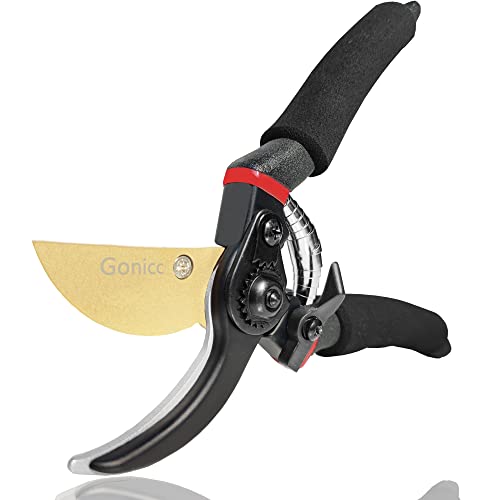
Features listed: Drop forged body and handles, Premium Titanium steel blade with ultra-fine polishing, and ergonomic non-slip handles. The titanium coating on the blade emphasizes corrosion resistance and reduced friction. The drop-forged construction indicates a focus on durability for repeated garden use. Ergonomic handles and non-slip surfaces aim to improve grip and control during precision pruning tasks.
Fiskars Bypass Pruning Shears, 5/8-Inch Cut Capacity
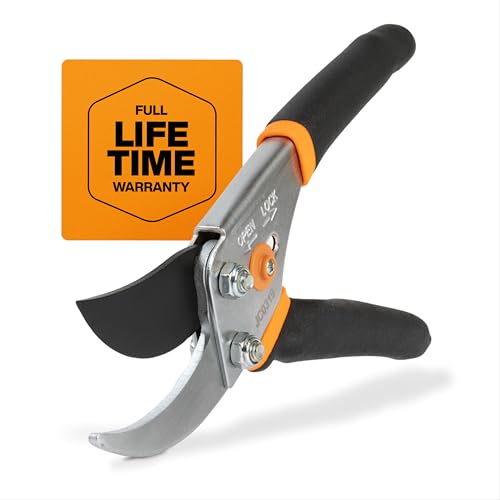
Features listed: Steel blade with low-friction coating, self-cleaning sap groove, non-slip grip, and an easy-open lock. Designed for delicate stems with bypass action that minimizes stem damage. The coating reduces gumming and improves rust resistance. Built-in sap groove and comfortable grip address sticky residue and handling control during extended trimming sessions.
Haus & Garten ClassicPRO 8.5″ Professional Titanium Bypass Shears

Features listed: Japanese grade high-carbon steel with titanium coating, ergonomic non-slip grips, shock-absorbing pads, and anodized aluminum construction for rust resistance. The design emphasizes precise, clean cuts that encourage healthy regrowth and reduced wrist strain for frequent users. Titanium coating and anodized parts aim to extend service life by limiting corrosion.
Kimura® 8″ Pro Bypass Pruning Shears, SK5 Steel

Features listed: Japanese SK5 steel blades heat-treated to retain edge, 1″ cut capacity, and lightweight aluminum handles with non-slip PVC coating. This model prioritizes cutting thicker stems and offers ergonomics aimed at reducing hand fatigue. The SK5 blade material and heat treatment suggest good long-term edge retention with less frequent sharpening.
Felco F6 Pruning Shears – 7.7″ Swiss-Made Garden Clippers

Features listed: Forged aluminum handles, hardened steel blades, rotating handle for comfort, cushioned shock absorber, and replaceable parts. This model is noted for durability and serviceability with components that can be replaced. The rotating handle and shock absorption target ergonomic pruning and reduced wrist strain across medium to extensive gardening tasks.
Buying Guide: How To Choose Bypass Pruning Shears
Blade Material And Coating
High-carbon steel and SK5 offer excellent edge retention and sharpness but may need more rust prevention. Titanium-coated or stainless options increase corrosion resistance and reduce friction, improving longevity and reducing gumming.
Cut Capacity And Intended Use
Match cut capacity to common tasks: light flower deadheading needs smaller capacity (5/8″), general shrub trimming mid-range, and thicker stems require up to 1″ capacity. Choosing a shears rated for your typical branch diameter prevents blade damage and poor cuts.
Ergonomics And Handle Design
Look for non-slip grips, shock-absorbing pads, and ergonomic profiles if you prune frequently or have hand sensitivity. Rotating handles and lightweight forged aluminum can reduce wrist strain during longer sessions.
Durability And Serviceability
Forged construction and replaceable parts extend tool life. Check whether the model offers replaceable blades, springs, or screws—this can be more sustainable and cost-effective long term.
Sap Management And Cutting Quality
Features like a sap groove or low-friction coating prevent sticking and keep blades moving smoothly. Bypass cutting action is preferred for live stems as it makes cleaner cuts that support healthy regrowth.
Maintenance Needs
Consider how often you can sharpen and clean blades. High-carbon steel may need more frequent maintenance but can be easier to sharpen. Coated or stainless blades resist rust and reduce upkeep.
Comparison Perspectives
- Performance vs. Maintenance: High-carbon and SK5 provide sharpness but need rust care; titanium or stainless reduce maintenance.
- Ergonomics vs. Cutting Power: Heavier forged models may be more durable; lighter aluminum helps reduce fatigue for long jobs.
- Cost of Ownership: Replaceable parts and durable construction lower lifetime cost even if initial cost is higher.
Final Selection Tips
Identify your most frequent pruning tasks, evaluate cut capacity needs, and balance blade material with maintenance willingness. Prioritize ergonomics if you prune often, and inspect whether the model supports replacement parts for long-term value.