Choosing the right benchtop drill press for metalwork depends on motor power, speed range, construction, and precision features. Below is a quick comparison of the selected models to help you scan options before the detailed reviews.
| Model | Motor | Swing / Travel | Speed Range | Key Features |
|---|---|---|---|---|
| WEN 4212T | 5 A | 10″ swing / 2″ travel | 530–3100 RPM (variable) | Variable speed, laser, digital RPM |
| BUCKTOOL 12 Inch | 6.2 A | 12″ swing / 3-1/8″ travel | 580–3200 RPM (variable) | Large swing, digital readout, 3/4HP |
| Skil DP9505-00 | 6.2 A | 10″ class | 610–2800 RPM (5-speed) | Laser alignment, work light |
| VEVOR 10″ Benchtop | 3.2 A | 10″ swing | 610–2800 RPM (5-speed) | Tilting table, LED work light |
| WEN 4208T / 4206T | 2.3 A | 8″ swing / 2″ travel | ~740–3200 RPM (5-speed) | Compact, cast iron, keyed chuck |
WEN 4212T 5-Amp 10-Inch Variable Speed Drill Press
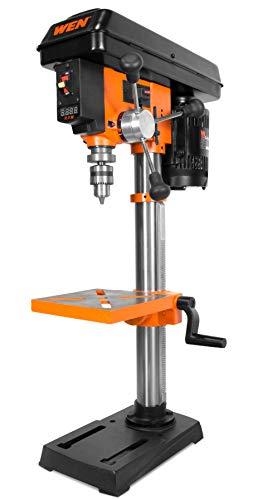
Features: 5-amp induction motor, 10-inch swing, 2-inch spindle travel, mechanical variable speed 530–3100 RPM, digital speed readout, integrated laser alignment.
This model emphasizes variable speed control and power suitable for small- to medium-sized metal drilling tasks. The mechanical variable range lets you dial slower speeds for larger bits and harder metals and higher speeds for smaller holes in softer materials. The digital RPM readout and laser assist help with repeatable, accurate hole placement. Cast iron components contribute to stability during metal cutting. For bench setups where power and precise speed feedback matter, this unit provides a balanced package.
BUCKTOOL 12 Inch 6.2A Professional Bench Drill Press

Features: 6.2A induction motor, 12″ swing, 3-1/8″ spindle travel, variable speed 580–3200 RPM, 1/32″–5/8″ keyed chuck, digital speed readout, laser and work light.
With a larger swing and deeper spindle travel, this unit is designed for heavier bench projects and thicker metal stock. The more powerful 6.2A motor supports larger bit diameters and sustained drilling through tougher alloys. Variable speed and digital feedback make it easier to select the correct RPM for metal types and bit sizes. The larger chuck capacity expands tooling options for fabricating and repair tasks that require bigger holes or extended reach.
SKIL 6.2 Amp 10 In. 5-Speed Benchtop Drill Press DP9505-00

Features: 6.2A induction motor, 5-speed system 610–2800 RPM, laser alignment system, built-in work light.
This SKIL model targets users who want higher motor output and alignment aids without moving to a floor model. The 6.2A motor delivers robust torque for standard metalworking chores, while the 5-speed stepped pulley system covers common RPMs needed for metal bits. The laser alignment system is useful for consistent hole placement on small workpieces. The included work light improves visibility when working with darker metals or in lower light conditions.
VEVOR Benchtop Drill Press 10 Inch Swing

Features: 3.2A induction motor, 10″ swing, multi-speed 610–2800 RPM, tilting worktable 0–45°, sturdy cast iron frame.
The VEVOR 10″ model provides a balance of build quality and adjustable workholding with a tilting table for angled drilling and a cast iron frame to reduce vibration. Its 3.2A motor is adequate for routine metal drilling and sheet metal work. The 5-speed range addresses typical metal drill operations, and the tilting table increases versatility for angled holes or countersinking tasks on metal components.
WEN 4208T 2.3-Amp 8-Inch 5-Speed Cast Iron Benchtop Drill Press
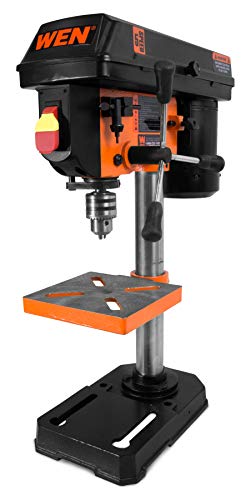
Features: 2.3A induction motor, 8″ swing, 2″ spindle travel, 1/2″ keyed chuck with onboard key storage, 5 speeds (740–3140 RPM).
This compact WEN model is tailored for light-duty metalwork and hobbyist use. Cast iron construction improves stability for a smaller machine. The 2.3A motor and limited swing make it best suited for thin metal, small brackets, and occasional repair tasks. Built-in keyed chuck and storage provide practical convenience for workshop use where space and budget are limited.
Buying Guide: Choosing A Benchtop Drill Press For Metal
When selecting a drill press for metalwork, evaluate these core factors to match the machine to your shop needs.
Motor Power And Torque
- 2–3.5A: Suitable for light sheet metal, small diameter bits, and hobby projects.
- 5–6.2A: Better for thicker metal, larger bits, and sustained use. More torque reduces bit chatter and stalls.
Speed Range And Control
- Low RPMs (under 1000) are essential for large-diameter bits and harder metals to avoid overheating and bit wear.
- Variable speed (mechanical or electronic) gives finer control than fixed multi-step systems and is helpful for mixed materials.
- Stepped pulley systems are reliable and easy to maintain, while electronic variable speed offers on-the-fly adjustments.
Swing, Spindle Travel, And Chuck Capacity
- Swing determines maximum workpiece diameter you can spindle-center—larger swings allow larger parts.
- Spindle travel affects depth capacity; deeper travel is useful for thicker metal blocks.
- Chuck size dictates the maximum drill shank you can use—1/2″ or 5/8″ chucks expand tooling options.
Build Quality And Vibration Control
- Cast iron bases and tables damp vibration for cleaner holes and longer tool life.
- Solid column and secure table locking improve repeatable accuracy when drilling multiple parts.
Precision Features
- Laser alignment and digital RPM readouts aid repeatability and correct speed selection for metalwork.
- Depth stops ensure consistent hole depth for repetitive tasks.
- Tilting tables add versatility for angled holes and countersinking operations.
Work Area And Lighting
- Integrated work lights or LEDs improve visibility when aligning marks on metal stock.
- Ensure the table size and clamping options support your fixtures, vises, or jigs.
Comparison Perspectives
- Power vs. Size: Larger motors add capability but increase footprint; match motor size to the largest metal tasks you expect.
- Precision vs. Budget: Laser and digital readouts help accuracy but increase cost; consider if high repeatability is required.
- Stepped vs. Variable Speed: Stepped systems are durable and inexpensive; variable speed offers finer RPM choice for diverse metal types.
Accessories And Maintenance
- Look for quality chucks, keyed chuck storage, and table locks. Consider adding a drill press vise for metalwork.
- Keep belts and pulleys maintained, and use cutting fluid for metals to extend bit life and improve hole quality.