Choosing the right belt grinder can dramatically improve knife-making results, from rough stock removal to precise edge finishing. The following picks emphasize power, versatility, and control, helping you tackle metal, wood, and composite materials with confidence. Each option below includes essential specs, notable features, and how it suits knife makers at different skill levels.
| Product | Brand | Highlights |
|---|---|---|
| Bucktool Combo 2″ x 42″ Belt Sander | Bucktool | 2-in-1 belt sander and 6″ grinder; tilting belt; versatile for knives |
| Bucktool Low Speed Bench Belt Grinder Combo | Bucktool | 1×30 belt, 6″ grinder; 1/3 HP; low-speed control for precise shaping |
| Jinlida Belt Grinder Sander | Jinlida | 2×72″ belt; VFD; multi-tool capabilities for grinding and polishing |
| KFMK 3in1 Belt Sander Combo | KFMK | 2×36″ belt, 7″ disc, 8″ grinder; versatile 3-in-1 design |
| Greteefor 6″ Bench Grinder & 1″x30″ Belt Sander | Greteefor | Two tools in one; 3600 RPM wheel, 3400 FPM belt; quick belt changes |
Bucktool Combo 2″ x 42″ Belt Sander and 6″ Bench Grinder
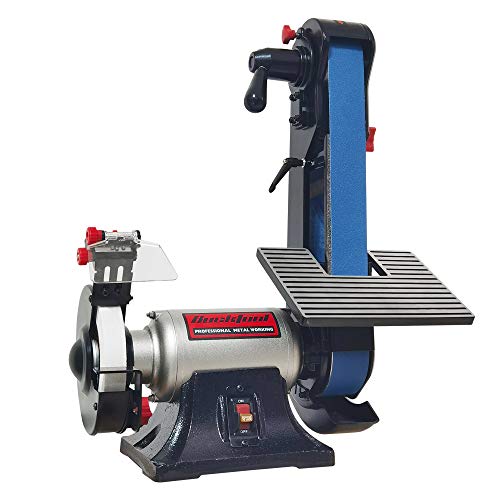
The Bucktool BG2600 combo unit is designed to streamline knife-making workflows by offering dual functionality in a single footprint. It ships with a 2″ x 42″ sanding belt and a 6″ bench grinder, enabling rough stock removal and precise shaping without swapping machines. A robust induction motor provides reliable power, and the belt speed reaches around 4,480 feet per minute, aiding efficient metal removal. The belt tilts 0–90 degrees, and the belt housing swivels to work both flat and vertical orientations, helping handle long pieces or awkward angles common in blade shaping. This flexibility can reduce setup time when moving between bevel formation and heat-treated edge refinement.
Key considerations for knife-makers include belt condition and tracking stability. The Bucktool model supports multi-angle sanding, which can help establish consistent bevels, especially on larger blades. With a 1/2 HP motor and a claimed CSA-standard construction, the unit prioritizes durability in workshop environments. When evaluating for your shop, check belt replacement availability, dust control, and alignment tools to minimize downtime. This is a strong all-around starter-to-intermediate option for knife makers who need a single, capable machine for several steps of the process.
Bucktool Low Speed Bench Belt Grinder Combo

This Bucktool model emphasizes controlled, precise shaping with a low-speed belt option and a separate 6″ grinder, making it suitable for knife-makers who value finish quality over raw stock removal. The 1/3 HP motor runs at approximately 1790 RPM, delivering smoother control and reduced heat buildup during delicate grind work. The direct-drive design improves efficiency, with a belt tracking system and quick belt changes designed for intermittent sharpening and bevel tasks. A built-in wrench storage space keeps essential tools organized for quick adjustments during a project. This setup suits hobbyists and professional smithies focusing on blade geometry and edge refinement rather than heavy stock removal.
Consider the workflow implications: the lower belt speed translates to slower aggressive material removal but better control for bevel consistency and edge honing. For knife makers who routinely switch between shaping and sharpening, this model can minimize overheating and blade deformation. The quick belt-change feature reduces downtime, though you may want to pair it with a separate, more aggressive sander for initial stock shaping on larger blades. Overall, it’s a reliable option for craftsmen seeking predictable, steady performance with low heat input.
Jinlida Belt Grinder Sander 2×72

The Jinlida belt grinder stands out for its high-powered motor and versatility with a 2×72-inch belt configuration, a common choice for knife-making due to long-life contact areas and substantial material removal capacity. The machine uses a 1500W copper motor rated around 2900 RPM, delivering strong grinding performance for heavy beveling and large-scale stock removal. It features a variable speed control via a VFD, allowing speeds to adapt to different materials and finishing tasks. The included three sets of grinding tools provide options for circular, flat, and arc grinding, enabling comprehensive surface preparation, deburring, and weld removal. It is essential to note compatibility with 220V power supplies and the need for a transformer if your shop runs on 110V.
For knife makers, the 2×72 format is favored for aggressive bevel shaping and edge preparation. The VFD-based speed control helps maintain control during delicate finishes and sharpening steps, reducing heat buildup and preserving temper. When planning installation, verify the power supply, cooling, and dust management preferences, especially for extended sessions. This model suits shops prioritizing throughput and versatility, where blade geometry adjustments and multiple grinding tasks occur within a single setup.
KFMK 3in1 2×36″ Belt Sander with 7″ Disc and 8″ Grinder

The KFMK 3in1 model integrates a belt sander, disc sander, and wheel grinder into a single unit, providing a compact yet capable solution for knife-making workflows. Its 2″ x 36″ belt offers precise control for bevel formation and edge work, while the 7″ disc and 8″ grinder expand into finishing, deburring, and shaping broader surfaces. A 3.1 A motor drives the system, delivering steady power with a gearless feel and a quick belt release for rapid tool changes. The belt can be adjusted up to 90 degrees, offering flexibility for beveling, flat grinding, and contour work. This setup is well-suited for makers who appreciate an all-in-one approach within smaller shop spaces.
Consider how often you edge, bevel, and polish in your process. The 2×36 belt size is common for knife-edge work but may require careful belt selection for aggressive stock removal. The disc and wheel add versatility for shaping guards or ricasso areas. Maintenance thoughts include ensuring proper belt alignment and tracking, securing the disc wheel alignment, and guarding against belt fraying in heavy use. This option suits compact shops or makers who want multiple capabilities in a single footprint.
Greteefor 6″ Bench Grinder & 1″x30″ Belt Sander

The Greteefor bench grinder and belt sander combo focuses on a balance between material removal and precision shaping. With a 2.3A induction motor driving a 3600 RPM grinding wheel and a belt speed of 3400 FPM on a 1″ x 30″ belt, this unit is capable of steady bevel shaping and edge refinement. The quick-release belt tensioning and tracking system support rapid belt changes, reducing downtime between tasks. A hardened 6″ grinder wheel complements belt work for edge finishing and deburring. The design includes a sturdy base with mounting options to minimize vibration, improving control during delicate knife work. This model suits small- to medium-sized shops that need reliable, two-tool functionality without sacrificing precision.
When evaluating this combination, consider the balance between belt-driven and wheel-driven tasks. The 1×30 belt excels in fine detail work, while the 6″ wheel handles more aggressive shaping. The tool-free adjustments and integrated storage add efficiency, especially in busy work sessions. For knife makers who want a single station that can handle bevels, flat grinding, and edge finishing, this Greteefor unit provides a practical and compact solution.
Buying Guide: Key Purchase Considerations
- Power and speed: Higher horsepower and belt speeds remove material faster but may generate more heat. For beveling and profiling, look for models in the 1/2 HP to 2 HP range with belt speeds from 2,500 to 4,800 FPM.
- Tilting and multi-function: Belts that tilt 0–90 degrees plus swiveling housings offer flexibility for long blades and varied bevels. 2-in-1 or 3-in-1 units save space but may compromise specialization; choose based on workflow.
- Belt size and durability: 2″x42″ and 2″x72″ belts are common for knife work. Ensure easy belt replacement, tracking accuracy, and accessibility of replacement belts.
- Adaptability: Consider machines with adjustable speed (VFD or variable-speed control) for different materials and tempering considerations. Quick belt release systems reduce downtime during bevel changes.
- Work area and vibration: A stable base and vibration-damping feet improve control. A compact footprint benefits smaller shops, but verify clearance for longer blades on belt paths.
- Power compatibility: Some units require 220V circuits and may need transformers for 110V shops. Check your electrical setup before purchasing.
- Maintenance and accessories: Assess included belts, discs, and guards. Look for bolt-on accessories or optional add-ons (dust collection, coolants) that align with your workflow.
Overall, pick a belt grinder system that aligns with your typical knife-making tasks: heavy beveling, edge finishing, and deburring. For beginners, a versatile 1×30 to 2×36 unit with adjustable speed can provide a gentle learning curve. For intermediate to advanced users, a 2×72 or similar setup with robust power and varying tools offers greater efficiency and process control, enabling consistent blade geometry and polished edges over time.