Choosing the right belt and disc sander can boost woodworking efficiency by delivering smooth surfaces and precise bevels. This guide highlights five solid options that balance power, versatility, and stability. Each model combines a belt sander and a disc sander in one benchtop unit, with adjustable worktables and tilting capabilities for horizontal and vertical sanding. Read on to compare features, build quality, and how each model supports common sanding tasks—from bevels and curves to flattening stock.
| Product | Key Features |
|---|---|
| WEN Benchtop Belt and Disc Sander 6502T | 4×36″ belt, 6×6″ disc, belt tilt 0–90°, cast iron base |
| Bucktool Direct Drive 4×36″ Belt Sander BD4603 | 3/4 HP motor, 0–45° tilting worktable, 8″ disc, direct-drive, portable base |
| Woodskil 4.5-Amp Belt & Disc Sander (Upgraded) | 4×36″ belt, 6″ disc, 0–90° belt tilt, 3/4 HP, hex-key adjustments |
| WEN 6508 6×48″ Belt & 9″ Disc Sander | 6×48″ belt, 9×9″ disc, 3450 RPM, heavy-duty body |
| SKIL BB9504-00 Belt & Disc Sander Combo | 2-in-1 sanding station, tilting belt 0–90°, miter gauge |
Note: Specs reflect typical configurations from the listed models. Always verify current details before purchasing. Below, each product section provides a concise overview with listed features and practical use cases.
WEN Benchtop Belt And Disc Sander 6502T
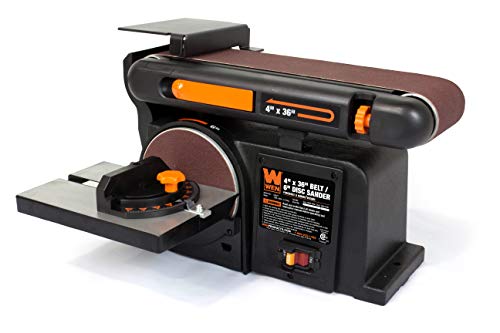
The WEN 6502T combines a 4-by-36 inch belt with a 6-by-6 inch disc, offering a versatile dual-sanding station for wood stock and small projects. The belt tilts from 0 to 90 degrees, enabling horizontal or vertical sanding for bevels and edge work. With a sturdy cast-iron base, the unit minimizes vibrations during shaping and flattening tasks, which helps maintain accuracy during finish work. It suits hobbyists and professionals who need a compact, reliable machine for contouring, levelling rough stock, and deburring edges.
Bucktool Direct Drive 4×36 Belt Sander BD4603

This Bucktool model uses a direct-drive 3/4 HP motor to deliver efficient and steady performance at up to 3450 RPM on the disc. The belt is 4×36 inches with 80-grit, designed for flexible orientation either horizontally or vertically. A tilt-adjustable cast aluminum worktable (0–45 degrees) supports precise bevels and angles, while the 8-inch disc is stabilized by a heavy steel cover and includes a miter gauge for fixed-angle work. Ideal for woodworkers who value a compact, powerful, and adjustable benchtop sander for complex shaping and stock preparation.
Bucktool 5.0A Belt Disc Sander BD4603 Upgrade
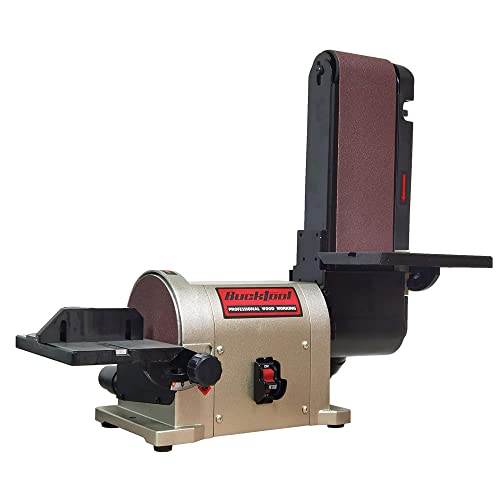
The upgraded Bucktool BD4603 emphasizes maintenance-free operation with direct-drive design and a 3/4 HP fully enclosed induction motor, delivering quieter but powerful performance. The belt tilts 0–90 degrees to support horizontal and vertical sanding, and the quick belt replacement design with track control helps minimize downtime during project work. This model is suited for continuous sanding sessions and tasks requiring rapid belt changes without complex adjustments.
Woodskil 4.5-Amp Belt & Disc Sander (Upgraded)

The Woodskil upgraded model features a 3/4 HP motor delivering 3590 RPM on the disc and 1900 FPM on the belt for robust material removal. The belt and disc are directly driven for consistent performance, with belt tilt from 0 to 90 degrees and an adjustable worktable tilting 0–45 degrees. A hex-key adjustment system ensures precise belt alignment, and the double dust exhaust ports help manage debris during longer sessions. Suitable for users who need a capable, compact setup with straightforward adjustments.
WEN 6508 6×48 Belt & 9×9 Disc Sander

The WEN 6508 pairs a 6×48 inch belt with a 9×9 inch disc, powered by a 9-amp motor for higher-demand tasks. The heavy-duty body design minimizes vibrations, providing stability when removing high spots and shaping larger stock. This model is well-suited for serious woodworking projects where extended run times and greater surface coverage are needed, such as planing and flattening large panels or beams.
SKIL 4.5 Amp Belt & Disc Sander BB9504-00
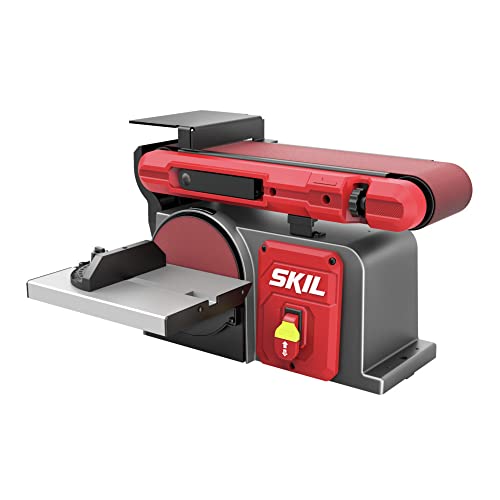
The SKIL BB9504-00 provides a two-in-one sanding station with belt and disc capabilities, plus a miter gauge to guide crosscuts. The belt angle adjustment supports sanding from 0 to 90 degrees, enabling bevel work and edge finishing. This model is a practical choice for hobbyists who need a compact, value-oriented unit that can handle a range of stock sizes with decent accuracy.
Buying Guide: Key Purchase Considerations For Belt And Disc Sanders
- Power and speed: Look for a motor with ample horsepower (0.75–1.0 HP or higher) and a belt speed around 1500–2000+ SFM and disc RPM near 3000–3600 for efficient stock material removal and smooth finishes.
- Dual-function versatility: Ensure the belt and disc can operate independently or together, and verify the belt’s tilt range (0–90 degrees) and the disc’s stability for both horizontal and vertical sanding tasks.
- Worktable adjustments: A tilting worktable (0–45 degrees or 0–90 degrees belt tilt) expands capabilities for bevels, chamfers, and angled cuts. A miter gauge improves accuracy on crosscuts and contour work.
- Stability and vibration control: Cast-iron bases and heavy frames reduce vibrations, improving surface quality and tool longevity during long sessions.
- Dust management: Integrated dust ports and dual exhaust options help maintain a cleaner workspace and longer tool life by reducing debris in the sanding area.
- Size and footprint: Benchtop models vary in belt length (4×36 in or similar) and disc size (6–9 in). Choose based on workspace size and the scale of projects you typically tackle.
- Maintenance and belt changes: Direct-drive motors reduce belt tension adjustments and simplify belt changes, enabling quicker setup between tasks.
- Accessories and compatibility: Check included sanding belts and discs, and confirm whether you can source replacement belts and discs easily from the same brand or compatible third-party options.
- Noise and comfort: Induction motors and enclosed designs help minimize noise and heat, which is important for comfortable prolonged use in a home shop.
- Price-to-performance balance: Evaluate overall build quality, warranty, and included features against price to identify the best value for your needs.