Professional landscapers and property managers need backpack blowers that combine high power, reliability, and comfortable operation. The following selections highlight machines designed for heavy-duty commercial use, emphasizing air volume, velocity, fuel efficiency, and ergonomic design. Each option is tuned for large properties, persistent debris, and long work sessions without frequent refueling or downtime.
| Product | Brand | Key Power | Airflow | Fuel/Engine Notes |
|---|---|---|---|---|
| Getell 80cc Gas Backpack Leaf Blower, 900CFM 206MPH | Getell | 80cc | 900 CFM, 206 MPH | 2-stroke, large 2.3L tank |
| Husqvarna 150BT Gas Backpack Blower | Husqvarna | 51cc, 2.16 HP | 765 CFM, 270 MPH | 2-stroke |
| Echo PB-9010T Backpack Blower | ECHO | 79.9cc | 1110 CFM, 220 MPH | 2-stroke |
| HTK Backpack Blower, 63CC | HTK | 63cc | 665 CFM, 205 MPH | 2-stroke |
| Relxxon Gas Powered Backpack Leaf Blower | Relxxon | 75.6cc | 750 CFM, 205 MPH | 4-stroke |
Note: This overview focuses on units well-suited for commercial properties, where continuous performance, fuel economy, and operator comfort are critical. The listed features reflect each model’s core strengths to help buyers compare at a glance.
Getell 80cc Gas Backpack Leaf Blower

The Getell 80cc model delivers robust power with an 900 CFM/206 MPH combination, making it capable of clearing dense leaves, grass clippings, and light snow. Its large 2.3-liter fuel tank supports extended use on commercial properties, reducing refueling downtime. The 22-pound backpack includes padded straps, a vibration-dampening frame, and cruise control to help maintain steady airflow during long sessions. This unit emphasizes fuel flexibility with a flexible oil-to-fuel mix, accommodating various two-stroke blends for site-specific needs.
Husqvarna 150BT Gas Backpack Blower

The Husqvarna 150BT pairs ergonomic design with strong performance: 765 CFM at 270 MPH from a 51-cc two-stroke engine. It emphasizes operator comfort through a padded harness, hip belt, and weight-balancing system to reduce fatigue during long shifts. While lighter than some commercial units, it delivers substantial airflow and speed for medium-to-large commercial properties, with emissions reductions and fuel efficiency improvements emphasized in its design.
Echo 220 MPH Backpack Blower PB-9010T
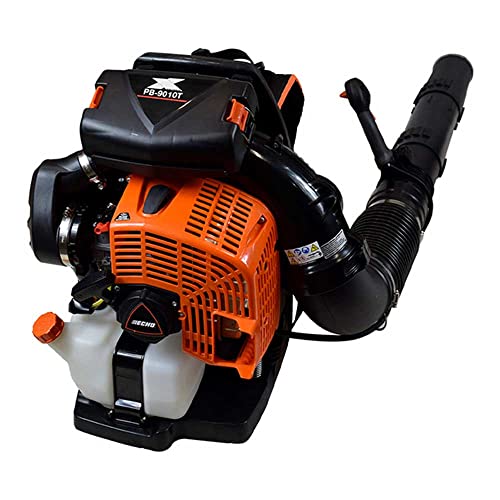
The Echo PB-9010T stands out with high air volume and velocity: 1110 CFM at 220 MPH from a 79.9 cc engine. This model is designed for demanding commercial sites where heavy debris and wet leaves require sustained power. Echo’s design also prioritizes ergonomic comfort and durable construction, making it a frequent choice for professional crews seeking reliable performance across long workdays.
HTK Backpack Blower, 63CC

HTK’s 63cc gas-powered blower delivers 665 CFM at 205 MPH, designed for commercial lawn care and snow removal. It emphasizes work efficiency with a fully padded backpack harness and low-vibration technology to reduce operator fatigue. The model suits contractors managing large properties where frequent trips across varied debris loads are common, delivering solid airflow without excessive weight.
Relxxon Gas Powered Backpack Leaf Blower

The Relxxon RL9905 PRO uses a 75.6cc four-stroke engine to deliver 750 CFM at 205 MPH. The four-stroke design eliminates fuel mixing, relying on standard unleaded fuel for easier operation and cleaner emissions. Built for intensive, repetitive use, its rugged chassis and commercial components are intended to withstand daily jobsite demands, making it a practical option for crews handling large properties and challenging debris loads.
Buying Guide: Key Purchase Considerations
When selecting a commercial backpack blower, consider the following factors to ensure the best fit for your crew and properties:
- Airflow and velocity: Higher CFM and MPH translate to faster debris clearance, especially for wet leaves and heavy debris. Balance airflow with maneuverability for varied sites.
- Engine type and fuel: Gas engines offer long run times and high power, but require fuel management and maintenance. Four-stroke engines can offer smoother operation and easier fuel handling, while two-stroke models often require oil mixing.
- Weight and ergonomics: Look for padded harnesses, hip belts, and vibration-dampening features to reduce operator fatigue during extended use.
- Fuel capacity and efficiency: Larger tanks reduce refueling stops, but heavier weight can impact comfort. Consider tank size in relation to typical job duration.
- Durability and maintenance: A robust chassis, dual-stage air filtration, and accessible service components minimize downtime on busy sites.
- Noise considerations: Quieter models help with neighbor relations and compliance on certain job sites; consider noise-reduction features if working near residential areas.
- Fuel availability and cost: Commercial crews often operate across multiple sites; ensure parts availability and local support for maintenance and repairs.
- Reliability and warranty: Check manufacturer warranties and field-proven reliability to reduce total cost of ownership on heavy-use equipment.
These considerations help balance immediate performance with long-term productivity, ensuring crews can complete commercial cleaning tasks efficiently while safeguarding operator health and equipment longevity.