Finding a reliable anchor for sandy environments helps keep your gear secure at the beach, lake, or shoreline. This guide compares five durable sand anchors designed to grip loose and compact sand, saltwater, and windy conditions. Read on to see how each option performs, what materials they use, and which one fits your gear. The selections emphasize ease of use, portability, and compatibility with common pole sizes and boat or umbrella setups.
| Product | Brand | Type | Key Advantage |
|---|---|---|---|
| AMMSUN Beach Umbrella Sand Anchor | AMMSUN | Sand Anchor | 5-spiral design for wind resistance |
| BeneLabel 36″ Sand Anchor | BeneLabel | Boat Sand Anchor | 304 stainless steel for corrosion resistance |
| SandShark Supersport 3.0 | SAND SHARK SANDSHARKANCHOR.COM | Shallow Water Anchor | Reinforced nylon and aluminum construction |
| Insaga 26” Sand Anchor | Insaga | Stainless Steel Anchor | Fully welded helix with crossbar |
| Beachr Beach Umbrella Sand Anchor | Beachr | Umbrella Sand Anchor | ABS plastic, rust-resistant, universal fit |
AMMSUN Beach Umbrella Sand Anchor

The AMMSUN anchor uses a sturdy ABS plastic build designed to resist rust from sand and saltwater. It is marketed as wind resistant, capable of withstanding gusts up to 50 MPH, and designed to fit umbrella poles with a diameter of 1.5 inches or less. The 5-spiral design enhances stability in windy conditions and loose beach sand, helping to keep umbrellas anchored during beach outings. The universal base accommodates most umbrella brands, making it a flexible option for various setups.
BeneLabel 36″ Sand Anchor

This screw-in sand anchor is crafted from 304 stainless steel for superior seawater corrosion resistance and impact resilience. With a 36-inch pole and a propeller-style design, it emphasizes grip and stability in various sand types. It weighs about 3.18 pounds and ships with a storage bag for portability. Its cross-compatibility extends across multiple boat sizes, including motorboats and kayaks, making it a versatile choice for shoreline docking and beach setups.
SandShark Supersport 3.0

The SandShark Supersport 3.0 is designed for shallow-water use and pontoon applications. It employs reinforced nylon and aircraft-grade aluminum, combining strength with lighter weight. The kit includes collapsible handles and a padded case for storage. It is intended to prevent boats, jet skis, and PWCs from drifting toward the beach or other vessels, offering robust performance in sandy shorelines and weed-free zones.
Insaga 26” Sand Anchor
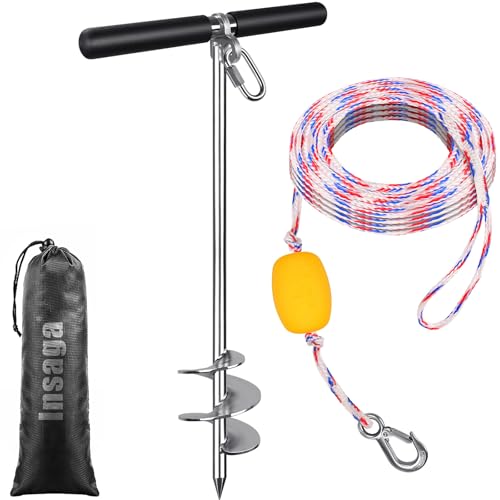
The Insaga anchor is built from solid 12 mm 304 stainless steel with a fully welded 30 mm dual helix and a removable crossbar for installation ease. Its crossbar design improves drilling into sand, enhancing grip in both soft and firm sands. Suitable for boats, jet skis, kayaks, PWCs, and pontoons, it offers versatile anchoring across shallow coastal and lakeside environments.
Beachr Beach Umbrella Sand Anchor

The Beachr anchor emphasizes rust resistance with ABS plastic, avoiding metal corrosion in salt air. It is designed for easy, quick setup, allowing users to screw the auger into sand and place the umbrella in the base holder. It is described as a universal fit for umbrella poles and compact enough to travel easily, making it a practical option for casual beachgoers and families.
Buying Guide
Key purchase considerations help you choose the right sand anchor for your needs. Here are the main factors to evaluate:
- Material and corrosion resistance: Stainless steel and ABS plastic are common; stainless steel is strong and long-lasting, while ABS resists rust and is lightweight.
- Compatibility: Check pole diameter compatibility (most umbrellas use up to 1.5 inches) and cross-compatibility with different brands or boat sizes.
- Holding power: Look for designs with multiple spirals or a helix for better grip in varying sand types and wind conditions.
- Ease of setup and storage: Consider how quickly you can install and remove the anchor and whether it includes a carry bag or case for transport.
- Portability and weight: Lighter anchors are easier to transport, but heavier ones may offer greater stability in strong winds.
- Intended environment: Umbrella anchors suit beaches and lawns, while boat anchors are optimized for watercraft and pontoons.
- Durability and maintenance: Check whether the design resists corrosion, rust, and wear from sand and salt exposure.
When choosing, balance the anchoring power with practicality: for casual beach trips, a lightweight, easy-to-install anchor with universal fit may suffice; for windy coastal sites or watercraft docking, prioritize a heavier, more robust design with stronger grip and corrosion resistance.