Air-driven transfer pumps offer reliable, maintenance-friendly solutions for moving oil, water, chemicals, and other liquids. This guide highlights five top options, detailing performance, materials, and compatibility to help buyers choose the right model for their needs. Each example prioritizes durability, strong flow, and safe operation in typical workshop or industrial environments.
Summary of chosen products
| Product | Brand | Key Benefit | Approx. Flow |
|---|---|---|---|
| MXBAOHENG 898GPH Air Operated Diaphragm Pump | MXBAOHENG | PTFE diaphragm for chemical resistance | 56.67 L/min |
| TITIDU Air-Operated Waste Oil Transfer Pump | TITIDU | High pressure up to 120 PSI, good solids handling | ~39.63 GPM |
| EISHCGSY Diaphragm Pump | EISHCGSY | High compatibility and solid durability | ~39.63 GPM |
| JLOSHUTN 1″ Air Diaphragm Pump | JLOSHUTN | Robust construction; 120 PSI tolerance | ~39.63 GPM |
| KIMISS Hand Driven Siphon | KIMISS | Portable manual option for emergencies | Not applicable (hand siphon) |
MXBAOHENG 898GPH Air Operated Diaphragm Pump

The MXBAOHENG model uses a PTFE diaphragm to deliver strong chemical resistance, including acids and alkalis, while maintaining sealing integrity under challenging conditions. The polypropylene body adds corrosion resistance, enabling transfer of conventional liquids, including corrosives and higher viscosity fluids. This pump is designed to run reliably with an air-driven mechanism and is suitable for waste oil and chemical transfer workflows. It emphasizes stability in demanding environments and extended service life, with a focus on safe, consistent operation.
TITIDU Air-Operated Waste Oil Transfer Pump

The TITIDU unit is built for robust performance with up to 120 PSI tolerance and a 1-inch inlet/outlet, delivering high flow rates up to about 39.63 GPM. Its air-driven mechanism promotes smooth operation and efficiency, while compatibility for suspended solids up to 1/8 inch reduces the risk of blockages. This makes it well-suited for transferring oil and water mixes or other common industrial liquids in demanding settings.
Diaphragm Pump, Air Operated Double Diaphragm – EISHCGSY

This model mirrors the robust dual-diaphragm design and 120 PSI capability, offering a high flow rate up to 39.63 GPM. Its construction emphasizes durability and consistent performance, with a focus on reliable air-driven operation and effective handling of a variety of liquids, including oils and potential contaminants. The unit’s solid build aims to minimize downtime in busy maintenance or process environments.
JLOSHUTN 1″ Air Operated Double Diaphragm Pump
Engineered for heavy use, the JLOSHUTN pump combines aluminum, polypropylene, and nitrile rubber for impact resistance and long-term durability. It tolerates up to 120 PSI and provides a high flow rate of up to 39.63 GPM via a 1-inch inlet/outlet. The air-driven mechanism is designed for continuous operation with a moderate air consumption rate, balancing performance and efficiency in routine transfer tasks involving oil, water, and similar liquids.
KIMISS Hand Driven Portable Siphon Pump
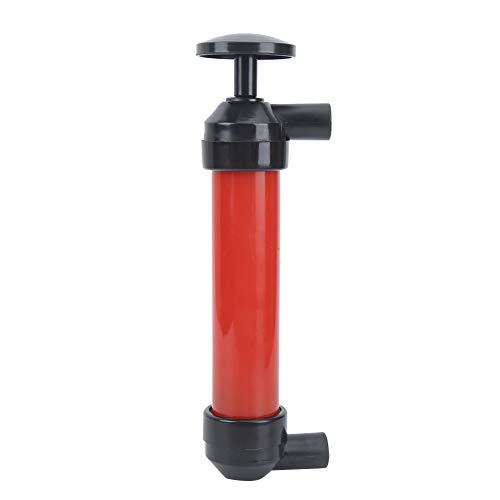
The KIMISS siphon pump represents a portable, manual option for emergency transfers, including oil and gasoline. Ideal for situations where a powered air-driven pump isn’t available, this compact device emphasizes portability and quick transfer capability. It is particularly suitable for small-volume tasks and roadside or workshop emergencies where simple, rapid liquid movement is needed.
Buying Guide: Key Considerations For Air-Driven Transfer Pumps
- Materials and chemical compatibility: Choose diaphragms and housings made from PTFE or polypropylene for resistance to acids, alkalis, and corrosive fluids. Consider fluid temperature ranges and potential solvent exposure.
- Flow rate and pressure: Higher flow rates (up to ~39.63 GPM) and pressure (up to 120 PSI) support faster transfers but may require larger fittings and better air supply. Match to your liquid type and container size.
- Solid handling: If pumping dirty or slurry liquids, verify the max solid particle size (e.g., up to 1/8 inch) to prevent clogging and downtime.
- Air consumption and efficiency: Look for units optimized for lower air consumption to reduce noise and energy use, especially in continuous operation settings.
- Durability and build: Aluminum or reinforced polypropylene bodies improve resilience in rugged environments. A robust design helps resist impact and vibration.
- Maintenance and service life: PTFE diaphragms and corrosion-resistant components reduce wear. Check availability of spare parts and seals for longer service life.
- Port sizing: A 1-inch inlet/outlet is common for high-flow models. Confirm thread standards (PT/BSP or NPT) to ensure compatibility with hoses and fittings.
- Liquid type suitability: For pure water, fuel, oil, kerosene, and some chemicals, verify that the pump’s chemical compatibility aligns with your liquid’s properties and regulatory requirements.
- Safety features: Ensure that systems designed for hazardous liquids include proper seals, grounding, and venting features to prevent spills and vapors.
- Portability vs. capacity: Manual siphons excel in portability and emergency use; air-driven pumps are better for consistent, higher-volume transfers in workshop or field settings.
When selecting an air-driven transfer pump, assess the typical liquids you handle, the required transfer rate, and the environment in which the pump will operate. The five models highlighted balance durability, chemical compatibility, and high-flow performance suitable for industrial, automotive, and maintenance tasks. Always follow manufacturer safety and operation guidelines to maximize efficiency and longevity of the pump system.