Finding the right 60A MPPT charge controller can maximize solar gains for RVs, cabins, and off-grid installations. This guide compares top models from trusted brands, highlighting efficiency, battery compatibility, and smart features. Below is a quick summary table of five strong options to consider, followed by detailed product sections and a buying guide to help you choose.
| Product | Brand | Battery Types | Key Feature |
|---|---|---|---|
| ECO-WORTHY 60A MPPT | ECO-WORTHY | Lead-Acid, LiFePO4 | Bluetooth monitoring, 4 load modes |
| Renogy Rover 60A MPPT | Renogy | Lead-Acid, Gel, Lithium | Storm-ready protection, auto voltage detect |
| LiTime 60A MPPT | LiTime | LiFePO4, Lead-Acid | LCD display, high tracking efficiency |
| MakeSkyBlue 60A MPPT | MakeSkyBlue | LiFePO4, AGM, Gel | Auto voltage detect, extended lifespan claims |
| Renogy Rover Lite 60A | Renogy | Lithium, AGM, Gel | High solar input, full temperature range |
Note: Specifications vary by model. Always verify battery compatibility and installation requirements before purchase. This article provides objective comparisons to help inform your decision without endorsing any single option.
ECO-WORTHY 60A MPPT Solar Charge Controller

The ECO-WORTHY 60A MPPT controller combines high-efficiency power tracking with practical connectivity features. It supports 12V/24V/36V/48V systems and includes a Bluetooth module for real-time monitoring via a smartphone app within about 33 feet. The device claims tracking efficiency up to 99.5% and peak conversion up to 98%, maximizing energy harvest in variable light conditions. Four load control modes adapt the regulator to different usage needs, including normal on/off and timed or optical controls for automated lighting or equipment. This model is suitable for RVs, small cabins, and solar projects that require easy monitoring and solid MPPT performance.
Renogy Solar Charge Controller 60A MPPT

Renogy’s Rover 60A MPPT controller emphasizes multi-peak tracking with a claimed 99.9% efficiency under partial shading and cloudy conditions. It supports 12V/24V/36V/48V operation and is designed for demanding RV, off-grid, and marine installations. The unit is compatible with gel, sealed, flooded, and lithium batteries, making it a flexible option for mixed-storage systems. Teeming with protective features, it includes temperature compensation, surge protection, and safeguards against reverse polarity. The model is positioned as a reliable core controller for steady, long-term energy management in challenging environments.
LiTime 60A MPPT Solar Charge Controller
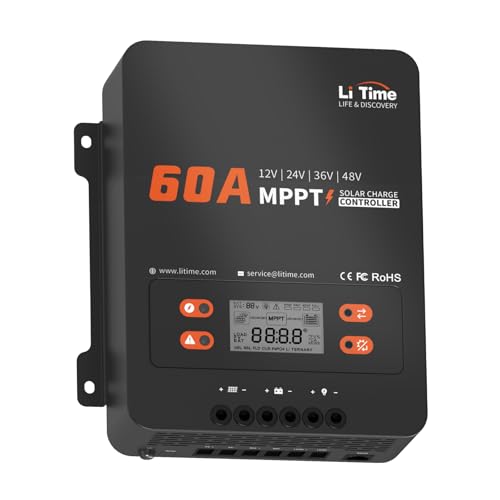
LiTime presents a 60A MPPT controller designed to operate with LiFePO4 and lead-acid batteries. It offers 99% tracking efficiency with a peak conversion rate around 96%, and supports multiple voltages up to 48V for LiFePO4 and up to Auto 48V for lead-acid configurations. An LCD screen provides system data and status indicators, with two control buttons for menu navigation. This model is suitable for users needing clear, on-device feedback and broad battery compatibility without Bluetooth connectivity.
MakeSkyBlue 60A MPPT Solar Charge Controller

MakeSkyBlue touts 60A MPPT capability with auto-detection for 12V/24V/48V systems and an LCD display for status at a glance. The product emphasizes 98.2% efficiency with dynamic shading compensation and a dual cooling mechanism (aluminum heat sink plus smart fan) for sustained performance. It supports LiFePO4, AGM, and Gel batteries, with a stated 20% longer lifespan through optimized charging. The controller’s flexible voltage recognition makes it a practical option for varied solar setups and battery chemistries.
Renogy Rover Lite 60A MPPT

Renogy’s Rover Lite 60A MPPT controller features a 150V maximum solar input, suitable for connecting multiple panels in series to reduce wiring. It operates across a broad temperature range, with low-temperature protection for lithium batteries and efficient self-cooling to maintain performance in hot environments. The unit supports a wide battery range from 12V to 48V and is designed to accommodate diverse battery chemistries. This option appeals to users who want robust input capacity and dependable operation in variable climates.
PowMr 60A MPPT Solar Charge Controller

PowMr offers a 60A MPPT controller with automatic 12V/24V/36V/48V detection and a maximum PV input of 160VDC. It uses a 3-stage charging algorithm (Bulk, Boost, Float) to optimize charging efficiency and battery health. The device emphasizes high MPPT efficiency, often cited as above 98%, with a broad compatibility range including lead-acid and lithium batteries. A negative grounding design adds safety for certain installations, and the parameter presets cover sealed, gel, flooded, and Li (LFP) batteries, with options to customize charging parameters for other battery types.
Buying Guide: Key Purchase Considerations
- Voltage and system compatibility: Ensure the controller supports your battery bank voltage (12V, 24V, 36V, or 48V) and is compatible with the battery chemistry you use (lead-acid, LiFePO4, lithium, AGM, etc.).
- Maximum input and MPPT efficiency: Look for a unit with a high MPPT tracking efficiency (ideally 98% or higher) and a robust maximum PV input voltage, especially if you plan to run multiple panels in series or experience shading.
- Battery protection and weather resilience: Temperature compensation, low-temperature protection, surge and reverse polarity safeguards, and wide operating temperature ranges are important for outdoor installs and extreme climates.
- Monitoring and control: Bluetooth or LCD-based displays help you monitor performance, log history, and adjust charging parameters. Bluetooth is convenient for on-the-go adjustments via smartphones.
- Load control and automation: Some models include built-in load outputs with modes such as timed, auto on/off, or optical control. This can simplify powering fixtures or accessories directly from the controller.
- Installation footprint and wiring: Consider the number of panels you’ll connect, wire sizes, and whether the controller’s input terminals and mounting options fit your setup. Higher input voltage possibilities can reduce cable runs in larger arrays.
- Price and support: Compare warranties, customer support quality, and component availability. A well-supported brand with clear documentation can reduce maintenance hassle.
When choosing among these 60A MPPT controllers, balance efficiency, battery compatibility, and local climate conditions. For shaded or partially shaded installations, models with advanced tracking algorithms may yield better daily output. If you value on-device readability and direct feedback, selections with LCD displays can simplify troubleshooting. Bluetooth-enabled options are advantageous for remote monitoring, especially in RV or off-grid scenarios where physical access is limited.