When selecting a 50 amp portable generator, you want reliable power, fuel flexibility, and safety features that keep your home or campsite running during outages. This guide highlights top 50 amp capable units from trusted brands, with a focus on real-world performance, ease of use, and transfer-switch readiness. The following picks balance output, fuel options, and practical features suitable for American homes and outdoor setups.
| Product | Fuel Options | Key 50A Outlet | Approximate Run Time (Tank) |
|---|---|---|---|
| Westinghouse 12500 Watt Dual Fuel | Gas / Propane | Yes (L14-30R 30A, 14-50R 50A) | Up to 12 hours |
| WEN TF1450X 14,500W Tri-Fuel | Gas / Propane / Natural Gas | Transfer-switch ready; 50A option shown | Not specified |
| Westinghouse 12500 Peak Watt EFI Dual Fuel | Gas / Propane | 14-50R 50A outlet | Up to 15 hours |
| Westinghouse 12500 Peak Watt Dual Fuel | Gas / Propane | 14-50R 50A outlet | Up to 12 hours |
| Westinghouse 8200 Peak Watt Tri-Fuel Inverter | Gas / Propane / Natural Gas | 50A outlet available | Not specified |
Note: The 50A rating typically refers to the 14–50R receptacle or equivalent, designed to power home essentials or RVs with a dedicated transfer switch. Always verify the exact outlet configuration on the product page before purchase.
Westinghouse 12500 Watt Dual Fuel Backup Generator

The Westinghouse 12500 Watt Dual Fuel generator provides robust power with gas and propane options. It offers remote electric start, a transfer switch ready configuration, and a durable 457cc engine. The unit delivers up to 12500 peak watts on gasoline and 11200 peak watts on propane, with a 6.6-gallon tank and a fuel gauge for situational awareness. It includes two GFCI outlets and a 50A RV-ready outlet, enabling compatibility with home backup and large devices. A digital hour meter and automatic low oil shutdown contribute to safe operation during extended outages.
WEN TF1450X Tri-Fuel Generator With Wheel Kit

The WEN TF1450X is a versatile tri-fuel generator, enabling seamless switching among gasoline, propane, and natural gas. It operates at both 120V and 240V, making it suitable for transfer switches and home back-up power needs. A CO watchdog sensor adds a safety layer by automatically shutting down if dangerous carbon monoxide levels are detected. While it emphasizes versatility and safety, confirm the exact 50A outlet configuration on the product listing to ensure compatibility with your backup plans.
Westinghouse 12500 Peak Watt EFI Dual Fuel
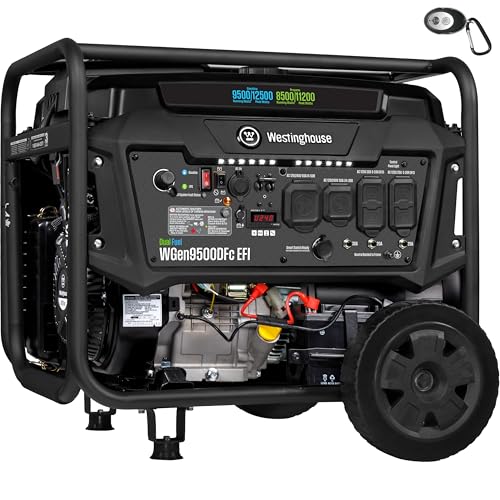
This EFI-equipped model provides peak watts around 12,500 with running watts near 9,500 on gasoline, and supports propane with a matching high output. It features a 6.6-gallon fuel capacity with a built-in gauge, remote start, and a 50A outlet for home or RV use in transfer switch setups. The unit’s durability comes from a Westinghouse 457cc engine and a CO safety sensor, offering long runtimes with fuel efficiency. It is designed for larger homes and more demanding outages where a 50A connection is beneficial.
Westinghouse 12500 Peak Watt Dual Fuel Home Backup

This 12500 peak watt, 9500 running watt model emphasizes dual fuel flexibility with practical run times and transfer switch readiness. It includes a 6.6-gallon tank with a fuel gauge, a robust 457cc engine, and multiple outlets with rubber covers. The combination of ease-of-use features, such as remote start and a digital hour meter, helps property owners deploy power quickly during outages while maintaining safety via automatic low oil shutdown and carbon monoxide awareness.
Westinghouse 8200 Peak Watt Tri-Fuel Inverter

The Westinghouse iGen8200TFc combines inverter technology with tri-fuel capability and a 50A outlet, offering clean power suitable for sensitive electronics and a compact footprint for portability. Its inverter design adjusts engine speed to match demand, delivering improved fuel efficiency and reduced noise. It includes a transfer switch-capable output and a CO sensor for added safety, making it a compelling option for smaller homes or campsites that still require reliable 50A power on occasion.
Buying Guide: Key Considerations For 50 Amp Portable Generators
- Power needs and outlet options: Identify the essential appliances and circuits you must run. A 50A outlet (often via a 14–50R receptacle) supports higher loads such as air conditioners, sump pumps, and multiple circuits in parallel with a transfer switch. Ensure the generator provides at least 9,000-12,000 running watts for typical home backup scenarios.
- Fuel flexibility: Dual fuel or tri-fuel generators offer greater resilience during fuel shortages. Propane, natural gas, and gasoline each have pros and cons in terms of availability, storage, and maintenance.
- Transfer switch compatibility: If you plan to connect to a home electrical system, confirm the generator is transfer-switch ready or comes with an interlock kit option. This simplifies safe, code-compliant operation during outages.
- Safety features: Look for CO sensors, automatic low oil shutdown, GFCI outlets, and rubber outlet covers. These features reduce risk and extend the unit’s life in demanding environments.
- Run time and tank size: Longer runtimes mean fewer stops for refueling. Compare fuel tanks and estimated run times at typical load levels to estimate outage duration.
- Portability and reliability: Wheel kits and electric start options save effort during setup. Prioritize brands with strong service networks and accessible parts for long-term reliability.
- Maintenance and monitoring: Digital hour meters and fuel gauges help track maintenance intervals and fuel status, ensuring readiness when needed.
- Noise considerations: Inverter-based models generally run quieter than traditional open-fram generators, which can be a priority for residential use or shared spaces.