For hobbyists and professionals alike, a reliable 4-inch belt sander delivers fast material removal with controllable finishing. The following selections highlight popular 4×24 and 4×36 belt sanders that fit typical shop setups, including benchtop and direct-drive models. This guide compares noise levels, motor power, belt speed, tilt capability, and dust management to help you choose a model that matches your workflow.
| Product | Brand | Key Features |
|---|---|---|
| Makita 9403 4″ x 24″ | Makita | Low noise, 1,640 ft/min belt speed, Labyrinth seals |
| Makita 9404 4″ x 24″ | Makita | 8.8A motor, low noise, auto-tracking |
| WEN 6502T | WEN | Two-in-one belt and disc, cast iron base |
| Bucktool Direct Drive 4×36 | Bucktool | Direct-drive, 0–90° belt tilting, 3/4HP |
| Bucktool Pro 1HP BD4801-M | Bucktool | 1HP motor, belt and disc, metalworking capable |
Makita 9403 4″ x 24″ Belt Sander

The Makita 9403 features a 4″ wide belt and a belt speed of 1,640 ft/min for rapid material removal. A low-noise 84 dB operation improves comfort in lengthy sanding sessions. Its Labyrinth construction seals and protects the motor and bearings from dust and debris, contributing to longer tool life and consistent performance in busy shops.
Makita 9404 4″ x 24″ Belt Sander

The Makita 9404 upgrades to a more powerful 8.8 Amp motor and maintains a low-noise profile at 84 dB. It uses an auto-tracking belt system, helping maintain belt alignment with less user intervention. This model is well-suited for frequent, longer sanding sessions on woodworking projects requiring consistent finish quality.
WEN Benchtop Belt And Disc Sander (6502T)
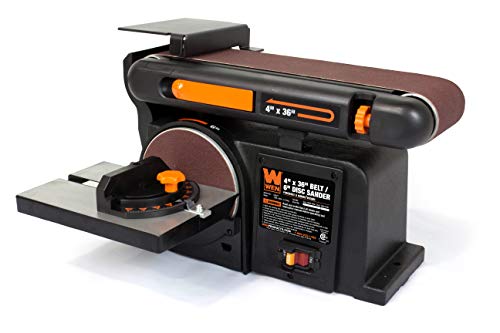
The WEN 6502T combines a 4×36 inch belt with a 6-inch disc in one benchtop unit. It offers belt tilting from 0 to 90 degrees for versatile sanding angles and a sturdy cast iron base to dampen vibrations. This model supports a range of woodworking tasks from flattening faces to shaping curves with stable performance.
BUCKTOOL BD4603 4×36 Belt and 6in Disc Sander
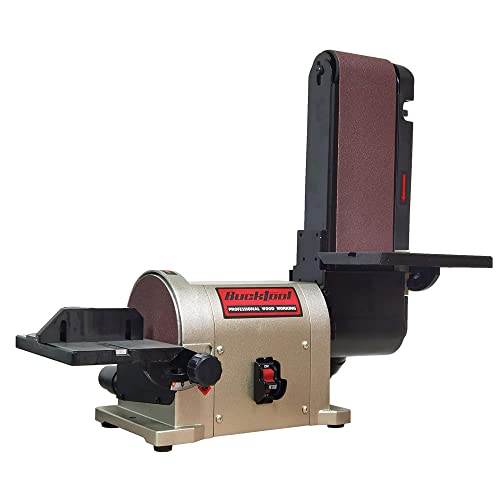
This upgraded Bucktool model features a direct-drive motor designed for efficiency, with a 0–90° tilting belt and a quick belt replacement design. It emphasizes multi-angle sanding and a guided track to manage belt changes easily, making it practical for projects requiring both horizontal and vertical access to the workpiece.
BUCKTOOL Direct Drive 4×36 Belt Sander

This benchtop sander uses a direct-drive motor to maximize efficiency and includes an 8-inch disc in addition to the 4×36 belt. The 3/4 HP motor delivers stable power, while the cast aluminum work table tilts for diverse sanding angles. A dust port supports cleaner work conditions and longer belt life.
VEVOR 6″ Disc Sander & 4″ x 36″ Belt Sander Combo
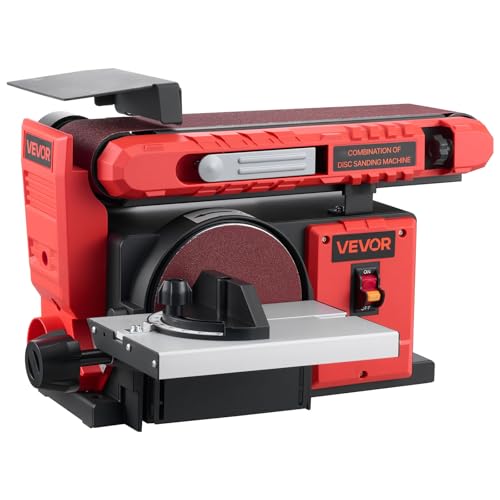
Note: This option is included for context of the popular combo approach, though it is a 6″ disc plus 4″ belt system. It offers a 0–45° tilting worktable and a 400W motor. This pairing supports projects where larger disc sanding is needed alongside belt work, expanding material handling options in a small shop.
Buying Guide: Key Purchase Considerations
- Absoluteness of belt size: 4×36 inch is a common, versatile format; 4×24 inch models are more compact and lighter for mobile use.
- Motor power and speed: Higher amperage and belt speed reduce sanding time on tough hardwoods but may increase noise and vibration.
- Drive type: Direct-drive belts offer simpler maintenance and consistent feed, while belt-driven digressions may require belt tension adjustments over time.
- Tilting range and orientation: 0–90° tilt enables horizontal and vertical sanding; stable tables and miter gauges improve precision on angled workpieces.
- Dust management: A reliable dust collection port or enclosure extends belt life and keeps the workspace cleaner.
- Vibration and stability: Cast iron bases and heavy frames minimize movement during operation, improving finish quality.
- Versatility: A combination belt and disc model broadens capabilities, especially for projects needing both flat and contoured sanding.
When evaluating these machines, consider the types of projects you typically handle, the available shop space, and whether you prioritize portability or maximum durability for heavy use. The models listed balance price, feature sets, and performance characteristics commonly requested by American hobbyists and professionals alike.